Executive Summary
In mid-2026, Amazon formally opened its less-than-truckload (LTL) freight service to all U.S. businesses, marking a significant expansion of the company’s broader logistics ambitions. The service, previously limited to inbound shipments moving into Amazon’s own fulfillment centers, now delivers to any domestic destination—including third-party warehouses, distribution centers, and retail partners. The announcement sent shares of several established LTL carriers lower, reflecting investor concern about a technology-first competitor entering a historically specialized market. Amazon’s LTL service is backed by substantial existing logistics infrastructure, including tens of thousands of trailers, tens of thousands of intermodal containers, and terminals across major U.S. metropolitan areas. However, industry analysts note that Amazon’s terminal network remains considerably smaller than the networks operated by established players, suggesting the competitive impact is likely to unfold gradually rather than overnight. This analysis examines Amazon’s LTL entry, its competitive implications, and strategic considerations for shippers evaluating this new option in the freight market.
Amazon LTL Enters the Freight Market: Understanding a New Competitive Force
(亚马逊进军零担运输市场:物流行业新的竞争力量)
1 · The Announcement: A Significant Expansion
From Inbound-Only to Nationwide Service
In a notable mid-2026 announcement, Amazon expanded its less-than-truckload freight service considerably, opening its LTL network to all U.S. businesses and allowing shipments to any domestic destination—not just Amazon’s own fulfillment centers.
The service, which had previously operated for several years exclusively for Amazon’s selling partners and vendors moving inventory into the company’s fulfillment network, had already been moving substantial pallet volumes across the U.S. annually. The expansion arrived through Amazon Supply Chain Services (ASCS), the company’s growing logistics platform that gives outside businesses access to the transportation and fulfillment network Amazon has built over roughly three decades.
Amazon leadership overseeing the freight business framed customer feedback as the driving force behind the expansion, noting that Amazon selling partners using the LTL service consistently praised the technology, visibility, and reliability, and wanted to use it more broadly. The resulting service is designed to move freight wherever it needs to go, servicing destinations nationwide for businesses of essentially any size.
What the Service Offers
Amazon’s LTL service generally handles shipments ranging from roughly one to six pallets, or between approximately 150 and 15,000 pounds. The company offers several scheduling options intended to appeal to a broad range of shippers, including next-day live pickup for orders placed by a defined afternoon cutoff, same-day pickup through drop trailers, and standing daily pickups for higher-volume shippers.
Built on Amazon’s Existing Infrastructure
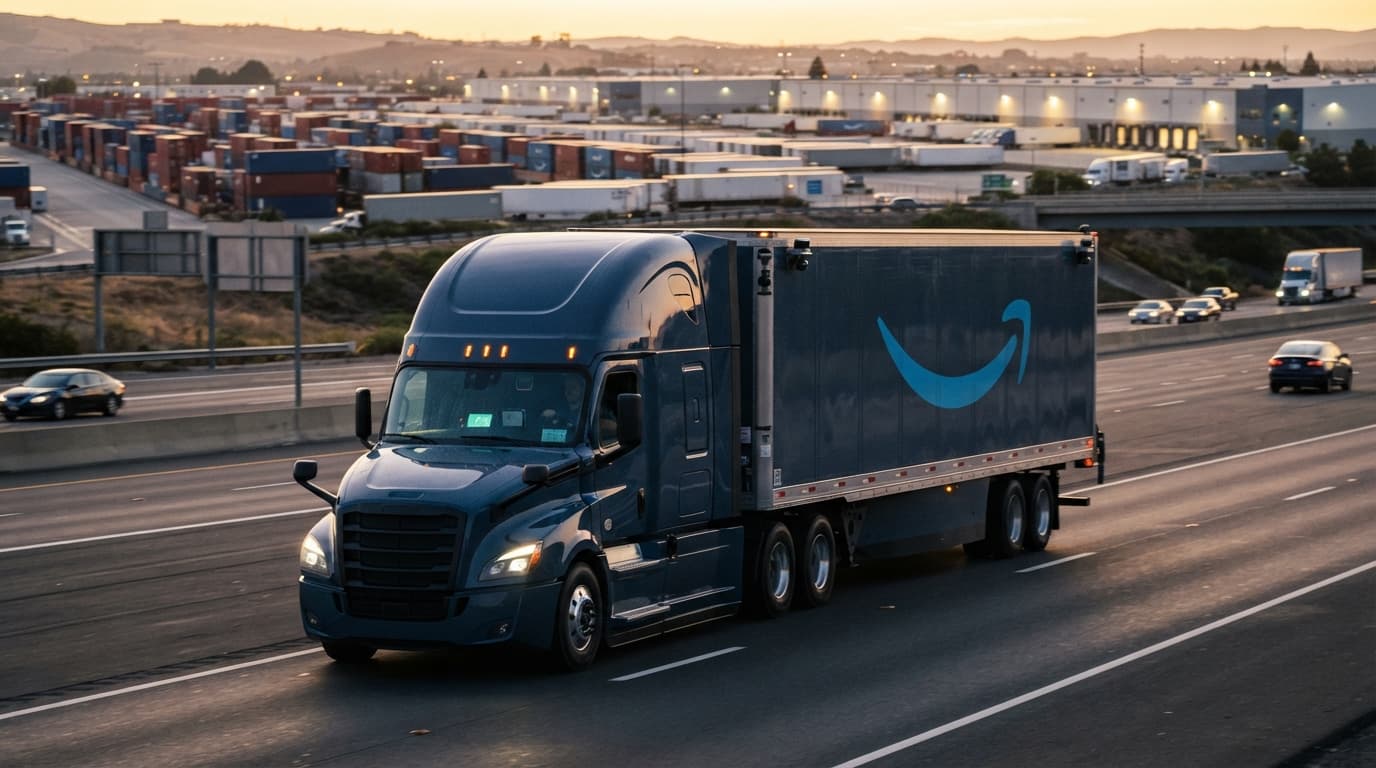
The LTL service runs on the same operational backbone that already moves Amazon’s own shipments. Amazon Freight now spans full truckload, LTL, and rail services, supported by a fleet of tens of thousands of trailers, tens of thousands of intermodal containers, and terminals across major U.S. metropolitan areas.
The company has also deployed cargo cameras and door sensors across its fleet, monitored through a centralized system that sends automated alerts to drivers and helps secure freight in transit.
2 · The Technology Advantage: Amazon’s Key Differentiator
Visibility and Tracking
Amazon is leaning heavily on its technology capabilities to compete with established LTL carriers. The company’s LTL service features real-time GPS tracking from origin to destination, automated appointment scheduling, electronic proof of delivery, EDI integrations that connect with shippers’ existing systems, and cargo cameras and door sensors intended to improve visibility and security throughout transit.
Amazon Freight leadership has described the offering as an asset-backed LTL service built specifically to close long-standing industry gaps—combining flexible same-day and next-day pickup, real-time shipment tracking from dock to door, and dedicated, LTL-trained drivers.
A Unified Drop-Trailer Pool
One of Amazon’s more distinctive features is a unified, multi-modal drop trailer pool shared across both full truckload and LTL operations. This allows businesses to manage both partial and full truckload shipments within the same yard, streamlining yard management considerably.
One early customer, describing the operational impact, noted that warehouse teams could load freight on their own schedule instead of racing against a driver’s clock—an approach that reduced dock congestion and kept throughput more consistent.
Technology as a Competitive Tool
Amazon appears to be targeting long-standing industry pain points by replacing manual tracking processes with more modern digital tools. For companies already using Amazon’s broader logistics network, the LTL rollout is intended to further streamline supply chain operations.
Customer feedback has pointed to faster transit times and lower costs compared with traditional LTL services in some cases—a combination that customers note is relatively rare to achieve simultaneously, and one that appears to be central to the service’s early appeal.
3 · The Competitive Landscape: Scale Versus Technology
The Terminal Network Gap
While Amazon brings substantial technology and existing logistics infrastructure to the LTL market, its physical terminal network remains considerably smaller than that of established players in the space.
Amazon currently operates from a terminal network numbering roughly two dozen facilities. By comparison, several major established LTL carriers operate from networks of 200 to 300 or more facilities nationwide. As industry analysis has noted, established LTL carriers maintain expansive national networks operating from roughly ten times the terminal infrastructure of Amazon’s current LTL footprint.
An Asset-Light Approach
Industry analysts have observed that Amazon’s relatively modest number of service terminals suggests a more asset-light model for this venture than is typical within the broader LTL sector. Some estimates place Amazon’s cross-dock facility count meaningfully below 100, compared with an average approaching 300 among the industry’s top players.
Observers have also suggested the service may lean more heavily toward three- to four-day economy lanes rather than premium, expedited service in its early stages.
The Incumbents’ Response
Leadership at established carriers has offered a somewhat measured, if not entirely dismissive, assessment of the competitive threat. LTL remains, in this view, a highly specialized industry with significant barriers to entry, including dense terminal networks that take years to build—and from that perspective, Amazon does not yet have the network required to operate as a full LTL-type company.
That said, established carrier leadership has generally acknowledged that Amazon’s moves in this space warrant close attention regardless of current network limitations.
4 · The Market Reaction: Carrier Shares Under Pressure
Immediate Impact on Carrier Valuations
The announcement contributed to declines in shares of several publicly traded LTL carriers, reflecting investor concern about the competitive implications of Amazon’s entry. Multiple established carriers saw meaningful single-day share price declines in the immediate aftermath of the announcement.
Analyst Perspectives
Some equity analysts had previously flagged Amazon’s potential entry as a for-hire LTL competitor as a substantial risk factor for LTL stocks more broadly, and the formal announcement appears to have reinforced those concerns among investors.
That said, other industry observers have urged a more measured perspective. Amazon will likely build more terminals over time and will likely continue improving its service—developments that clearly matter for the competitive landscape. However, a wholesale disruption of the LTL industry does not appear imminent in the near term. The industry has anticipated Amazon’s potential entry into this space for roughly a decade, and carriers that used that time to strengthen their own operations and technology appear to be performing reasonably well.
A Structural Advantage Assessment
Some equity research has emphasized that LTL operations are fundamentally constrained by terminal and door density, pickup-and-delivery execution quality, freight handling practices, claims management, and overall service consistency—areas where established carriers maintain meaningful structural advantages built up over decades of operation.
5 · The Customer Perspective: Early Adoption
Major Customers Already Onboard
Amazon has already secured several notable customers for its expanded LTL service, including well-known consumer goods and apparel companies among the first shippers using the broader service offering.
Customer Experience
Some early customers had already been using Amazon’s full truckload shipping services for several years before extending into LTL, citing a need for a provider capable of keeping pace with their company’s growth. For these customers, the LTL expansion has followed a similar trajectory to their earlier full truckload experience.
What Drove the Expansion
The broader rollout appears to have been driven substantially by demand from existing Amazon selling partners and vendors already using the more limited version of the service. Amazon Freight leadership has described hearing a consistent request from shippers: LTL service that performs at a level comparable to their full truckload experience—a high bar that the company has stated was intentionally set as its own target.
6 · Strategic Considerations for Shippers
A New Option in the LTL Market
For shippers, Amazon’s entry into the LTL market creates a meaningful new transportation option while simultaneously intensifying competition among traditional carriers and third-party logistics providers. By opening its LTL network to all shippers and destinations, Amazon has effectively created a new option for distributors and manufacturers alike.
Key Factors Worth Weighing
Shippers evaluating Amazon’s LTL service may benefit from considering several factors carefully.
Technology and Visibility: Amazon offers real-time GPS tracking, automated appointment scheduling, and EDI integrations that many traditional carriers have historically been slower to fully adopt, potentially offering meaningful operational advantages for shippers prioritizing visibility.
Cost and Transit Time: Early customer feedback suggests faster transit times and lower costs compared with traditional LTL services in some cases, though the service may lean more toward three- to four-day economy lanes rather than premium expedited options.
Terminal Network Limitations: With a terminal network considerably smaller than established carriers, Amazon’s geographic coverage may currently be more limited in certain regions, warranting careful lane-by-lane evaluation.
Unified Drop-Trailer Pool: The ability to manage both full truckload and LTL shipments within the same yard using a unified drop-trailer pool may offer meaningful operational efficiencies for shippers with mixed shipment profiles.
A Brokerage-Like Operating Model
Amazon appears to be operating a flexible, brokerage-like business model for portions of its LTL service, contracting with a subset of carriers for pickup and delivery—drivers with specific LTL expertise capable of managing multi-stop routing and more complex dock procedures. This asset-light approach allows Amazon to scale its service without the full capital intensity typically associated with building an entirely owned carrier network from scratch.
7 · The Bigger Picture: Amazon’s Broader Logistics Strategy
The Amazon Supply Chain Services Platform
The LTL expansion followed closely on the heels of Amazon opening its broader supply chain network to all shippers through Amazon Supply Chain Services. That earlier change allowed businesses to tap into Amazon’s substantial trailer and intermodal container fleet, along with aircraft capacity and distribution, warehousing, and fulfillment services more broadly.
The LTL expansion represents the latest in a series of significant supply chain and logistics announcements from Amazon, alongside other substantial infrastructure investments the company has made to expand robotics, fulfillment, and delivery capabilities across multiple regions globally.
A Growing Competitive Presence
Amazon has increasingly been spinning out components of its in-house logistics capabilities for external companies to access, representing a growing competitive presence for established industry players. The company has built a substantial logistics footprint over several years, originally developed largely to serve its own operational needs and meet increasingly demanding shipping speed expectations.
This footprint includes a fleet of Amazon-branded cargo aircraft, a large fleet of delivery vans, and a growing freight service built around a substantial trailer and container fleet.
8 · Outlook: What Amazon’s LTL Entry Means for the Market
Near-Term Expectations
Industry analysts generally expect Amazon’s LTL entry to create meaningful competitive pressure on rates and service levels over time, particularly around the technology and visibility dimensions where Amazon’s offering appears strongest. However, the current terminal network limitations suggest the competitive impact is likely to unfold gradually rather than immediately reshape the industry.
As some industry commentary has framed it, a sudden industry-wide disruption does not appear imminent in the near term. Established carriers with dense terminal networks and decades of operational experience maintain structural advantages that cannot be replicated quickly, regardless of how quickly Amazon’s technology capabilities continue to improve.
Longer-Term Structural Implications
The entry of a technology-first competitor like Amazon into the LTL space could still accelerate broader digital transformation across the industry over time. Traditional carriers may find it increasingly necessary to invest more heavily in visibility technology, automated scheduling, and customer-facing digital tools in order to remain fully competitive.
The LTL expansion also reflects a broader strategic shift within Amazon—transforming logistics capabilities that were originally developed as an internal cost center into a revenue-generating business serving external customers directly.
A Longer-Term Question
Established carrier leadership has generally framed the situation as an open question over a longer time horizon: whether LTL’s traditional barriers to entry, rooted in dense terminal networks built over decades, can ultimately be overcome by Amazon’s technology capabilities and brand recognition as the company continues investing in this space.
9 · Conclusion: A New Competitive Force Takes Shape
A Significant Development
Amazon’s decision to open its LTL freight service to all U.S. businesses represents a genuinely significant development within the freight market. For the first time in this space, a technology-first company with substantial existing logistics infrastructure is competing directly with well-established, decades-old carriers in the less-than-truckload segment.
What the Numbers Suggest
The immediate market reaction was telling, with meaningful share price declines among several established LTL carriers in the days following the announcement—a clear signal that investors view Amazon’s entry as a genuine competitive consideration.
At the same time, the numbers also point to real limitations. A terminal network numbering roughly two dozen facilities remains considerably smaller than the 200 to 300 or more facilities operated by many established industry leaders.
What It Means for Shippers
For shippers, Amazon’s LTL entry creates a meaningful new option within the freight market—one that offers the technology, visibility, and reliability Amazon has become known for more broadly. Early customer feedback suggests faster transit times and lower costs compared with traditional LTL services in certain cases.
That said, the current terminal network limitations suggest Amazon’s LTL service may not yet function as a complete replacement for established carriers across all lanes and regions. Shippers evaluating this option are generally well served by assessing it on a lane-by-lane basis, weighing coverage, transit time, and cost carefully before making sourcing decisions.
The Bigger Picture
Amazon’s LTL entry fits within a broader pattern: the ongoing transformation of the company’s logistics capabilities from an internal cost center into a revenue-generating business serving external customers directly. Coming shortly after the broader Amazon Supply Chain Services launch, the LTL expansion represents another meaningful step in that transformation—and, for the LTL industry more broadly, a new competitive dynamic worth watching closely in the years ahead.
This analysis reflects Amazon’s LTL service expansion and related industry reporting as of mid-2026. Market conditions and competitive dynamics continue to evolve. Organizations evaluating LTL options should consult with logistics providers and supply chain professionals for guidance tailored to their specific requirements and circumstances.