Executive Summary
The Asia air freight market in July 2026 is defined by unprecedented demand from the artificial intelligence (AI) and semiconductor sectors, which has fundamentally reshaped capacity dynamics across the region. Taiwan’s Taipei transit hub—a critical gateway for U.S.-bound high-tech cargo—has reached full capacity as AI-driven volumes fill available space, leaving limited room for additional shipments. This relentless demand for AI microchips, servers, and cooling equipment is crowding out traditional cargo, with flight lanes out of major Asian tech hubs like Taiwan and South Korea running near full capacity. Spot rates from Northeast and Southeast Asia to North America have risen substantially since late February, with Taiwan-U.S. air freight remaining one of the tightest corridors globally. This analysis examines the drivers, regional dynamics, rate environment, and strategic considerations for shippers navigating this AI-fueled air cargo market.
Asia Air Freight: AI Demand Fueling Capacity Crunch and Rate Surge
(亚洲航空货运:AI需求推动运力紧张与运价飙升)
1 · Market Overview: A High-Tech Driven Freight Market
The New Reality
AI Replaces E-commerce as Primary Growth Driver: For the past several years, cross-border e-commerce was the dominant contributor to air cargo demand. However, industry analysts now indicate that AI-related hardware, data center equipment, and semiconductor shipments have become the primary drivers of growth, particularly across the Asia-Pacific to North America corridor. While AI cargo represents a relatively small share of total air freight volume, its high value, urgency, and specialized handling requirements generate strong demand for premium air cargo capacity.
Manufacturing Resilience: Global manufacturing activity has remained resilient, anchored by strong semiconductor, AI-server, and high-tech demand across Asia, led by Taiwan. Regional manufacturing indices have held above the growth threshold for an extended stretch of months. Taiwan’s manufacturing sector has been particularly strong, supported by semiconductor, AI server, and electronics demand, while South Korea, Japan, Vietnam, and India have also remained in expansion territory.
The Taiwan Epicenter
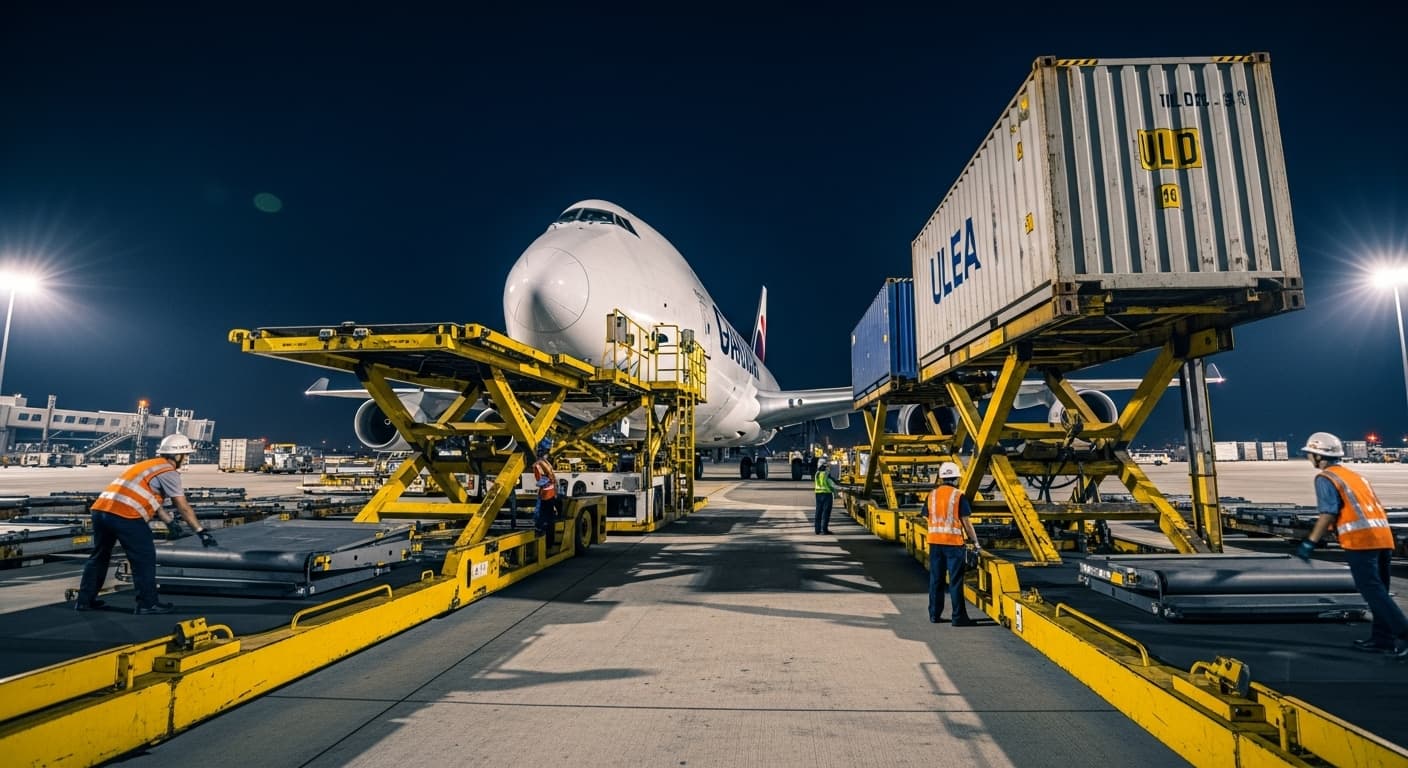
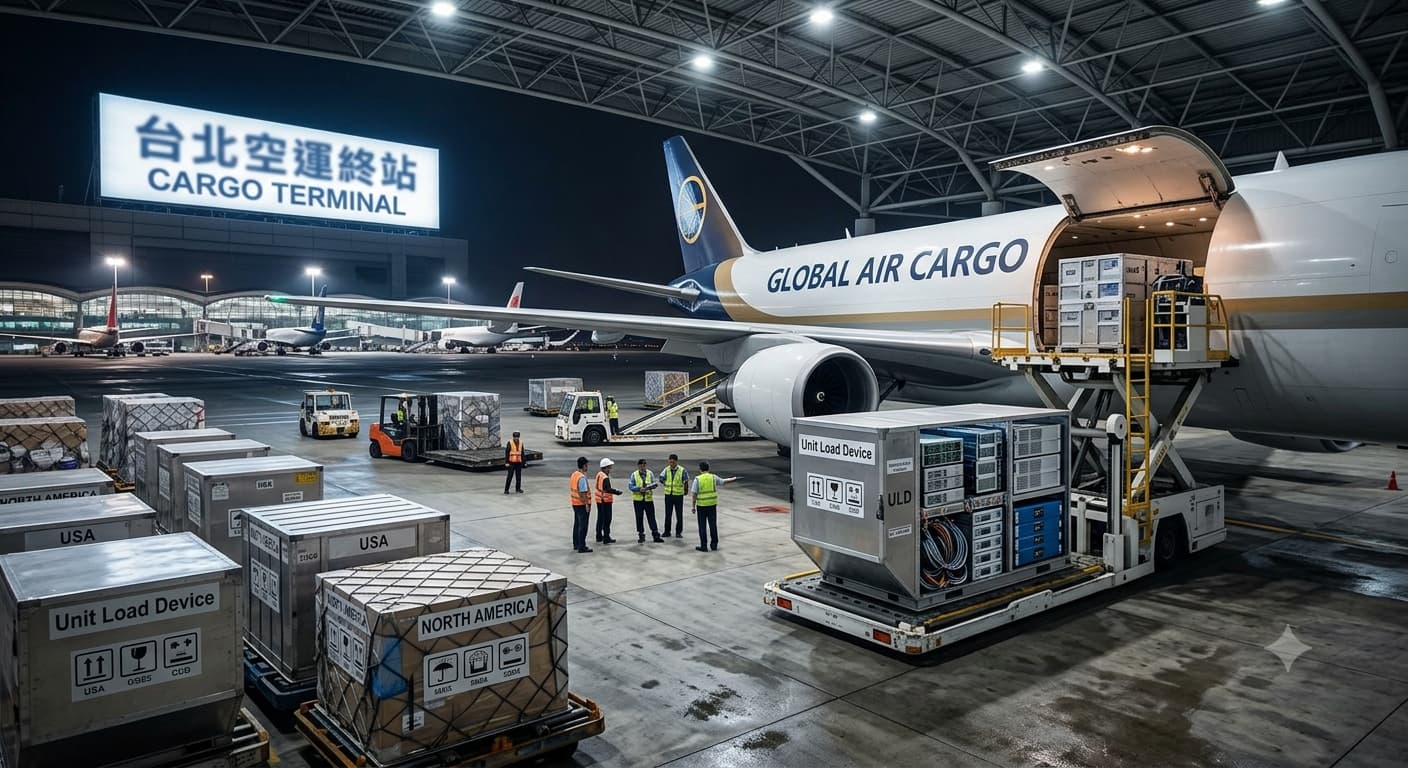
Transit Hub at Full Capacity: The clearest signal this month comes out of Taiwan. AI-driven volumes have filled the Taipei transit hub to capacity, and until that demand eases, space and rates across U.S. and regional lanes are likely to stay under real pressure. Taiwan remains a major consolidation point for U.S.-bound high-tech cargo, and airfreight space is now scarce.
A Continuing Trend: This pattern is not a one-off event. Taiwan-U.S. airfreight demand propelled by technology shipments has been a continuing trend throughout the year. Electronics, semiconductor, and AI server shipment volumes are keeping both direct and indirect capacity constrained on the lane, pushing rates up in the process.
2 · The AI Demand Driver: Understanding the Surge
What Is Driving the Demand?
Global AI Infrastructure Buildout: The relentless demand for AI microchips, servers, and cooling equipment is occupying cargo space on planes worldwide. Global investment in AI technologies has been accelerating, with U.S. technology companies paying premium freight rates to expedite server equipment deliveries via air, driving Asia-North America air cargo demand and rates sharply higher.
Semiconductor Production Expansion: The continued expansion of semiconductor manufacturing is strengthening demand across transpacific air freight markets. Taiwan, which remains one of the world’s leading producers of advanced semiconductors, has experienced exceptionally strong economic growth as global investment in AI technologies accelerates. Worldwide semiconductor sales have reached record levels, supporting sustained demand for high-value component shipments between Asia and North America.
Data Center Construction: The global AI infrastructure buildout is driving massive investment in data centers. In the U.S. alone, investment has been flowing at a rate of many billions of dollars per week. This construction boom requires the rapid deployment of heavy server racks and semiconductor wafers, placing considerable pressure on global air cargo capacity.
The Shift from E-commerce
E-commerce Crowded Out: As traditional e-commerce and low-value parcel shipments have slowed somewhat, high-value technology hardware is increasingly dominating air cargo capacity. This shift represents a fundamental change in the composition of air freight demand—AI is reshaping global logistics, not just the technology sector itself.
What This Means for Shippers: The traditional e-commerce-driven air freight market is being transformed. Shippers of non-AI related goods face increasing competition for space and rising rates as high-value technology cargo commands premium capacity.
3 · Capacity Constraints: The Regional Picture
Taiwan: The Epicenter of Tightness
Transit Hub at Full Capacity: Taiwan-U.S. airfreight remains one of the tightest corridors globally, with direct and indirect capacity constrained and rates rising. The Taipei transit hub is operating at full capacity, leaving limited room for additional shipments.
Regional Spillover: Taipei-Europe capacity has been comparatively more stable, with rates in line with or slightly below U.S. levels. However, regional lanes from Taiwan to Penang, Singapore, Bangkok, and Chennai are also feeling pressure from the same underlying demand.
South Korea: Tight Conditions
Multiple Pressures: South Korea is seeing tight conditions tied to China transshipment cargo, e-commerce, High Bandwidth Memory semiconductor shipments, and equipment moving through Incheon. Terminal congestion is adding another layer of difficulty.
Rising Exports: Rising AI server and semiconductor exports continue to tighten capacity, while equipment cargo adds further pressure on regional airfreight services. Semiconductor, cosmetics, and pharmaceutical exports are also supporting demand on South Asia routes.
Southeast Asia: Tightening Across the Region
Thailand and Malaysia: Thailand and Malaysia continue to experience tight airfreight capacity driven by strong high-tech exports. In Thailand, congestion remains the main challenge, with shippers advised to secure space several days in advance and allow for possible flight delays.
Singapore: Singapore is also seeing very tight airfreight capacity due to strong semiconductor demand.
Philippines: The Philippines continues to face operational delays at Manila’s airport because of terminal works, leading to longer cargo clearance times. Congestion at the airport and limited staging space have left some cargo releases taking more than a week.
The Overall Capacity Outlook
Overall capacity constraints in the region are expected to persist through the summer months, with Taiwan, South Korea, Malaysia, Thailand, and Singapore remaining among the region’s tightest air freight markets.
4 · Rate Environment: The Pricing Impact
Spot Rate Increases
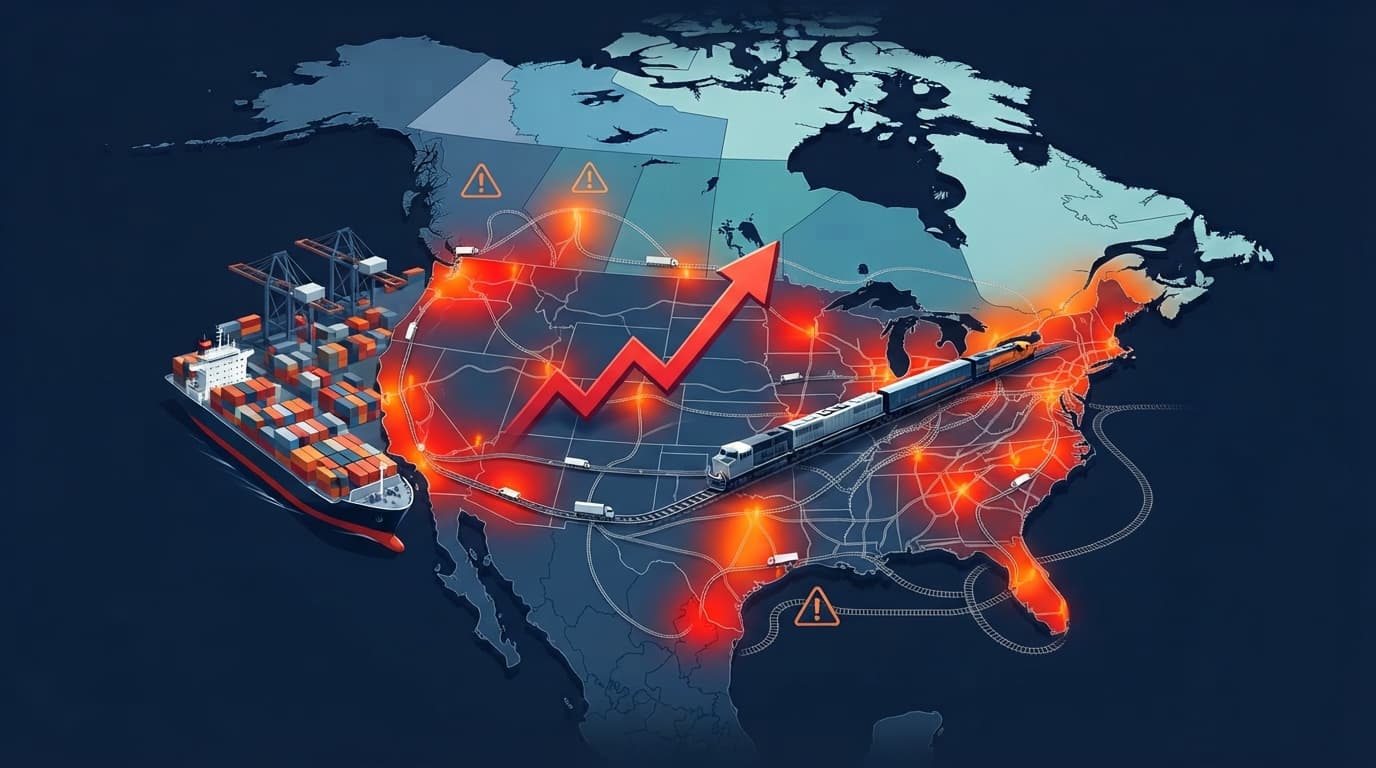
Significant Year-to-Date Gains: Spot rates from both Northeast Asia and Southeast Asia to North America have risen substantially since late February, reflecting robust demand for AI-related cargo and advanced electronic components.
Global Average Rate Context: Worldwide air cargo volumes increased meaningfully year-on-year in June, while global average spot rates have climbed considerably compared with the same period last year.
Strongest Pricing on Asia-U.S. Lanes: The strongest pricing gains continue to be seen on Asia-North America trade lanes. In contrast, the Europe-North America market has experienced comparatively softer pricing due to different supply and demand conditions.
Rate Drivers
High-Value, Time-Sensitive Cargo: AI cargo’s high value, urgency, and specialized handling requirements generate strong demand for premium air cargo capacity. This premium demand supports elevated rate levels even as overall market conditions might otherwise suggest softening.
Fuel and Surcharge Factors: Elevated fuel surcharges and rerouting related to Middle East tensions continue to keep long-haul airfreight rates high, while intra-Asia markets remain relatively stable. Periods of relative calm in key maritime chokepoints have eased some immediate fuel cost concerns, though the situation remains volatile.
Capacity Tightness: The fundamental driver of rate increases remains the supply-demand imbalance. Until AI-driven demand eases, space and rates across U.S. and regional lanes are likely to stay under real pressure.
5 · Operational Challenges and Congestion
Airport Congestion
Bangkok and Manila: Bangkok and Manila have not fully recovered from congestion issues, extending door-to-door lead times. Terminal congestion at these airports means longer transit periods, making shipment planning more critical than ever.
Manila’s Particular Challenges: In the Philippines, congestion at the main international airport and limited staging space have left some cargo releases taking more than a week. Ongoing terminal works are contributing to longer cargo clearance times.
Impact on Shippers: Shippers are advised to allow additional buffer time when planning shipments to these destinations. The congestion adds unpredictability to already tight capacity conditions.
The Frontloading Episode
Short-Lived Surge: An early-June frontloading of U.S.-bound cargo proved short-lived, lasting about two weeks before transpacific eastbound volumes normalized. However, capacity has remained tight due to sustained technology volumes.
What This Means: The frontloading episode demonstrates that even temporary demand surges can strain already tight capacity. The sustained AI demand, unlike the short-lived frontloading, continues to pressure the market on an ongoing basis.
6 · Strategic Considerations for Shippers
Booking and Planning
Early Booking Essential: Industry advisories consistently recommend booking early on high-demand airfreight corridors, particularly for shipments from Taiwan, South Korea, Thailand, and Malaysia, to avoid space shortages and shipment delays. Pre-booking three to four weeks ahead on key transpacific lanes is a common recommendation.
Build Buffer Time: Shippers should build buffers into monsoon-exposed lanes and monitor developments in the Middle East. The Southwest Monsoon intensifying across Southeast and South Asia adds weather-driven delays and moisture risk during this period.
Route and Mode Considerations
Taiwan-U.S. Lanes: Shippers should expect continued tightness on Taiwan-U.S. airfreight lanes and consider alternative routing where possible, though regional lanes are also under pressure.
Taipei-Europe Option: Taipei-Europe capacity has generally been more stable, with rates in line with or slightly below U.S. levels—a consideration worth exploring for cargo destined for Europe.
Intra-Asia Stability: Intra-Asia lanes have stayed broadly stable amid ample competition, offering somewhat more available capacity than long-haul U.S. lanes for regional shipments.
Cost Management
Fuel Surcharge Monitoring: If key maritime chokepoints remain calm, fuel pressure may ease rather than build further. Shippers should monitor fuel surcharge developments and adjust cost models accordingly.
Rate Volatility: With rates significantly elevated and continuing pressure on capacity, budgeting for higher air freight costs is prudent. The substantial rate increases seen since February should be factored into landed cost calculations.
Regulatory Awareness
Evolving U.S. Customs Requirements: Ongoing reforms to U.S. customs enforcement have tightened Importer of Record rules, including higher bonds, tangible U.S.-asset requirements, restrictions on foreign IORs, and expanded disclosure obligations phased across several implementation deadlines. Under these evolving requirements, importers of record are increasingly expected to hold tangible U.S. assets and/or an appropriate bond to file entry, with foreign IORs facing new restrictions on informal entry filing.
U.S.-bound shippers should review bond adequacy and IOR structure well ahead of any applicable deadlines.
7 · Outlook and Market Evolution
Near-Term Projections
Continued Tightness: Overall capacity constraints in the region are expected to persist through the coming months, with Taiwan, South Korea, Malaysia, Thailand, and Singapore remaining among the region’s tightest air freight markets.
AI Demand Persistence: AI-driven volumes have filled the Taipei transit hub to capacity, and until that demand eases, space and rates across U.S. and regional lanes are likely to remain under pressure.
Structural Changes
AI as a Long-Term Growth Driver: AI is no longer transforming only the technology sector; it is also reshaping global logistics. The surge in semiconductor production and AI infrastructure investment is creating a new generation of high-value, time-critical cargo that increasingly relies on air freight.
Continued AI Investment: As AI investment continues worldwide, supply chains supporting technology manufacturing are likely to remain among the strongest contributors to global air cargo demand.
The New Normal
AI Replaces E-commerce: For the past several years, cross-border e-commerce was the dominant contributor to air cargo demand. AI-related hardware, data center equipment, and semiconductor shipments have since become the primary drivers of growth—representing a structural shift in air freight demand composition rather than a temporary anomaly.
Premium Air Freight: The AI-driven demand for high-value, time-sensitive cargo is likely to sustain elevated rate levels and tight capacity on transpacific lanes, even as other segments of the air freight market may soften.
8 · Conclusion: Navigating the AI-Driven Air Freight Market
The New Reality
The Asia air freight market in July 2026 looks fundamentally different from where it stood just a year earlier. AI and semiconductor demand have displaced e-commerce as the primary driver of air cargo growth, filling transit hubs to capacity and pushing rates up substantially since February. Taiwan’s transit hub is operating at full capacity, with flight lanes out of major Asian tech hubs running near their limits.
Strategic Themes
Early Planning: With capacity tight and rates elevated, early booking has become an important discipline. Shippers benefit from pre-booking three to four weeks ahead on key transpacific lanes wherever possible.
Buffer Management: Building buffer time into supply chain planning, particularly for lanes affected by airport congestion in Bangkok and Manila, helps manage the unpredictability of the current environment.
Cost Preparation: Budgeting for elevated air freight rates is worthwhile, with the substantial increase since February factored into landed cost calculations.
Regulatory Awareness: Monitoring evolving U.S. customs requirements and reviewing IOR structures ahead of applicable deadlines helps avoid unwelcome surprises.
Looking Ahead
The AI-driven demand surge shows few signs of abating. As global AI infrastructure investment continues at a substantial pace in the U.S. alone, the demand for air freight of semiconductors, servers, and related equipment is likely to continue pressuring capacity and rates for the foreseeable future.
Organizations that understand these dynamics—and build the capabilities to navigate them—will be better positioned to manage costs, maintain service levels, and achieve competitive advantage in this transformed air freight environment.
This analysis reflects Asia air freight market conditions in July 2026 based on available industry reporting. Market conditions evolve continuously and specific circumstances vary by shipper, origin, and commodity. Organizations managing air freight from Asia may wish to consult with freight forwarders, air cargo specialists, and logistics professionals for guidance tailored to their specific requirements and circumstances.