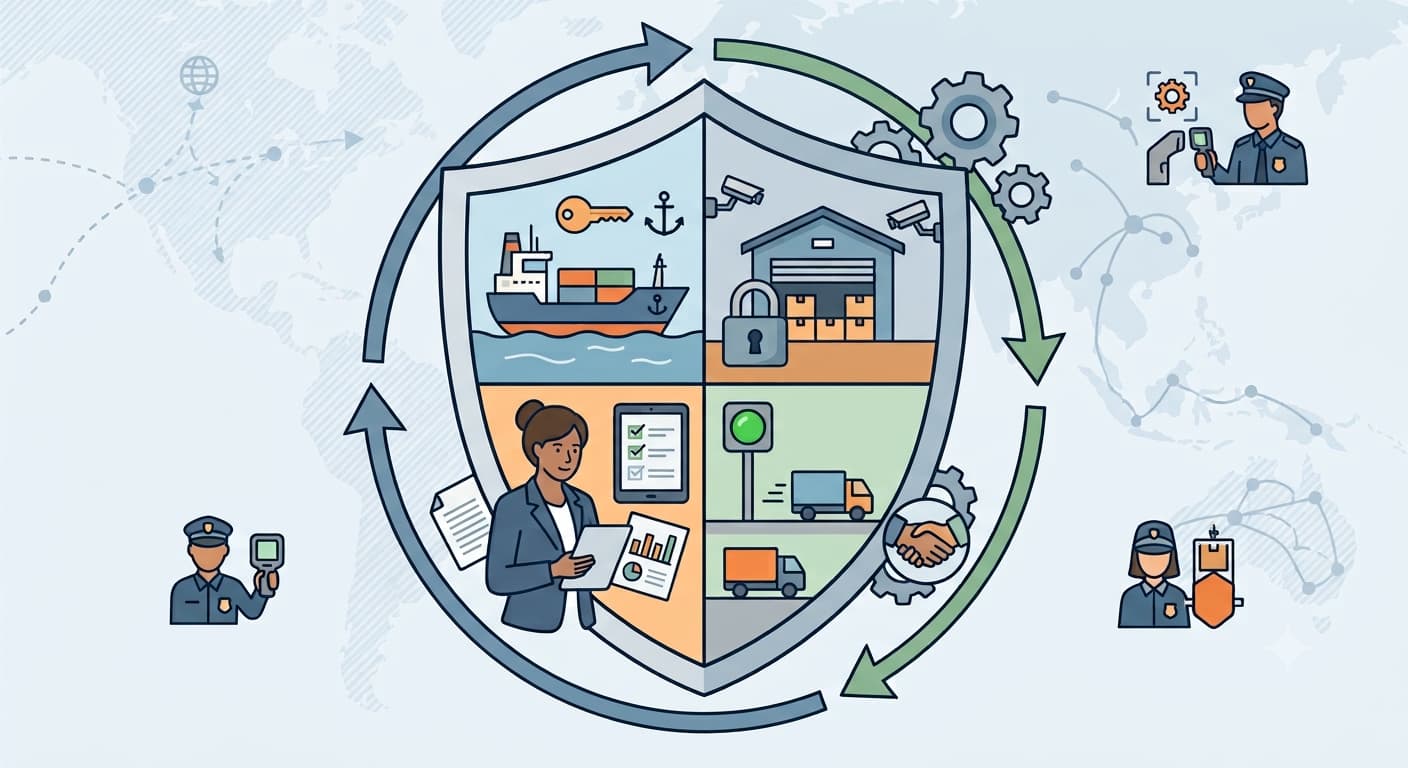

Executive Summary The Bureau of Industry and Security’s fiscal year 2025 annual report, released in July 2026, reveals a staggering escalation in export enforcement: total monetary penalties jumped from roughly $16 million in 2024 to over $324 million in 2025—an 18-fold increase. Criminal and civil penalties totaled $324 million, with 65 criminal convictions of individuals and companies (producing nearly $84 million in criminal fines, over $81 million in forfeitures, and more than $5 million in restitution, alongside a combined 2,668 months of imprisonment), administrative penalties of approximately $108 million, 162 indictments, 455 warning letters, 705 detentions, 232 seizures, and 29 denial orders. BIS also completed 1,840 end-use checks across 73 countries, roughly 88% of them conducted by BIS Export Control Officers stationed at U.S. embassies and consulates worldwide. BIS has hired approximately 70 people in 2026, almost all in enforcement, and plans to add another 60 by the end of FY2026—including doubling the number of export control officers from 12 to 25. The agency’s FY2027 budget request seeks $450 million to add 290 more enforcement agents, 57 additional positions for lead generation and prosecution, 38 specialized engineers, and 40 export control officers posted abroad. This is not incremental change—it is a structural overhaul. For logistics providers that handle exports, the message is clear: export compliance is now as critical as import compliance.
BIS Export Enforcement Surges: Penalties Jump 18-Fold
(BIS出口执法力度激增:物流企业须知)
1 · The Numbers: A Staggering Escalation
FY2025 Annual Report: The Key Metrics
BIS’s FY2025 annual report to Congress, released in July 2026, documents an unprecedented enforcement surge:
| Metric | FY2025 Total |
|---|---|
| Total Monetary Penalties | $324 million (up from ~$16M in FY2024 — 18-fold increase) |
| Criminal Convictions | 65 individuals and companies |
| Criminal Fines | Nearly $84 million |
| Criminal Forfeitures | Over $81 million |
| Restitution | More than $5 million |
| Imprisonment (Combined) | 2,668 months |
| Administrative Penalties | Approximately $108 million |
| Indictments | 162 |
| Warning Letters | 455 |
| Detentions | 705 |
| Seizures | 232 |
| Denial Orders | 29 |
| End-Use Checks | 1,840 (across 73 countries) |
Source: BIS FY2025 Annual Report to Congress
Worth noting on the breakdown: administrative penalties alone rose from roughly $10 million in FY2024 to approximately $108 million in FY2025, while criminal fines, forfeitures, and restitution combined rose from about $6 million to roughly $216 million over the same period—meaning the criminal side of the ledger, not just high-profile civil settlements, has driven a substantial share of the overall increase.
The 18-Fold Increase in Context
The jump from roughly $16 million in 2024 to over $324 million in 2025 represents more than just a statistical anomaly. It reflects a deliberate, strategic shift in enforcement posture.
Early FY2026 Results: The Pace Is Accelerating
The enforcement surge is not slowing down. BIS leadership has indicated that administrative penalties imposed in 2026 have already doubled compared to the full-year total for 2025—a record pace that underscores the agency’s renewed focus on enforcement.
2 · The People: A Massive Enforcement Hiring Spree
FY2026 Hiring: 70 Already, 60 More Coming
BIS has hired approximately 70 people in 2026, almost all in enforcement, and plans to add about 60 more employees to enforcement by the end of FY2026. This includes increasing the number of export control officers from 12 to 25—more than doubling the dedicated field presence.
FY2027 Budget Request: A Structural Overhaul
BIS is asking Congress for a “significant funding increase” for fiscal year 2027. The agency’s FY2027 budget request seeks $450 million and 1,077 positions to “drastically expand its enforcement capacity” and strengthen its ability to “aggressively investigate violations, pursue criminal penalties, and deny adversaries access to U.S. technologies”.
The proposed expansion includes:
| Position Type | Number |
|---|---|
| Export enforcement agents (domestic) | 290 |
| Positions for enforcement leads & prosecution | 57 |
| Specialized engineers (license determinations & technical witnesses) | 38 |
| Export control officers (posted abroad) | 40 |
“This Is Not Incremental Change”
BIS itself described the proposal in stark terms: “This is not incremental change. It is a structural overhaul that will empower agents to move with speed and precision, strike earlier in the lifecycle of a violation, and dismantle illicit procurement networks before they can inflict lasting damage on U.S. national security. With a significantly expanded network of enforcement agents, major cases will rise in number, scope, and consequence. Investigations will be more proactive, penalties more severe, and deterrence unmistakable.”
3 · The Context: Why Enforcement Is Surging
A “New Era for Export Enforcement”
The enforcement surge is not a temporary campaign—it reflects a fundamental shift in how the U.S. government approaches export controls. As one BIS official put it, we are in a “new era for export enforcement” that is likely to endure.
Key Policy Changes Driving the Surge
BIS has implemented several policy changes that have contributed to the enforcement escalation:
- Eliminating “no admit, no deny” settlements: Companies can no longer settle cases without admitting wrongdoing
- Increasing penalty amounts for serious violations
- Toughening its voluntary self-disclosure (VSD) policy
- Hiring its first chief of corporate enforcement
- Issuing BIS-specific recommendations on evasion typologies, high-priority HS codes, and evasion red flags
The Russia-China Strategic Competition Driver
A significant portion of the enforcement surge is driven by the strategic competition with China and Russia. BIS has issued sweeping controls restricting exports of advanced AI chips and semiconductor manufacturing equipment to China. The agency has also published guidance on Russian evasion typologies and red flags.
The Entity List Expansion
BIS has dramatically expanded the Entity List, adding 142 entities in FY2025. For all newly-listed entities, BIS imposes a license requirement for exports, reexports, and transfers of all items subject to the Export Administration Regulations.
4 · Notable Enforcement Actions
Applied Materials: $252 Million Penalty
In February 2026, semiconductor firm Applied Materials paid a $252 million penalty—the second-largest BIS penalty in history. The case involved unauthorized reexports and represented a landmark enforcement action in the semiconductor sector.
Cadence Design Systems: $95 Million Penalty
BIS imposed a $95 million administrative penalty against Cadence Design Systems for unlawfully exporting semiconductor design software to companies on the Entity List. This figure reflects the BIS administrative resolution specifically; Cadence’s total exposure across parallel civil and criminal resolutions with other federal agencies reportedly exceeded $140 million. The case demonstrates that even major, sophisticated technology companies are not immune from aggressive enforcement.
Bosch: $36 Million Settlement
BIS reached a settlement totaling $36 million in penalties with Bosch, resolving allegations involving the diversion of microelectronics and automotive software to a company on the Entity List. This case reinforces that enforcement attention extends well beyond the semiconductor equipment sector into the broader automotive and industrial supply chain.
Exyte Management: $1.5 Million Penalty
In a separate action, BIS imposed a $1.5 million penalty against Exyte Management GmbH, a Germany-based company, for unlicensed in-country transfers to Semiconductor Manufacturing International Corporation (SMIC), a listed entity. This case is particularly relevant to logistics providers because it involved failure to control downstream, in-country transfers rather than the export transaction itself.
Colt’s Manufacturing: Antiboycott Enforcement
In a reminder that export enforcement extends beyond technology, BIS resolved an antiboycott enforcement action against Colt’s Manufacturing Company in August 2026.
The FY2025 Record: $324 Million in Context
The $324 million in total penalties in FY2025 represents a dramatic escalation from prior years. To put this in perspective:
- FY2024: ~$16 million
- FY2025: $324 million (18-fold increase)
- First 6.5 months of FY2026: Over $258 million (on pace to exceed FY2025)
5 · What This Means for Logistics Providers
Export Compliance Is Now as Critical as Import Compliance
For years, logistics providers have focused on import compliance—classification, valuation, origin, AD/CVD. Export compliance was often treated as a secondary concern. That era is over.
The BIS enforcement surge demonstrates that export violations now carry the same—or greater—financial and reputational consequences as import violations.
The Supply Chain Liability Exposure
Logistics providers face several specific risks in the current enforcement environment:
1. Involvement in Unauthorized Exports If a logistics provider transports goods that require an export license—or that are destined for an Entity List entity—without proper authorization, the provider itself may face enforcement action.
2. Failure to Screen Against Restricted Parties BIS expects all parties involved in export transactions to screen against the Entity List, Unverified List, and other restricted party lists. Even “seemingly routine shipments can become violations if the end-user is restricted”.
3. Inadequate Recordkeeping BIS requires five years of export record retention under 15 CFR 762.6. Logistics providers that cannot produce complete records may face penalties.
4. Antiboycott Violations U.S. persons—including logistics providers—are prohibited from participating in foreign boycotts not sanctioned by the U.S. government.
The Cost of Non-Compliance
The financial exposure for export violations is substantial:
| Penalty Type | Maximum |
|---|---|
| Civil Penalty (per violation) | $374,474 (as of January 2025) or twice the transaction value, whichever is greater |
| Criminal Penalty (willful violation) | $1 million per violation and 20 years imprisonment |
| Average Settlement (diversion cases) | $2.8 million for SMB exporters |
Beyond the direct penalties, exporters who receive a Warning Letter spend $180,000 to $340,000 on remediation before the case closes—independent of any penalty assessed.
6 · What Logistics Providers Must Do Now
1. Audit Your Export Compliance Program
With enforcement at record levels, logistics providers should conduct a thorough audit of their export compliance programs:
- Do you have written export compliance procedures?
- Are employees trained on export control requirements?
- Do you screen all transactions against restricted party lists?
- Are you maintaining five years of export records?
2. Screen Every Shipment Against Restricted Party Lists
BIS has made clear that even “seemingly routine shipments can become violations if the end-user is restricted”. Logistics providers should:
- Screen against the Entity List, Unverified List, and Denied Persons List for every shipment
- Maintain records of screening results
- Escalate any matches immediately
3. Understand Your License Obligations
Not all exports require a license—but many do. Logistics providers should:
- Understand when an export license is required
- Verify that customers have obtained necessary licenses before shipping
- Refuse to ship when licenses are missing or suspicious
4. Train Employees on Export Compliance
With BIS expanding its enforcement workforce dramatically, the likelihood of investigations and audits is increasing. Logistics providers should:
- Provide regular export compliance training to all relevant employees
- Include export compliance in new employee onboarding
- Document all training activities
5. Review Antiboycott Compliance
U.S. persons—including logistics providers—are prohibited from participating in foreign boycotts not sanctioned by the U.S. government. Logistics providers operating in or with the Middle East should:
- Review all transactions for potential boycott-related requests
- Train employees on boycott reporting requirements
- Maintain records of boycott-related communications
6. Consider Voluntary Self-Disclosure
If a logistics provider discovers a potential export violation, BIS’s Voluntary Self-Disclosure (VSD) program can significantly reduce penalties. The program processes VSDs in a dual-track manner, with minor or technical violations resolved within 60 days.
7. Prepare for Increased Scrutiny
With BIS planning to add 290 more enforcement agents domestically and 40 export control officers abroad, logistics providers should expect:
- More frequent investigations
- More aggressive enforcement actions
- Higher penalties for violations
- Greater scrutiny of international shipments
7 · Conclusion: A New Era for Export Enforcement
The BIS FY2025 annual report documents a transformation in U.S. export enforcement. Total monetary penalties jumped 18-fold from 2024 to 2025. BIS has hired approximately 70 people in 2026, almost all in enforcement, and plans to add another 60 by the end of FY2026. The agency’s FY2027 budget request seeks $450 million to add 290 more enforcement agents, 57 additional positions, 38 specialized engineers, and 40 export control officers abroad.
Key Takeaways
| Factor | Detail |
|---|---|
| Total Penalties (FY2025) | $324 million — 18-fold increase from FY2024 |
| Enforcement Hiring (FY2026) | ~70 hired; ~60 more planned by year-end |
| Export Control Officers | 12 → 25 (more than doubling) |
| FY2027 Budget Request | $450 million; 1,077 positions |
| New Enforcement Agents (FY2027) | 290 domestic; 40 abroad |
| Major Penalties | Applied Materials: $252M; Cadence: $95M; Bosch: $36M |
| Entity List Additions (FY2025) | 142 entities |
The Bottom Line
For logistics providers, the message is unmistakable: export compliance is no longer a secondary concern. The enforcement surge—driven by strategic competition with China and Russia, a massive expansion of BIS’s enforcement workforce, and record-setting penalties—means that export violations now carry consequences comparable to—or greater than—import violations.
Companies that treat export compliance as an afterthought expose themselves to civil penalties of up to $374,474 per violation, criminal penalties of up to $1 million and 20 years imprisonment, and significant reputational damage.
The message is clear: BIS has entered a new era of export enforcement. Logistics providers that fail to adapt will face the consequences.
This analysis reflects BIS’s FY2025 annual report, the agency’s FY2026 hiring and FY2027 budget request, and related enforcement developments as of September 2026. Specific penalty amounts, enforcement actions, and budget figures are subject to official BIS and Congressional actions. Organizations engaged in exports should consult with trade counsel and export compliance professionals for guidance tailored to their specific circumstances.