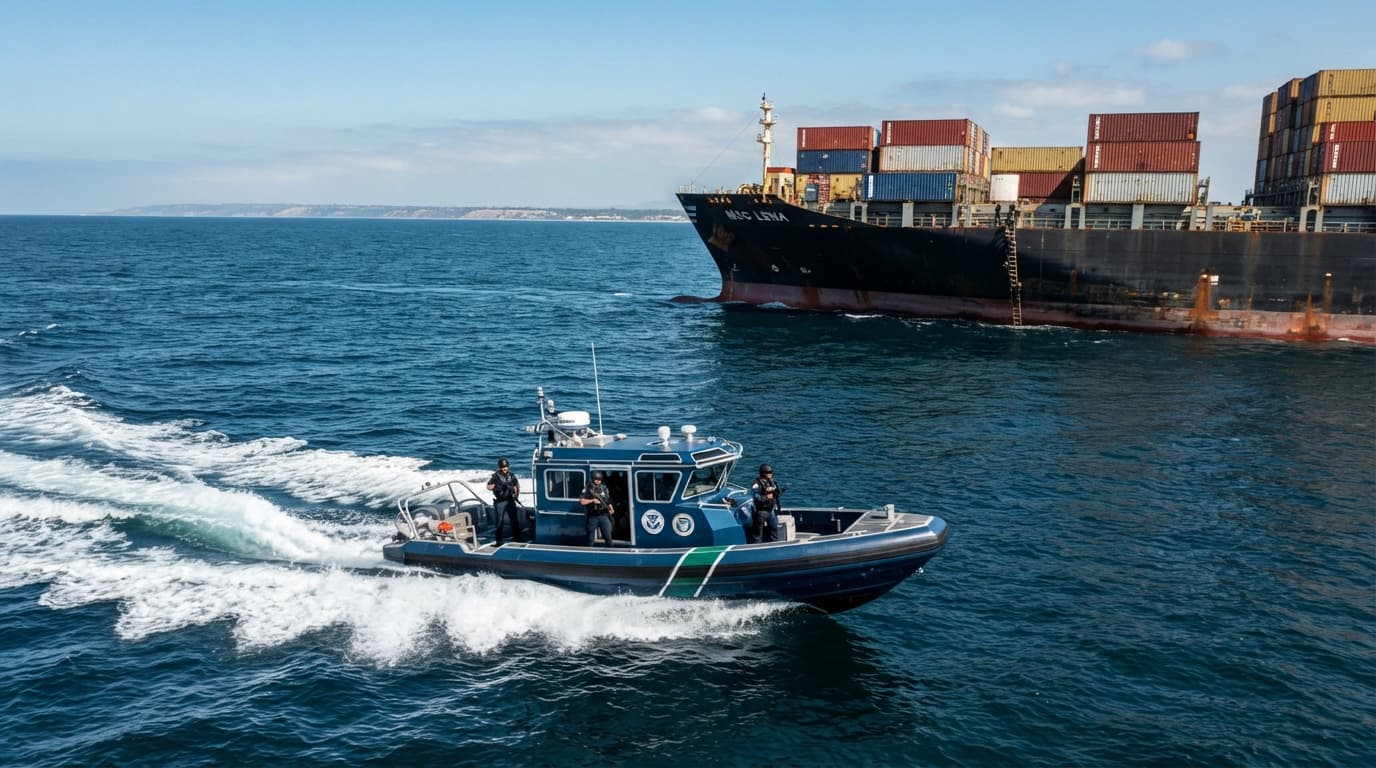
Executive Summary On August 25, 2026, U.S. Customs and Border Protection established four Customs-Enforcement Areas (CEAs) , expanding its enforcement jurisdiction from 12 to 24 nautical miles in designated waters adjacent to South Florida, Southern California, Puerto Rico, and the Gulf Coast of Texas.The expansion, authorized under the Anti-Smuggling Act of 1935 and directed by Executive Orders 14165 and 14411, responds to smuggling organizations that have exploited the outer edge of traditional customs waters by positioning vessels beyond the 12-nautical-mile boundary, transferring illicit cargo at sea, and coordinating landings along remote shorelines.Within the CEAs, customs officers and agents may now board vessels, examine manifests and cargo, pursue and seize vessels and merchandise, and arrest individuals—authorities previously limited to the 12-nautical-mile customs waters.CBP acknowledges that such enforcement activity may result in “limited operational impacts,” including delays to vessel owners, operators, passengers, and cargo interests.This analysis examines the new boundaries, enforcement powers, and what shipping and logistics providers must do to prepare.
CBP Expands Maritime Enforcement Jurisdiction to 24 Nautical Miles
(CBP将海上执法管辖权扩大至24海里)
1 · The Problem: Smugglers Exploiting the 12-Mile Boundary
The “Hovering Vessel” Tactic
Smuggling organizations have long exploited the boundary between U.S. customs waters (12 nautical miles) and the high seas. Their tactic was straightforward: position vessels just beyond the 12-nautical-mile line—“hovering” outside U.S. enforcement jurisdiction—and transfer illicit cargo to smaller, faster boats that then race to remote shorelines for landing.
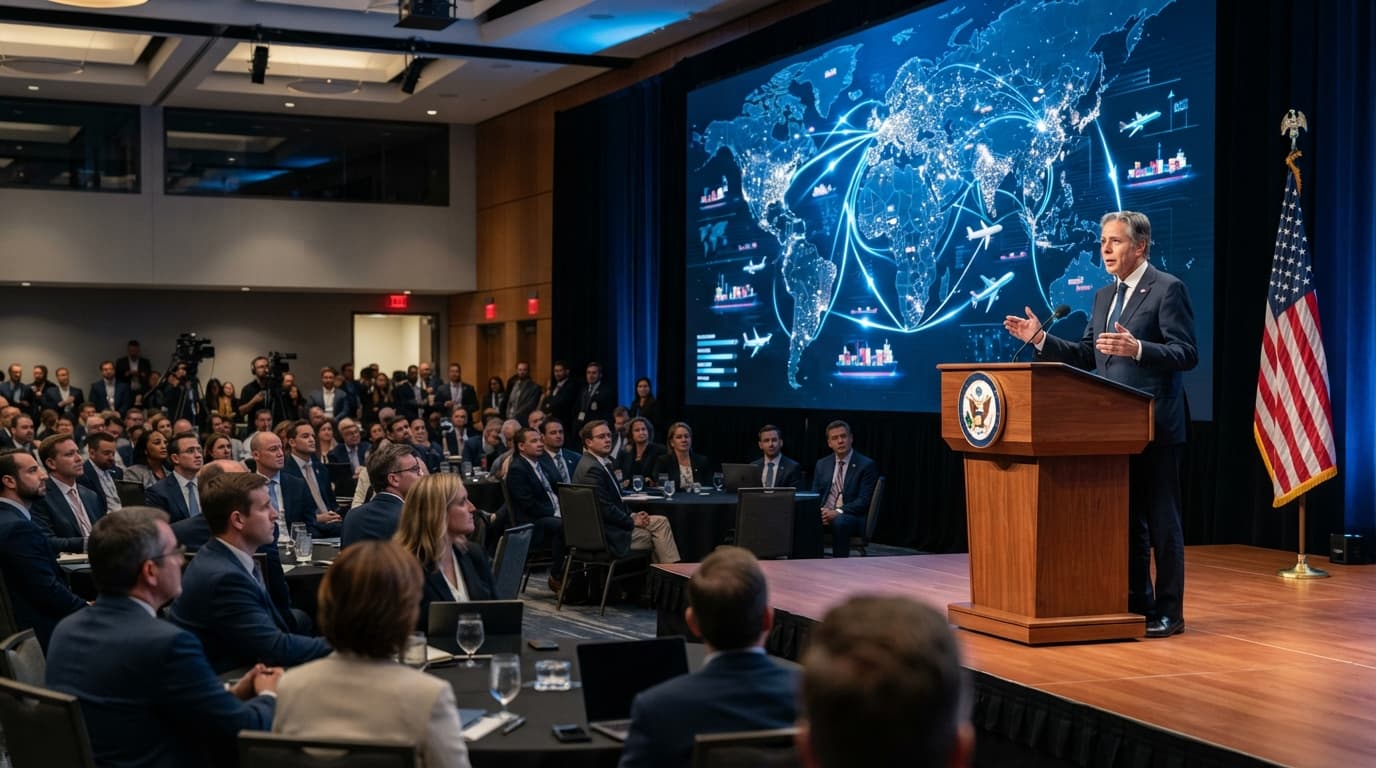
CBP Commissioner Rodney Scott described the challenge directly: “The ocean is not a safe haven for cartels and smugglers. These designations give our agents the room to act sooner and stop threats before they reach the American people.”
The Legal Gap
The U.S. contiguous zone extends to 24 nautical miles, and the U.S. Coast Guard already operates within that zone. However, CBP’s customs enforcement authority was limited to the statutory definition of “customs waters” —12 nautical miles.This created an asymmetry: the Coast Guard could operate at 24 miles, but CBP could not, leaving a gap that smugglers exploited.
The Legislative Push
Congress had been working to close this gap. In February 2025, Rep. Mike Levin introduced the Extending Limits of U.S. Customs Waters Act, which would expand CBP’s jurisdiction from 12 to 24 nautical miles.Senator Ruben Gallego co-sponsored companion legislation in the Senate.While that legislation remained pending, CBP used its existing authority under the Anti-Smuggling Act of 1935 to establish the CEAs—achieving the same result through executive action.
The Enforcement Record CBP Cites to Justify the Expansion
In its Federal Register notice, CBP laid out five years of enforcement data from within the newly designated areas to justify the jurisdictional expansion:
| Region | Five-Year Enforcement Activity |
|---|---|
| South Florida | ~77,000 lbs of narcotics seized; 26,000 apprehensions; 324 search-and-rescue operations |
| Puerto Rico | ~860,000 lbs of cocaine seized; over 15,000 apprehensions; 172 search-and-rescue operations |
| Texas Gulf Coast | 3,700 lbs of drugs seized; over 17,000 apprehensions |
| Southern California | ~1,500 lbs of methamphetamine and 5,145 lbs of other drugs seized |
Across all four areas combined, CBP reports that 488 vessels were seized over the five-year period. CBP characterizes most of this maritime smuggling as being conducted by vessels that travel long distances outside of, or parallel to, current U.S. jurisdiction specifically to avoid detection—landing on remote shorelines, transferring cargo to separate vessels, and operating without navigation lights.
2 · The Legal Framework: Anti-Smuggling Act of 1935
The Statutory Authority
The establishment of CEAs is authorized pursuant to Section 1 of the Anti-Smuggling Act of 1935, as amended (49 Stat. 517) (19 U.S.C. 1701).The statute provides that when the President finds that vessels are “hovering” off the U.S. coast and that unlawful introduction of merchandise or persons “is being or may be occasioned, promoted, or threatened,” the area in question “shall constitute a customs-enforcement area.”
The “Hovering Vessel” Definition
The statute defines a “hovering vessel” as:
Any vessel which is found or kept off the coast of the United States within or without the customs waters, if, from the history, conduct, character, or location of the vessel, it is reasonable to believe that such vessel is being used or may be used to introduce or promote or facilitate the introduction or attempted introduction of merchandise into the United States in violation of the laws respecting the revenue.
Anti-Smuggling Act sec. 401(d) (19 U.S.C. 1709(d))
The Geographic Limits
The statute sets strict boundaries for CEAs:
- Not more than 100 nautical miles in either direction up and down the coast from where hovering vessels are present
- Not more than 50 nautical miles out to sea beyond the customs waters
In practical terms, the CEAs extend from the baseline out to 24 nautical miles—aligning CBP’s authority with the U.S. contiguous zone and with the U.S. Coast Guard’s existing jurisdiction.
Executive Order Delegation
Although the Anti-Smuggling Act vests CEA establishment authority in the President, Executive Order 10289 (1951) delegated that authority to the Secretary of the Treasury, which was subsequently delegated to the Commissioner of CBP.
The Executive Order Drivers
The CEA designations comply with:
- Executive Order 14165, “Securing Our Borders,” by enhancing operational control in areas facing ongoing maritime smuggling threats
- Executive Order 14411, “Strengthening Customs Enforcement,” which directs DHS to take action to bolster enforcement of customs laws
3 · The Four Customs-Enforcement Areas: Geographic Coverage
The four CEAs cover strategically selected waters where smuggling activity has been most active:
| CEA | Geographic Coverage |
|---|---|
| South Florida | Brevard County to Pasco County, including the Florida Keys |
| Texas Gulf Coast | Sabine River to the Mexico maritime boundary |
| Central/Southern California | Año Nuevo Lighthouse to the Mexico boundary, including eight offshore islands (the five Channel Islands National Park islands, plus San Clemente, Santa Catalina, and San Nicolas Islands) |
| Puerto Rico | Waters encircling the island of Puerto Rico, plus the nearby islands of Mona, Desecheo, Vieques, and Culebra |
Each area extends 24 nautical miles from the baseline, within the statutory limits of 100 nautical miles from hovering vessels and 50 nautical miles beyond customs waters.
4 · The Enforcement Powers: What CBP Can Now Do
Within the CEAs, customs officers and agents now have the authority to:
4.1 Board and Examine Vessels
CBP officers may board any vessel within the CEA to:
- Examine manifests and other documents and papers
- Examine, inspect, and search the vessel and cargo on board
4.2 Pursue, Seize, and Arrest
CBP may pursue and seize or arrest any vessel, merchandise, or person in the CEA in accordance with applicable U.S. laws and regulations—in the same manner they are authorized to do at any place in the United States.
4.3 Bring Vessels into Port
CBP may bring vessels, merchandise, and persons into port for further examination and processing.
4.4 Interagency Coordination
Within the four CEAs, CBP’s Air and Marine Operations will work with the U.S. Coast Guard and other federal partners to detect and interdict vessels used by cartels, foreign terrorist organizations, and other criminal networks to move people, narcotics, and contraband toward the United States.
5 · What This Means for Vessel Operators and Logistics Providers
5.1 Acknowledged Operational Impacts
CBP has explicitly acknowledged that enforcement activity within the CEAs “may in some cases result in ’limited operational impacts,’ including delay, to vessel owners, operators, passengers, and cargo interests.”
This is a critical admission: the expansion of enforcement jurisdiction will not be cost-free for the shipping industry. Vessels transiting or operating within the CEAs—even those engaged in legitimate commerce—may face:
- Boarding and inspection delays
- Documentation reviews
- Cargo examinations
- Potential rerouting or holding
5.2 The Risk of “Collateral” Delays
While CBP’s stated focus is on smuggling vessels, the broad authority to board and inspect any vessel within the CEA means that legitimate commercial vessels may be subject to inspection if they meet certain risk criteria. Vessels with:
- Unusual routing patterns
- Incomplete or inconsistent documentation
- Prior enforcement history
- Associations with high-risk shippers or consignees
…may face heightened scrutiny.
5.3 The Compliance Burden
Vessel operators should ensure that:
- Manifests and cargo documentation are complete and accurate
- Crew and passenger records are in order
- AIS (Automatic Identification System) is functioning properly
- Routing and voyage plans are documented and consistent
5.4 The Demurrage and Detention Risk
If a vessel is boarded, inspected, or held within a CEA, the resulting delays can trigger demurrage and detention charges from terminals, carriers, and other parties. With CBP’s inspection authority now extending to 24 nautical miles, the potential for delays—and associated costs—has expanded significantly.
Vessel operators and logistics providers should:
- Review contracts for force majeure or delay provisions
- Document any CBP-ordered delays for potential claims
- Communicate proactively with customers about potential disruptions
5.5 The Broader Enforcement Context
The maritime jurisdiction expansion is part of a broader pattern of heightened CBP enforcement:
- Customs Enforcement Overhaul: Executive Order 14411 directs CBP to increase audits, impose higher penalties, and restrict foreign IORs
- Enhanced Import Disclosures: CBP is considering sweeping new supply chain visibility requirements
- De Minimis Suspension: Low-value imports now require formal entry procedures
- AD/CVD Enforcement: Antidumping and countervailing duty enforcement continues at record pace
For logistics providers, the message is clear: enforcement is expanding on every front—maritime, land, and regulatory.
5.6 Built to Withstand Legal Challenge
CBP structured the declaration so that each of the four CEAs operates independently. The notice states explicitly that if a court were to enjoin or invalidate the establishment of one CEA—or a specific boundary or application within one—the remaining CEAs and their other boundaries and applications are intended to remain in effect. Vessel operators and logistics providers should not assume that a legal challenge affecting one region (for example, California) would necessarily affect enforcement in the others (Texas, Florida, or Puerto Rico).
6 · What Vessel Operators and Logistics Providers Must Do Now
6.1 Understand Your Exposure
- Map your routes: Which of your vessels transit the four CEAs?
- Assess your risk profile: Do any of your vessels or shippers meet the criteria for heightened scrutiny?
- Quantify potential delays: What would a 24-48 hour delay cost your operations?
6.2 Strengthen Documentation
- Ensure manifests, bills of lading, and cargo declarations are complete and accurate
- Verify that country-of-origin documentation is consistent across all records
- Maintain crew and passenger lists that can be produced on demand
6.3 Train Crews on Boarding Procedures
- Develop standard operating procedures for vessel boarding
- Ensure crews understand CBP officers’ authority and their own rights and obligations
- Establish communication protocols for notifying shoreside operations if a vessel is boarded
6.4 Review Contracts and Insurance
- Review charter party agreements for provisions addressing government-ordered delays
- Confirm that insurance policies cover delays and detention resulting from law enforcement actions
- Consider whether demurrage and detention exposure needs to be renegotiated
6.5 Monitor CBP Guidance
- Watch for CBP CSMS messages and Federal Register notices for updates on CEA implementation
- Monitor industry associations (e.g., World Shipping Council, BIMCO) for guidance
- Track enforcement statistics to understand how actively the CEAs are being used
6.6 Prepare for the “New Normal”
The expansion of CBP’s maritime enforcement jurisdiction is likely not an isolated event. If successful, similar CEAs could be established in other coastal regions. Vessel operators and logistics providers should treat this as a structural change in maritime enforcement rather than a temporary campaign.
7 · Conclusion: A New Era for Maritime Customs Enforcement
The establishment of four Customs-Enforcement Areas represents a significant expansion of CBP’s maritime enforcement authority. By aligning CBP’s jurisdiction with the 24-nautical-mile contiguous zone, the agency has closed a gap that smugglers exploited for years.
Key Takeaways
| Factor | Detail |
|---|---|
| Effective Date | August 25, 2026 |
| Legal Authority | Anti-Smuggling Act of 1935 (19 U.S.C. 1701) |
| CEAs Established | 4 (South Florida, Southern California, Puerto Rico, Texas Gulf Coast) |
| Jurisdiction Expansion | 12 to 24 nautical miles |
| New Authorities | Board, examine, inspect, search, seize, arrest |
| Acknowledged Impacts | “Limited operational impacts,” including delays |
| Interagency Partners | U.S. Coast Guard, other federal partners |
The Bottom Line
For vessel operators and logistics providers, the expansion of CBP’s maritime enforcement jurisdiction is a new operational reality. While the focus is on combating smuggling, the broad authority to board and inspect any vessel within the CEAs creates real potential for delays—and real costs.
The message is clear: CBP now has the room to act sooner and stop threats before they reach American shores. For legitimate operators, that means preparing for a new level of scrutiny—and building resilience into maritime supply chains.
This analysis reflects CBP’s establishment of four Customs-Enforcement Areas, published in the Federal Register (91 FR 54800, CBP Dec. No. 26-17, Docket No. USCBP-2026-1090), effective August 25, 2026. For current contact details, see the official notice; the designated inquiry email is CEA@cbp.dhs.gov. Specific boundaries, enforcement procedures, and implementation details are subject to official CBP guidance. Vessel operators and logistics providers should consult with maritime counsel and trade compliance professionals for guidance tailored to their specific operations and exposure.