
Executive Summary
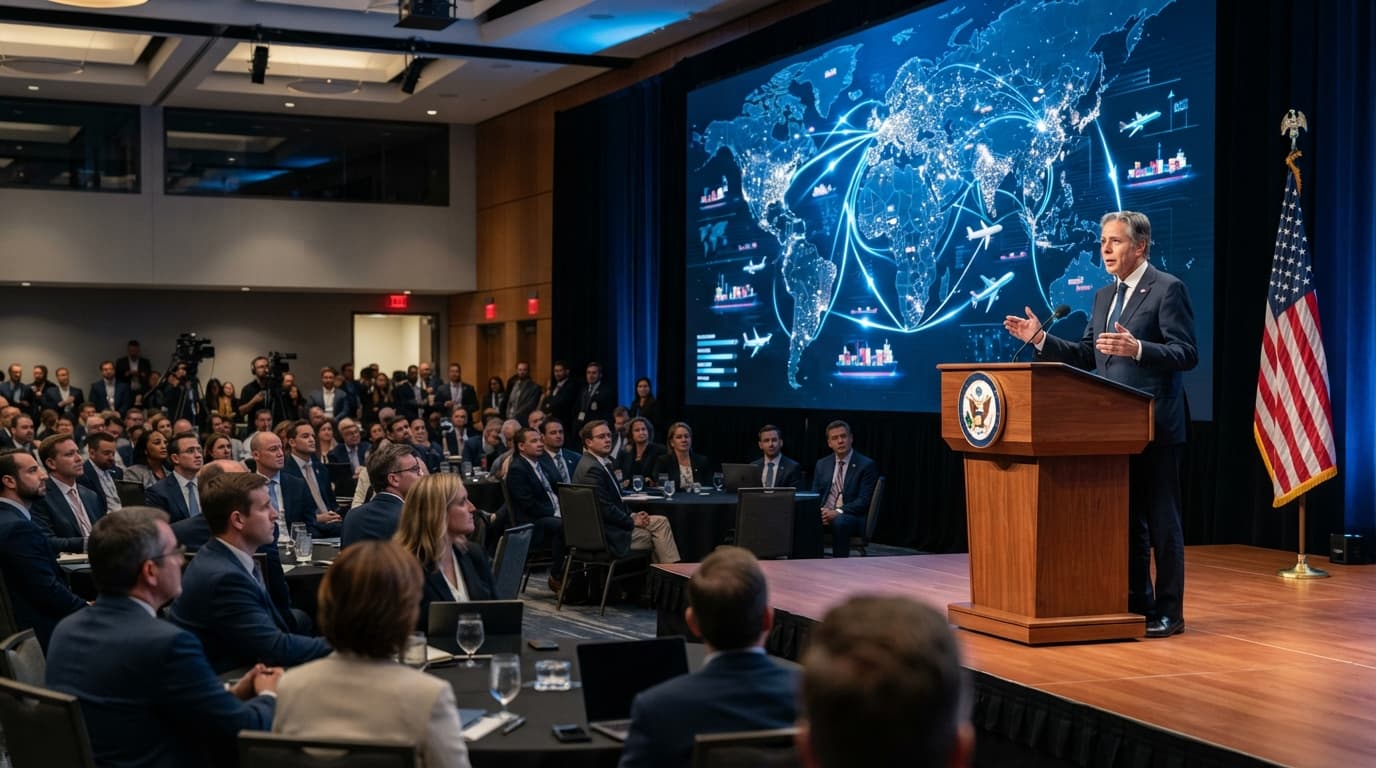
U.S. Customs and Border Protection hosted the 2026 Trade and Cargo Security Summit (TCSS) in Dallas, Texas, from September 8–10, drawing roughly 1,300 in-person and 3,000 virtual participants under the theme “Knowing Your Supply Chain to Remain Compliant and Mitigate Risk.” DHS Secretary Markwayne Mullin, CBP Commissioner Rodney S. Scott, Deputy Commissioner Ron Vitiello, and Executive Assistant Commissioner Susan S. Thomas each addressed the trade community directly, and the throughline across their remarks was consistent: supply chain visibility, forced labor enforcement, and implementation of Executive Order 14411, “Strengthening Customs Enforcement,” dominated the agenda. For logistics providers and importers, the Summit functioned as a preview of where CBP’s enforcement priorities are headed over the coming year—and a direct invitation to shape that direction through public comments on the agency’s pending supply chain visibility rulemaking. This analysis recaps the Summit’s key themes and what they signal for the trade community.
Inside CBP’s 2026 Trade and Cargo Security Summit: What Leadership Signaled About the Road Ahead
(CBP 2026年贸易与货物安全峰会:领导层释放的重要信号)
1 · A Summit Built Around One Theme: Know Your Supply Chain
The Setting and the Scale
CBP’s 2026 Trade and Cargo Security Summit—originally scheduled for April but postponed to September 8–10 due to a lapse in DHS appropriations—convened at the Hyatt Regency Dallas under the theme “Knowing Your Supply Chain to Remain Compliant and Mitigate Risk.” With roughly 1,300 attendees in person and another 3,000 participating virtually, the Summit brought together importers, exporters, carriers, brokers, attorneys, trade associations, other government agencies, Congress, and the press for direct engagement with CBP leadership on the agency’s top priorities, policies, and initiatives.
Why the Theme Matters: the choice of theme was not incidental. Nearly every major CBP action over the preceding months—the Form 5106 accuracy review, the CTPAT-linked requirements for foreign importers of record, and the Advance Notice of Proposed Rulemaking on heightened import disclosures—shares a common thread: CBP wants far greater visibility into who is actually behind a shipment, and it expects the trade community to build that visibility itself rather than waiting for CBP to find gaps.
Government and Industry, Framed as Shared Responsibility
DHS Secretary Markwayne Mullin delivered the Summit’s keynote address, framing border and economic security as a genuinely joint undertaking. “Every day we’re protecting the homeland,” Mullin said. “No way we can take our eye off our mission. And by the way, there’s no way we can do it without our partners who are in this room—your partnership with making sure that we have the technology, that we have the supplies, that we have the infrastructure coming in, that we have the supply chains working correctly.”
2 · Commissioner Scott: Economic Security, Human Rights, and AI
The Fireside Chat
CBP Commissioner Rodney S. Scott joined Christopher Siepmann, Executive Director of CBP’s Office of Trade Relations, for a fireside chat covering ground that ranged from the emerging role of artificial intelligence in trade enforcement to the deeper link between economic, border, and national security.
Forced Labor as a Values Commitment, Not Just an Enforcement Line Item
Perhaps the most notable moment came when Scott addressed CBP’s approach to forced labor enforcement directly, framing it as inseparable from the agency’s broader mission rather than a narrow compliance category. “The economic security of this country is super important,” Scott said. “But our core values, sticking to our beliefs, and making sure that we actually stand for human rights—is just as important.”
Why This Matters: this framing is consistent with the broader trend we have tracked across CBP’s recent trade fraud enforcement guidance, where forced labor compliance is treated as both a customs issue and a matter with real criminal law exposure. Importers should read Scott’s comments as confirmation that forced labor due diligence will remain a sustained institutional priority, not a temporary enforcement campaign.
The Human Role in an AI-Enabled Enforcement Environment
Scott also addressed AI’s growing role in trade enforcement, emphasizing that technology is expected to augment—not replace—CBP’s workforce. This mirrors themes we’ve seen elsewhere in CBP’s modernization efforts, including the AI-enabled supply chain tracing tools contemplated in the agency’s supply chain visibility rulemaking.
3 · Deputy Commissioner Vitiello: The Enforcement Agenda in One List
Opening the Summit
CBP Deputy Commissioner Ron Vitiello opened the event by laying out the specific trade topics CBP considers central to its current agenda: the Strengthening Customs Enforcement Executive Order, illegal transshipment, forced labor enforcement, ACE modernization, Enforce and Protect Act (EAPA) investigations, and supply chain security.
“Both CBP and the trade community have critical roles to play to ensure the economic security, national security, and prosperity of the United States,” Vitiello said. “That’s why we’re here: to strengthen supply chain security and safeguard the integrity of U.S. markets.”
Why This List Matters: taken together, Vitiello’s list of priorities reads as a fairly direct table of contents for CBP’s active enforcement agenda—and one that closely tracks the specific developments logistics providers have had to absorb in rapid succession this year: EO 14411 implementation across Form 5106 accuracy and CTPAT-linked broker requirements, the DOJ-DHS Resource Guide’s emphasis on transshipment and forced labor typologies, and continued ACE modernization efforts including Entry Type 13 and rail export manifest requirements.
4 · The Due Diligence Message: “Do Your Own Homework”
No Outsourcing Compliance
During the Summit’s leadership town hall, CBP senior leaders reinforced a message with direct operational consequences for how importers structure their compliance programs. Executive Assistant Commissioner Susan S. Thomas, of CBP’s Office of Trade, was explicit: “Do your due diligence now. It’s everybody’s responsibility in the supply chain. Each entity must own its compliance. For example, an importer should not rely solely on a broker or freight forwarder to validate its supply chain.”
Why This Matters: this statement lands directly on a point of frequent confusion in the trade community—namely, the assumption that engaging a competent customs broker or freight forwarder transfers or substantially reduces an importer’s own compliance burden. Thomas’s comment makes clear that CBP does not view it that way. This tracks closely with the enhanced due diligence expectations already emerging for CTPAT-validated brokers representing foreign importers, and reinforces that importers themselves—not just their intermediaries—remain squarely on the hook for supply chain visibility.
5 · A Direct Invitation to Comment on the Supply Chain Visibility ANPRM
CBP Actively Solicited Feedback
Notably, CBP used the Summit as a platform to actively encourage attendees to submit formal comments on the Advance Notice of Proposed Rulemaking titled “Heightened Import Disclosures for Supply Chain Visibility”—the sweeping proposal we examined in an earlier analysis, covering foreign export documentation, a redefined manufacturer identification framework, earlier entry filing, and enhanced CTPAT traceability standards.
To support this, CBP added three listening sessions specifically focused on the Strengthening Customs Enforcement Executive Order to this year’s agenda. “We prioritized mutual communication between the trade community and CBP by adding three listening sessions about the Strengthening Customs Enforcement Executive Order to the agenda this year,” Siepmann said. “Feedback from the trade community is important to us as we forge the way ahead.”
Why This Matters: with the ANPRM’s comment period running through December 1, 2026, the Summit’s emphasis on this rulemaking is a clear signal that CBP genuinely intends to shape the eventual proposed rule based on trade community input—not simply go through the motions of a comment period before finalizing a predetermined approach. Companies with meaningful exposure to the proposal’s foreign documentation and identifier requirements have a real opportunity here, and CBP’s own outreach suggests the agency wants to hear from them.
A Crowdsourced Approach to Traceability
The Summit also featured a competition during a Supply Chain Traceability Brainstorming Session, in which participating teams developed recommendations on programs, technology, and tools to help CBP improve visibility into upstream supply chains. Acting Executive Director Salvatore Ingrassia, of CBP’s OFO Cargo, Conveyance, and Security office, described the exercise as “a rare opportunity to engage with the trade community to hear novel ideas that could potentially help solve real challenges.”
This kind of structured, competitive brainstorming session is a departure from a typical government summit format, and suggests CBP is genuinely searching for practical, implementable ideas—not just gathering formal comments—as it develops the technical backbone for its supply chain visibility agenda.
6 · Practical Takeaways for the Summit’s Other Offerings
Beyond the policy sessions, TCSS 2026 offered several concrete, practical benefits for attendees that are worth noting for anyone planning to engage with CBP directly in the future:
- Global Entry interviews for applicants already in conditional status
- 45-minute one-on-one appointments with the ACE Help Desk—a genuinely useful opportunity for logistics providers working through specific ACE implementation questions
- In-person assistance from the CTPAT portal team
- Continuing education credits for licensed customs brokers
Organizations that did not attend this year should consider budgeting for participation in future Summits, given the direct access to CBP subject-matter experts these sessions provide.
7 · What This Means for Logistics Providers and Importers
The Consistent Signal Across Every Speaker
Reading across Secretary Mullin, Commissioner Scott, Deputy Commissioner Vitiello, and Executive Assistant Commissioner Thomas’s remarks, a consistent message emerges: CBP views supply chain visibility, forced labor compliance, and Executive Order 14411 implementation as a unified, sustained institutional priority—not a series of disconnected initiatives. Importers and logistics providers should plan accordingly, treating each individual rule or notice (Form 5106 accuracy, CTPAT-linked broker requirements, the supply chain visibility ANPRM) as one piece of a coherent, ongoing enforcement strategy rather than an isolated compliance task to check off.
Own Your Compliance Directly
Executive Assistant Commissioner Thomas’s comment on due diligence deserves particular attention from importers who have historically treated broker or freight forwarder relationships as a substitute for their own supply chain visibility work. CBP’s expectation, stated plainly at a public forum, is that each entity in the supply chain owns its own compliance.
Engage With the ANPRM While the Window Is Open
Given CBP’s direct encouragement at the Summit, companies with meaningful exposure to the supply chain visibility proposal should treat the December 1, 2026 comment deadline as a genuine opportunity to influence the eventual rule, not a formality to be ignored.
Watch for Continued EAPA and Transshipment Enforcement
Vitiello’s inclusion of Enforce and Protect Act investigations and illegal transshipment alongside Executive Order 14411 in his opening remarks suggests these enforcement tools will continue to see active use. Companies with multi-country sourcing structures should treat this as confirmation that transshipment risk remains a live enforcement priority, not a legacy concern.
8 · Conclusion: A Summit That Doubled as a Policy Preview
More Signal Than Ceremony
CBP’s 2026 Trade and Cargo Security Summit functioned as more than a networking event—it offered a fairly direct preview of the agency’s enforcement priorities for the coming year, delivered by the officials responsible for setting and executing that agenda. The consistent emphasis on supply chain visibility, forced labor enforcement, and Executive Order 14411 implementation across every major speaker reinforces that these priorities are structural, not transitory.
The Strategic Takeaway
For logistics providers and importers, the Summit’s central message is one we’ve reinforced throughout our recent coverage of CBP’s enforcement buildout: proactive, owned compliance—not reliance on brokers or freight forwarders to handle it—is what CBP now expects from every entity in the supply chain. Organizations that internalize that expectation now, and that engage directly with CBP’s open rulemakings while the comment windows remain open, will be considerably better positioned than those that wait for enforcement to arrive at their door.
If your organization would benefit from a review of your supply chain due diligence practices in light of CBP’s current enforcement priorities, or assistance preparing comments on the pending supply chain visibility ANPRM, our trade compliance team is available to help.
This analysis reflects CBP’s official recap of the 2026 Trade and Cargo Security Summit, held September 8–10, 2026, in Dallas, Texas, as published by CBP on September 16, 2026. Quotes and details are drawn from CBP’s public release. Organizations seeking further information should consult CBP’s TCSS webpage or their trade compliance professionals for guidance tailored to their specific circumstances.