Executive Summary
A labor dispute at a major sugar refinery in Crockett, California, escalated into a genuine regional supply chain disruption in July 2026, illustrating how a single plant-level conflict can ripple through the broader logistics network. What began as a strike by roughly 90 to 100 warehouse workers represented by ILWU Local 6 in mid-June over retiree health benefits, overtime rules, and sick days quickly widened when ILWU Local 10 dockworkers refused to cross picket lines, rerouting sugar shipments and eventually walking off jobs at three Northern California ports in a coordinated sympathy action. Tensions escalated further when nine protesters were arrested and picketers were injured after vehicles drove through the picket line. By late July, federal mediators had entered the process, and both sides ultimately agreed to a 60-day truce, with workers returning to their posts. This analysis examines the strike, the solidarity actions that shut down port terminals, and strategic considerations for supply chain managers navigating an increasingly complex labor environment.
When a Local Labor Dispute Shuts Down Ports: Understanding the C&H Sugar Strike
(局部劳资纠纷如何导致港口停摆:C&H糖业罢工的启示)
1 · The Strike: A Labor Dispute at a Major Sugar Refinery
The Contract Expiration and Walkout
The dispute began when the labor contract at C&H Sugar’s Crockett, California refinery expired on June 1, 2026. Negotiations stalled fairly quickly over several fundamental issues: retiree health benefits, overtime rules, sick days, and broader union protections.
On June 15, roughly 90 to 100 unionized warehouse employees—members of International Longshore and Warehouse Union (ILWU) Local 6—began an open-ended strike, marking the first strike at the Crockett refinery in nearly a century and representing a significant escalation in a labor relationship that had otherwise remained stable for decades.
The Issues at Stake
The core of the dispute centered on benefits workers had accrued over decades of service. Union leadership characterized cutting retiree healthcare as a fundamentally unfair proposition, given that workers had put in 30 or 40 years of service specifically to earn those benefits, only to have them potentially eliminated.
Union negotiators reported that the company had offered a 20% raise spread over five years, while simultaneously proposing to halve available sick days and eliminate retiree health benefits entirely. Union members rejected this trade-off outright, with local union leadership arguing that retirees could not afford to lose benefits altogether, that workers could not absorb a roughly 30% increase in their own healthcare costs, and that reduced sick leave was similarly untenable.
C&H Sugar, a subsidiary of American Sugar Refining—the world’s largest cane sugar refining company—maintained throughout the dispute that it had put forward a fair proposal, with a company spokesperson characterizing the offer as a genuine 20% increase over the contract’s five-year term.
The Operational Impact
The strike disrupted operations at the Crockett refinery, which under normal conditions processes roughly six million pounds of raw cane sugar daily. In response, the company kept operations running using replacement workers and rerouted some incoming raw sugar shipments through alternative terminals.
2 · The Solidarity Response: How a Plant Strike Became a Port Crisis
Dockworkers Refuse to Cross Picket Lines
The strike quickly drew support from ILWU Local 10, the longshore union representing dockworkers across the Bay Area, whose members refused from the outset to cross picket lines at the Crockett facility.
This solidarity created immediate logistical complications. A cargo ship carrying raw sugar from the Philippines—bound originally for the Crockett facility—was diverted to an alternative terminal in Richmond, where it sat docked for an extended period beginning in early July.
The Richmond diversion added a further dimension to the conflict. The terminal used for this diversion is an industrial facility typically handling cement, scrap metal, coal, petroleum products, and oil rather than food products. Community members and union activists raised concerns about potential contamination risks associated with unloading raw sugar at a facility not typically configured for food-grade cargo.
The Sympathy Walkout: Three Ports Affected
The situation escalated dramatically on July 21, when ILWU Local 10 longshore workers at three Northern California ports—Oakland, Sacramento, and Stockton—walked off the job in a coordinated sympathy protest.
The walkout shut down terminal operations at the Port of Oakland. Port officials confirmed that representatives from major terminal tenants reported workers leaving their posts across several locations in what appeared to be a coordinated labor action affecting multiple seaports simultaneously.
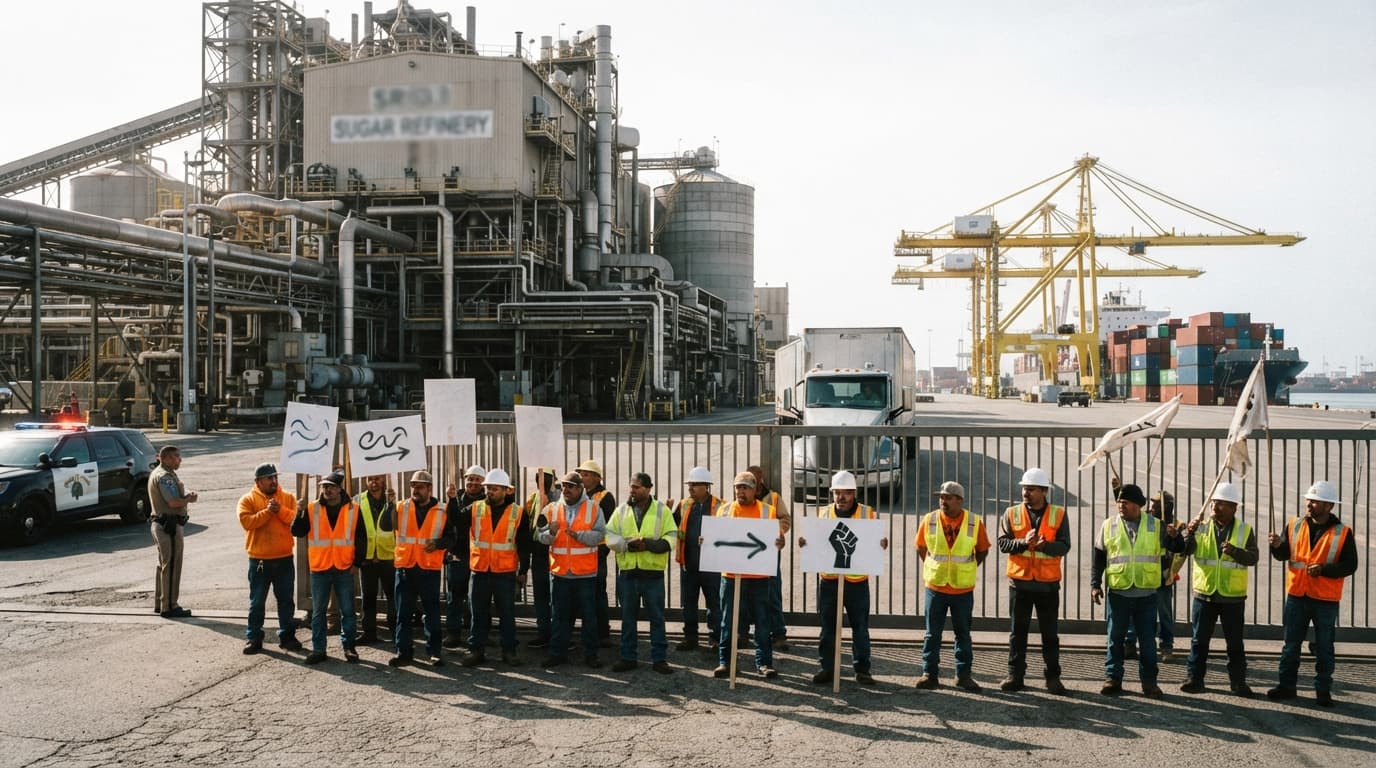
Reporting indicated that hundreds of union dockworkers who typically work Bay Area shipping docks left their posts to reinforce the picket lines at Crockett, preventing goods from moving in or out of the refinery. The action extended to affected workers at both the Stockton and Sacramento ports as well.
The immediate trigger for the sympathy walkout appears to have been C&H’s decision to bring in non-union labor to unload the diverted sugar vessel. Union leaders also cited the continued presence of replacement workers at the refinery itself, along with additional replacement workers who had arrived just prior to the walkout, as contributing factors.
Worth noting for supply chain planning purposes: the Pacific Maritime Association, the employer association representing terminal operators under the coastwide ILWU contract, characterized the coordinated walkout as a violation of the PMA-ILWU labor agreement. An arbitrator subsequently agreed and ordered the longshore workers back to their posts. This detail underscores an important nuance: sympathy actions of this kind, however effective as solidarity, can carry contractual and legal exposure for the union itself, not just operational risk for shippers.
3 · The Escalation: Arrests, Injuries, and Rising Tensions
The July 21 Protest
On the same day as the sympathy walkout, tensions at the Crockett refinery reached a genuine breaking point. A protest outside the facility turned confrontational, prompting law enforcement intervention.
Nine protesters were arrested after Contra Costa County Sheriff’s deputies declared an unlawful assembly. Deputies had received calls reporting a disturbance at the plant, including reports of objects being thrown at trucks attempting to enter the facility and protesters blocking the roadway.
Six of the nine individuals arrested were briefly booked on suspicion of remaining present at an unlawful assembly after being ordered to disperse, while the remaining three stayed in custody. Local law enforcement subsequently requested that prosecutors consider charges against at least some of those arrested for battery, obstruction, and resisting an officer.
Injuries on the Picket Line
The protest also resulted in physical injuries. Union leaders reported that two workers—both members of Local 10—were injured after motorists drove through the picket line, with one picketer requiring transport to a local medical center for treatment. Union officials maintained that picketers were not attempting to block the vehicles in question when the incident occurred, while also noting that replacement workers remained present at the refinery, with additional replacement workers having arrived shortly before the incident.
The Company’s Response
C&H Sugar issued a strong statement condemning the union’s actions during this period, characterizing conduct outside the company’s gates as reckless and unsafe, and describing the actions as endangering drivers, independent contractors, and employees while unlawfully blocking commerce in and out of the refinery. The company called on the union to halt what it characterized as dangerous and illegal activity and return to the negotiating table to finalize an agreement.
Union representatives, for their part, denied allegations that members had thrown objects at vehicles, characterizing the rally itself as peaceful and noting that several hundred people had joined for what organizers described as a peaceful demonstration featuring music and community entertainment.
4 · Resolution: Federal Mediation and a Temporary Truce
Marathon Bargaining Sessions
By late July, federal mediators had become involved in the dispute, with both sides engaging in extended bargaining sessions. The involvement of federal mediation signaled the genuine seriousness with which both the parties and outside observers viewed the potential for broader economic disruption stemming from the conflict.
The Joint Agreement
On July 27, C&H and ILWU Local 6 issued a joint statement announcing a return to work alongside a 60-day extension of negotiations.
Key terms of the resulting agreement included the company’s withdrawal of its previous impasse declaration—which had cleared a path for more aggressive use of replacement labor—along with workers resuming their posts beginning July 30. Workers agreed to remain on the job through September 30, 2026, while executives from C&H and ILWU International Officers participate directly in bargaining, with the stated goal of reaching a fair final agreement before that extension period expires.
Union Leadership’s Perspective
Union leadership expressed a goal of bringing the company’s senior executives more directly into ongoing talks, with the aim of securing a fair agreement before the extension period lapses. The broader involvement of ILWU Local 10—particularly its members’ refusal to cross picket lines—highlighted how a single plant-level dispute can ripple meaningfully through the regional logistics network well beyond the original site of conflict.
Industry commentary characterized the episode as underscoring the strategic leverage that warehouse and dock workers can exercise at critical supply chain nodes, particularly in a broader supply chain environment already sensitive to port and terminal disruptions.
5 · The Supply Chain Impact: Lessons from the C&H Strike
The Ripple Effect
The C&H Sugar strike offers a fairly clear illustration of how a localized labor dispute can cascade through a broader supply chain:
Warehouse workers at a single refinery walked out in mid-June. Dockworkers subsequently refused to cross picket lines, effectively blocking sugar shipments from moving. Shipments were diverted to alternative terminals not typically configured for this type of cargo. A cargo vessel sat idle for an extended period, unable to unload at its intended destination. Sympathy walkouts then shut down container terminal operations at three separate California ports. The resulting disruption affected the broader regional logistics network well beyond the original refinery dispute.
The Oakland Port Impact
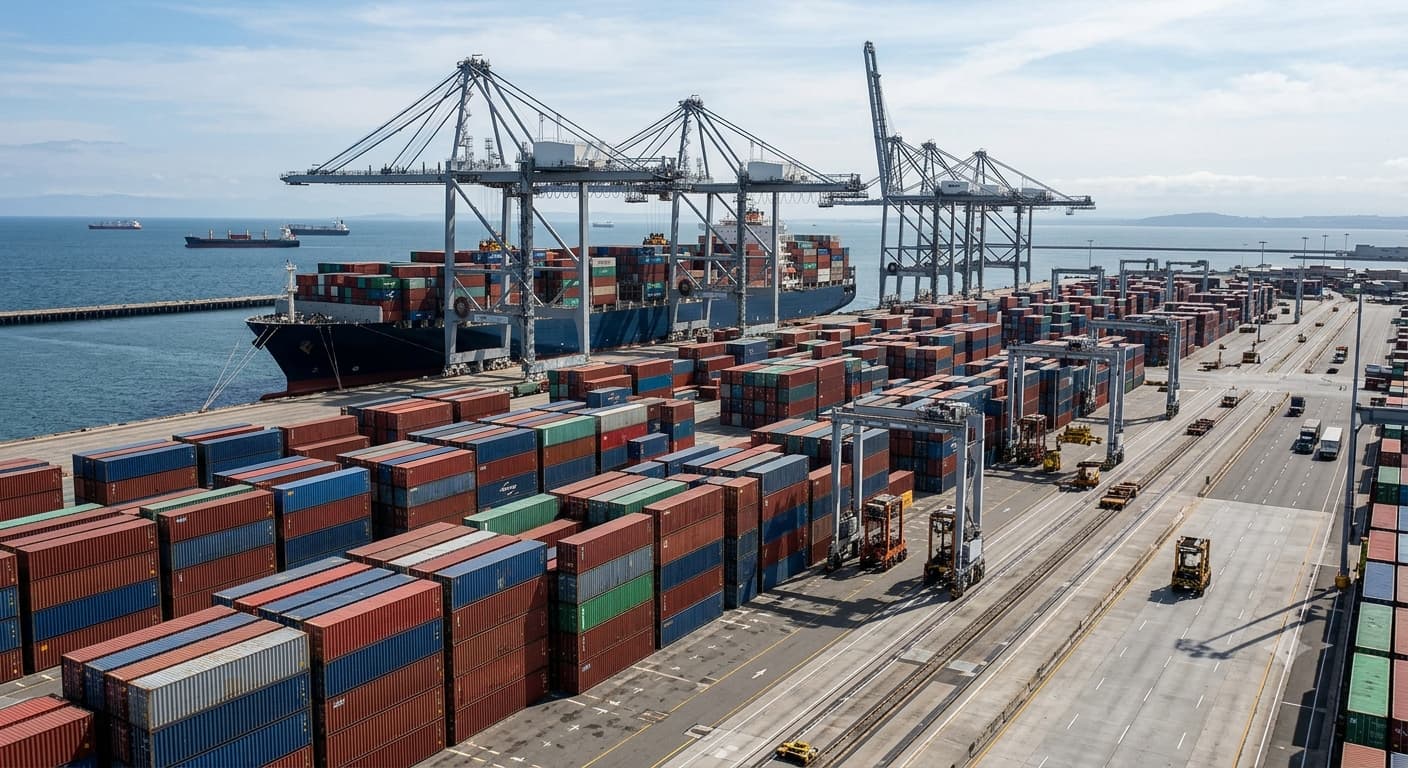
The sympathy walkout at the Port of Oakland disrupted cargo operations at one of the West Coast’s more significant container gateways. While the port authority itself did not comment specifically on the number of dockworkers who participated—since terminals are privately operated by several companies managing their own hiring—the operational impact was significant enough to shut down multiple terminals simultaneously.
The Strategic Leverage Point
Industry observers have noted that the strike underscored the considerable strategic leverage warehouse and dock workers can hold at critical supply chain nodes. A relatively small group of workers—approximately 90 to 100 warehouse employees at the outset—was able to disrupt operations at a major refinery and, through solidarity actions from a separate labor union, effectively shut down container terminals at multiple ports.
This dynamic highlights a fundamental vulnerability inherent in certain supply chain designs: critical nodes can become genuine points of failure when labor relations break down, even when the underlying dispute originates at a facility that may seem, on its surface, relatively disconnected from broader port operations.
6 · Broader Context: Labor Relations in the Supply Chain
A Notable Escalation
The C&H strike occurred against a backdrop of broader labor tensions within the supply chain more generally. The union’s walkout represented the first strike at the Crockett refinery in nearly a century—a willingness to strike, combined with solidarity shown by other affiliated labor locals, that illustrates organized labor’s continued strategic positioning within an era of ongoing supply chain sensitivity.
Connections to Broader Labor Issues
The strike also drew connections to labor issues extending well beyond California’s borders. Community organizations representing Filipino diaspora groups in Northern California organized rallies in solidarity with the striking workers, drawing attention to conditions faced by sugarcane workers in Negros, the Philippine province where much of the raw sugar processed at the refinery originates.
Organizers involved in these solidarity efforts raised concerns about wages and working conditions for sugarcane workers in the source region, framing the labor dispute as connected to broader questions about conditions throughout the entire supply chain, from field to refinery.
7 · Strategic Considerations for Supply Chain Managers
Diversification of Critical Nodes
The C&H strike demonstrates the genuine vulnerability inherent in relying heavily on single critical nodes within a supply chain. When a single refinery—and the relatively small group of workers who operate it—can trigger disruptions rippling across multiple ports, supply chain managers may benefit from considering geographic diversification of suppliers and processing facilities, alternative routing options for critical cargo categories, and appropriate inventory buffers positioned at key points throughout the supply chain.
Labor Relations as a Supply Chain Risk Factor
This episode reinforces the value of monitoring labor relations proactively as a genuine supply chain risk factor. Organizations may benefit from tracking labor contract expiration dates at critical suppliers and logistics providers, monitoring broader labor relations sentiment in key operating regions, developing contingency plans specifically addressing potential labor disruptions, and building relationships with multiple logistics providers to preserve operational flexibility when disruptions occur.
The Solidarity Risk
The C&H strike illustrated clearly how solidarity actions can meaningfully amplify what begins as a localized dispute. Supply chain managers may benefit from considering the potential for sympathy actions to expand a disruption well beyond its original scope, the genuine interconnectedness between different labor groups operating across the supply chain, and the strategic value of maintaining positive labor relations broadly, not merely with directly contracted workforces. It is also worth noting that such actions can carry contractual risk for the unions involved—the sympathy walkout in this case was itself found to violate the coastwide PMA-ILWU labor agreement—which may shape how frequently and how far unions are willing to extend solidarity actions in future disputes.
Federal Mediation as a Safety Valve, Not a Primary Strategy
The involvement of federal mediators in resolving the C&H dispute, and the resulting truce, illustrates the role federal mediation can play as something of a safety valve for significant supply chain disruptions. That said, organizations should generally avoid relying on federal intervention as a primary risk mitigation strategy, given the inherent unpredictability of when and how such intervention might occur in future disputes.
8 · Looking Ahead: The September 30 Deadline
The Truce’s Expiration
The 60-day truce reached between C&H and ILWU Local 6 is scheduled to expire on September 30, 2026. Should negotiations fail to produce a final agreement by that date, the possibility exists that workers could return to picket lines—potentially accompanied by renewed solidarity actions from affiliated labor unions.
What to Monitor
Supply chain managers with relevant exposure may wish to monitor progress in the underlying negotiations through the end of September, the potential for renewed solidarity actions should negotiations stall, and broader labor relations trends affecting the supply chain more generally.
Preparing for Continued Uncertainty
Companies with meaningful exposure to California ports or sugar-related supply chains may benefit from developing contingency plans addressing a potential resumption of the strike, maintaining alternative routing options for critical cargo, building appropriate inventory buffers to help weather potential future disruptions, and continuing to monitor labor relations developments closely as the September deadline approaches.
9 · Conclusion: A Cautionary Example for Supply Chain Planning
A Single Point of Failure
The C&H Sugar strike of 2026 serves as a fairly powerful illustration of how a single point of failure within a supply chain can cascade into much broader disruption. Roughly 90 to 100 warehouse workers, acting in solidarity with dockworkers at three separate California ports, were able to shut down container terminal operations and disrupt regional logistics activity well beyond the scope their numbers alone might suggest.
A Preview of Future Risk
In an environment of heightened labor activism and continued supply chain sensitivity, the C&H episode may prove instructive for disruptions yet to come. As industry observers have noted, the strike underscored the considerable strategic leverage that warehouse and dock workers can hold at genuinely critical supply chain nodes.
The Strategic Takeaway
For supply chain managers, the underlying message is reasonably clear: labor relations deserve treatment as a genuine strategic risk factor rather than an afterthought in broader supply chain planning. Organizations that actively monitor labor developments, diversify critical operational nodes, and maintain flexibility within their logistics networks will generally be better positioned to weather the next disruption of this kind.
The C&H strike has, for now, reached a temporary resolution. But the underlying issues driving the original dispute remain unresolved, and the September 30 deadline continues to loom. The relevant question for supply chain managers may not be whether another disruption of this nature will occur, but rather when—and how well prepared organizations will be when it does.
This analysis reflects the C&H Sugar strike and related California port disruptions as of August 2026 based on available public reporting. Labor negotiations and port operations continue to evolve. Organizations with exposure to California ports or related supply chains should consult with logistics providers and supply chain professionals for guidance tailored to their specific circumstances.