Executive Summary On May 19, 2026, the Department of Justice unsealed a superseding indictment charging four of the world’s largest Chinese shipping container manufacturing companies and seven executives with a global conspiracy to restrict output and fix prices of standard unrefrigerated shipping containers for more than four years[reference:0][reference:1]. The alleged conspiracy, which ran from at least November 2019 through January 2024, roughly doubled container prices between 2019 and 2021 and increased manufacturers’ profits approximately one hundredfold during the COVID-19 pandemic and global supply chain crisis[reference:2]. One executive was arrested in France and faces extradition to the United States; six others remain at large[reference:3]. This represents one of the most significant antitrust enforcement actions in the shipping industry, with implications reaching every logistics provider, importer, and supply chain participant that relied on containers during the pandemic. This analysis examines the indictment, the alleged conspiracy, and what it means for the logistics industry.
Container Price-Fixing Indictment: What the DOJ’s Antitrust Case Means for Logistics Providers
1 · The Indictment: What the DOJ Alleged
The Defendants
The superseding indictment, filed in the U.S. District Court for the Northern District of California and unsealed on May 19, 2026, charges 11 defendants — four corporate entities and seven individuals[reference:4]:
Corporate Defendants:
| Company | Description |
|---|---|
| China International Marine Containers (Group) Co., Ltd. (CIMC) | Publicly traded Chinese company; one of the world’s largest container manufacturers[reference:5] |
| Singamas Container Holdings Ltd. | Hong Kong-based publicly traded company[reference:6] |
| Shanghai Universal Logistics Equipment Co., Ltd. (Dong Fang / DFIC) | Chinese company operating the Dong Fang International Containers brand[reference:7] |
| CXIC Group Containers Co. Ltd. | Chinese container manufacturer[reference:8] |
Individual Defendants:
| Name | Role |
|---|---|
| Vick Nam Hing Ma (Vick Ma) | Marketing Director, Singamas — arrested in France on April 14, 2026[reference:9] |
| Siong Seng Teo | CEO and Chairman, Singamas[reference:10][reference:11] |
| Boliang Mai | Chairman and CEO, CIMC[reference:12] |
| Tianhua Huang | Vice President, CIMC[reference:13] |
| Yongbo Wan | General Manager, CIMC Operation Management Center |
| Qianmin Li | General Manager, Dong Fang |
| Yuqiang Zhang | CEO, CXIC |
⚠️ Critical Takeaway: Six of the seven individual defendants remain at large outside the United States. The DOJ has made clear it intends to pursue extradition and prosecution of all charged individuals[reference:14].
The Charge: Violation of Section 1 of the Sherman Act
The indictment charges the defendants with a conspiracy in restraint of trade in violation of Section 1 of the Sherman Antitrust Act[reference:15]. Such violations carry:
- Corporations: Maximum penalty of a $100 million fine, which may be increased to twice the gain derived from the crime or twice the loss suffered by the victims if either amount exceeds the statutory maximum[reference:16]
- Individuals: Up to 10 years in prison and a $1 million criminal fine, also subject to the alternative fine provision[reference:17]
2 · The Alleged Conspiracy: How It Worked
The November 2019 Meeting
According to the DOJ, the conspiracy began in November 2019 when four of the defendant companies met at CIMC’s headquarters in China and reached an illegal agreement to restrict production of standard dry shipping containers in order to drive up prices[reference:18]. By March 2020, the remaining two companies allegedly joined the agreement[reference:19].
The Mechanisms of Restraint
The conspirators allegedly agreed to restrict output through several coordinated means[reference:20][reference:21]:
Limiting production shifts and hours: Agreeing to cap the number of shifts and hours each production line could run per day[reference:22]
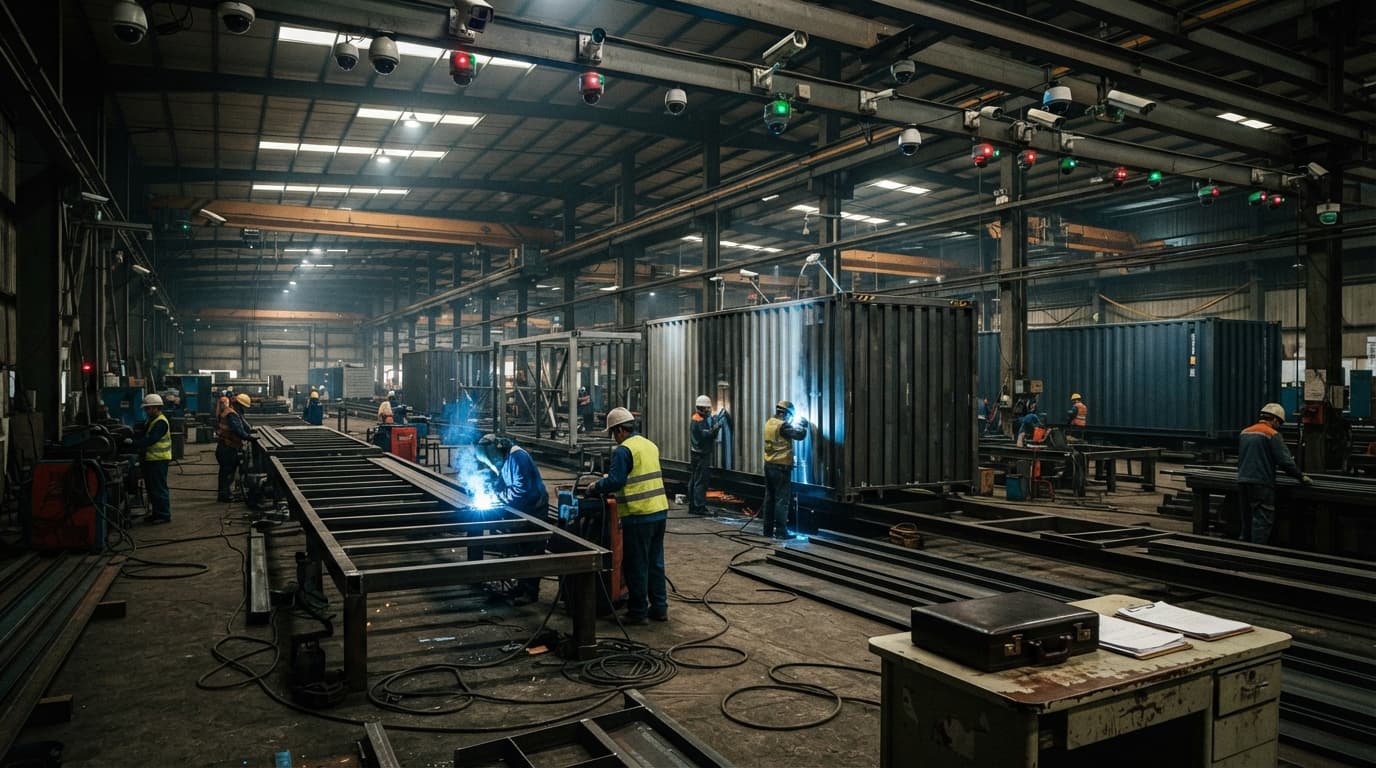
Video surveillance to enforce compliance: Installing 87 video surveillance cameras on 49 production lines to ensure that the companies did not exceed agreed-upon quotas[reference:23][reference:24]
No new factory construction: Agreeing not to build any new container manufacturing factories[reference:25]
Penalty fund for cheating: Establishing a fund that included a mechanism to financially penalize any party that cheated on the output-restriction agreement[reference:26]
Customer-specific restrictions: Later agreeing to restrict how many containers they would manufacture for particular customers, including container lessors, shipping lines, and logistics companies[reference:27]
Total volume cap: Agreeing to cap the total cargo volume of containers they produced[reference:28]
Covert Communications and Concealment
The defendants allegedly communicated secretly, either in-person or via WeChat groups, to control production quotas[reference:29]. They also took steps to conceal their actions by deleting documents and ensuring communications were discreet[reference:30][reference:31].
The Refrigerated Container Attempt
Outside of the dry container conspiracy, CIMC also allegedly attempted to coordinate with other competing manufacturers to control the output of refrigerated containers (reefers) , but its efforts were unsuccessful[reference:32].
3 · The Impact: Doubled Prices and $35 Billion in Commerce
Price Increases
The DOJ’s own language is direct: the conspiracy “roughly doubled the prices of standard shipping containers between 2019 and 2021”[reference:33][reference:34]. The DOJ has not published a specific dollar figure in its press materials, but the direction and magnitude are consistent with industry pricing data from the period, which shows standard 40-foot dry containers moving from roughly $2,000 in 2019 to well over $5,000 at points during 2021 — a shift of more than double the pre-pandemic price[reference:35].
Profits One Hundredfold
The profit increases were staggering:
- CIMC’s container manufacturing profits: Jumped from $19.8 million in 2019 to nearly $1.75 billion in 2021 — an approximately one hundredfold increase[reference:36][reference:37]
- Singamas: Swung from a loss of roughly $110 million in 2019 to a profit of about $186.8 million two years later[reference:38]
The $35 Billion Figure
The DOJ has stated that the conspiracy affected approximately US$35 billion in global commerce transported through the allegedly rigged containers[reference:39]. The conspiracy “stole from everyday Americans who paid more” for goods shipped in containers during the pandemic[reference:40].
4 · The Arrest: A Coordinated International Effort
Vick Ma’s Arrest in France
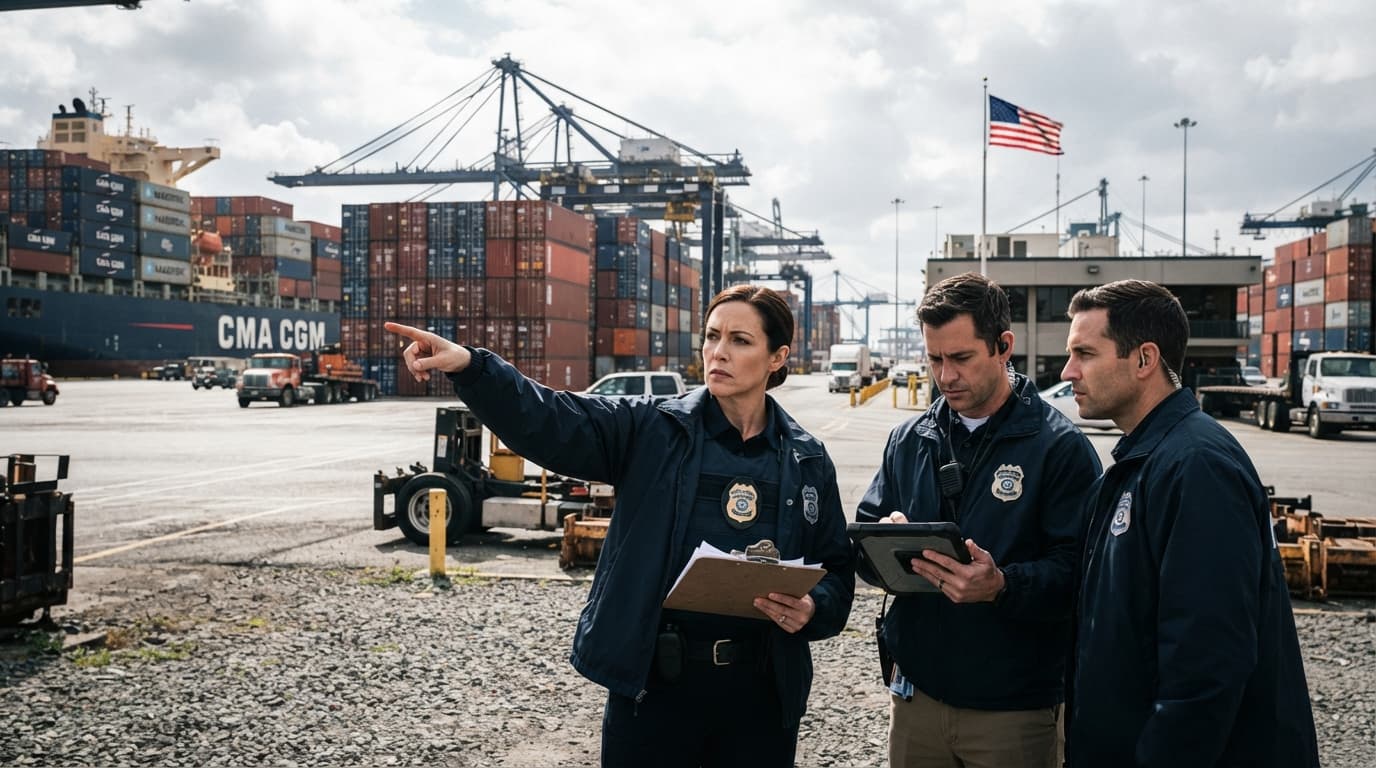
On April 14, 2026, Vick Nam Hing Ma, the Marketing Director of Singamas, was arrested at Charles de Gaulle airport in Paris, France[reference:41][reference:42]. The arrest resulted from a joint effort with French law enforcement[reference:43].
Following Ma’s arrest, the U.S. District Court for the Northern District of California unsealed the superseding indictment[reference:44]. Ma’s extradition to the United States is pending[reference:45].
Six Remain at Large
Six executive co-defendants remain at large[reference:46]. The DOJ has signaled that it will continue to pursue their apprehension and extradition.
5 · Civil Litigation: Class Actions Follow the Criminal Case
Two Class Action Lawsuits
The criminal indictment has been followed by civil litigation. Two separate class action lawsuits have been filed against the same four Chinese container manufacturers[reference:47]:
- C.A. Spalding (electromagnetic components manufacturer) filed the first civil complaint on June 2, 2026[reference:48]
- Daybreak Express (trucking company) filed its own grievance on June 9, 2026[reference:49]
Both lawsuits were filed in federal district courts in Northern California and named the seven executives from the original indictment as co-defendants[reference:50].
Allegations in the Civil Cases
Plaintiffs allege they suffered damages due to paying artificially inflated prices to move cargo after the manufacturers deliberately restricted the output of containers[reference:51]. C.A. Spalding alleged that the conspirators colluded to sell “noncompetitively priced” standard dry shipping containers to U.S. businesses, “thereby fixing ‘a component of global shipping costs…paid by United States importers’"[reference:52].
The Ripple Effect
Both firms allege they ultimately had to pass on the higher costs to downstream customers, widening the pool of parties impacted by the alleged price-fixing scheme[reference:53]. This means that any business that paid for container shipping during the conspiracy period may have standing to claim damages.
6 · The DOJ’s Enforcement Strategy: A Pattern of Shipping Industry Antitrust Actions
A Covert Investigation
The shipping container investigation appears to have been conducted covertly, a reminder that the Antitrust Division frequently uses covert investigation methods such as wiretaps and other tactics to gather information[reference:54].
A Pattern of Shipping Enforcement
This is not the DOJ’s first shipping industry antitrust action:
- 2019: The Division unsealed an indictment against two Norwegian shipping executives for their involvement in an international price-fixing conspiracy to allocate certain customers and routes, rig bids, and fix prices for the sale of international ocean shipments of cargo[reference:55]
- Earlier cases: Several ocean carriers have pleaded guilty and paid substantial fines for cargo rate-fixing conspiracies[reference:56]
The Message to the Industry
Acting Assistant Attorney General Omeed A. Assefi delivered remarks on the indictment, emphasizing that the conspiracy “stole from everyday Americans who paid more” and that “justice was secured”[reference:57][reference:58]. The message to the shipping industry is clear: price-fixing and output-restriction conspiracies will be prosecuted aggressively, regardless of where the defendants are located.
7 · What This Means for Logistics Providers
Retrospective Exposure
Logistics providers that purchased containers or paid container shipping rates during the conspiracy period (November 2019 – January 2024) may have been overcharged. Key considerations:
- Potential recovery: Logistics providers may be eligible to participate in class action settlements or file individual claims
- Documentation: Companies should preserve records of container purchases and shipping costs during the conspiracy period
- Statute of limitations: Antitrust claims have time limits; affected parties should consult counsel promptly
Ongoing Supply Chain Risk
The indictment highlights broader risks in container supply chains:
- Concentration risk: The four indicted companies manufacture approximately 95% of the world’s standard dry shipping containers[reference:59][reference:60]
- Vulnerability to future manipulation: With such high concentration, the industry remains vulnerable to coordinated action
- Need for diversification: Logistics providers should consider whether alternative container suppliers or leasing arrangements could reduce concentration risk
Compliance Implications
The case underscores the importance of antitrust compliance in the logistics industry:
- Price-fixing awareness: Logistics providers should be alert to any indications of coordinated pricing or output restrictions among suppliers
- Documentation: Maintain records of communications with suppliers that could evidence anti-competitive conduct
- Reporting: Companies that become aware of potential antitrust violations should consider reporting to the DOJ Antitrust Division’s Citizen Complaint Center
The Civil Litigation Risk
The class action lawsuits against the container manufacturers demonstrate that civil liability follows criminal enforcement. Logistics providers that purchased containers or shipping services during the conspiracy period may face:
- Opt-in/opt-out decisions: Should they participate in class actions or pursue individual claims?
- Documentation requirements: Claims will require evidence of purchases and overcharges
- Settlement participation: Class action settlements may require active participation to recover damages
8 · Conclusion: A Landmark Antitrust Action with Lasting Implications
The DOJ’s indictment of four Chinese container manufacturers and seven executives represents one of the most significant antitrust enforcement actions in the shipping industry’s history. The alleged conspiracy — involving video surveillance to enforce output restrictions, penalty funds for cheaters, and covert communications — demonstrates a level of coordination that, if proven, represents a profound abuse of market power during a global supply chain crisis.
Key Takeaways
- Four companies (CIMC, Singamas, Dong Fang, CXIC) and seven executives indicted[reference:61]
- Conspiracy period: November 2019 – January 2024[reference:62]
- Price impact: Container prices roughly doubled between 2019 and 2021[reference:63]
- Profit impact: CIMC’s container profits increased one hundredfold[reference:64]
- Commerce affected: Approximately $35 billion[reference:65]
- One arrest: Vick Ma arrested in France; six remain at large[reference:66]
- Civil litigation: Two class actions filed; more likely to follow[reference:67]
The Bottom Line
For logistics providers, this case is not merely a news story — it is a direct reminder of the risks inherent in concentrated supply chains and the importance of antitrust compliance. Companies that purchased containers or shipping services during the conspiracy period should preserve records, monitor class action developments, and consult counsel about potential recovery.
The DOJ has sent a clear message: price-fixing cartels that exploit global supply chains will be prosecuted, and those who profited will be held accountable — regardless of where they are located.
This analysis reflects the DOJ’s superseding indictment unsealed on May 19, 2026, charging four Chinese container manufacturers and seven executives with violations of Section 1 of the Sherman Antitrust Act. Specific charges, defendant status, and case developments are subject to ongoing court proceedings. Organizations that purchased containers or shipping services during the alleged conspiracy period should consult with antitrust counsel for guidance tailored to their specific circumstances and potential claims.