
Executive Summary
Much of the writing on CTPAT (Customs-Trade Partnership Against Terrorism) treats certification as either a compliance chore or a vaguely-defined competitive edge. Neither framing is quite right. CBP publishes a specific, concrete list of program benefits—reduced examinations, FAST lane access, an assigned Supply Chain Security Specialist, Importer Self-Assessment eligibility, and penalty mitigation for certain filings—but it does not publish a dollar figure for what any of this is worth, and it does not publish comparative examination-rate data for members versus non-members. That gap is actually useful: it means the real return on CTPAT certification is something every shipper and broker can calculate for their own operation, using their own container volume and their own cost per exam. This analysis walks through what CBP actually commits to, what the program does not quantify, how to build your own ROI estimate, and why CTPAT’s value is rising further under Executive Order 14411’s broker vetting requirements.
The CTPAT ROI: What Certification Actually Buys You at the Border
(CTPAT认证的投资回报:认证究竟能带来什么)
1 · What CBP Actually Commits To
The Published Benefits List
CTPAT is a voluntary program, free to apply to, under which a company implements and maintains documented supply chain security measures in exchange for a defined set of benefits from CBP. According to CBP’s own published materials, certified partners receive:
- A reduced number of CBP examinations, since CBP treats certified partners as lower-risk shippers within its targeting system
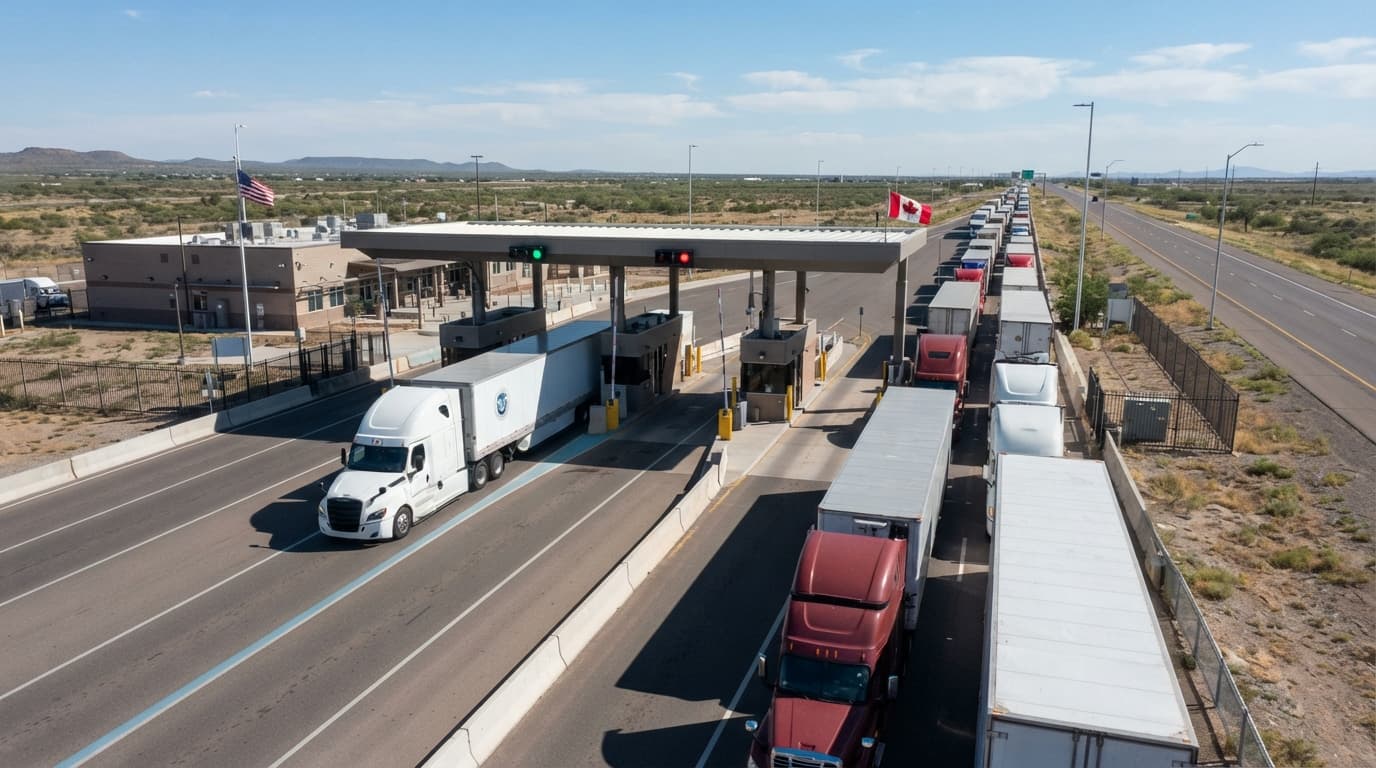
- Access to Free and Secure Trade (FAST) lanes at land border crossings with Canada and Mexico
- An assigned Supply Chain Security Specialist (SCSS)—a named CBP point of contact for the account
- Eligibility for the Importer Self-Assessment (ISA) program, which removes a company from the pool considered for CBP’s more resource-intensive Focused Assessment audits
- Up to 50% penalty mitigation for Importer Security Filing (10+2) violations
- Consideration for penalty mitigation related to Bio-Terrorism Act filing requirements
- Recognition under Mutual Recognition Arrangements with foreign customs administrations that have signed reciprocal trusted-trader agreements with the United States
Why This Matters: this is a genuinely concrete list—not vague promises of “faster processing” but specific, named mechanisms with defined eligibility criteria. A company evaluating whether certification is worth pursuing can assess each of these against its own operations rather than relying on generic marketing claims.
The Small Business Reality
A common misconception is that CTPAT is primarily a program for large multinational importers with dedicated compliance departments. CBP’s own data contradicts this directly: in a June 2026 announcement explicitly tied to Executive Order 14411, CBP stated that small businesses comprise over 70% of CTPAT members. Executive Assistant Commissioner Diane J. Sabatino, of CBP’s Office of Field Operations, framed the program’s value for this group directly: CTPAT “offers them a proven security framework, delivering tangible benefits like fewer inspections, expedited border processing, and access to a global network” of trusted trade partners.
2 · What CBP Does Not Quantify—And Why That’s Worth Knowing
No Published Dollar Figure
Here is the part most CTPAT marketing content skips over: CBP’s published list of benefits contains no cost estimate of any kind. No official CBP source puts a dollar figure on what certification is worth annually to a typical importer.
No Published Comparative Exam Rate
Similarly, while it is common to see figures like “CTPAT members are five times less likely to be examined” circulating in trade press and broker marketing materials, CBP does not publish a comparative examination-rate table showing member versus non-member inspection percentages. Careful analyses that have gone looking for the primary source behind that specific multiplier—checking CBP, DHS, GAO, and Federal Register materials—have not been able to trace it to an official CBP measurement. That does not mean certified partners don’t see meaningfully fewer exams in practice; it means the specific number attached to that claim should be treated as an industry estimate, not a CBP-verified statistic.
An Honest Note on Program Oversight
Worth factoring into a clear-eyed assessment: a January 2026 GAO report, drawing on CBP’s own SEACATS data, found that approximately 480 CTPAT participants had been involved in roughly 2,200 security-related incidents over the review period—and GAO noted this echoes a limitation it first flagged in 2017 regarding CBP’s ability to fully verify that participants are receiving the benefits they were promised, due to data quality issues within the program. This is not a reason to dismiss the program’s value, but it is a reason to treat CTPAT as a genuine security and compliance commitment rather than a box to check for the benefits alone—and a reason CBP continues to invest in tightening the program’s verification processes.
Why This Gap Is Actually Useful
Why This Matters: the absence of an official savings figure is not really a weakness in the program—it reflects the fact that the value of reduced examinations depends entirely on your own shipment volume, your own historical exam rate, and your own all-in cost per exam (drayage, exam fees, storage, and demurrage, which typically arrive on separate invoices from different vendors and are rarely added up in one place). A single published industry-wide savings figure would be less accurate for any individual company than a number built from that company’s own data.
3 · Building Your Own ROI Estimate
The Basic Calculation
A reasonably rigorous, company-specific estimate can be built from four inputs:
- Your current annual container or shipment volume
- Your current examination rate (the share of shipments that get flagged for exam, which your customs broker can typically provide from entry history)
- Your all-in cost per exam—not just the exam fee itself, but drayage to the exam site, storage while the shipment sits, demurrage or per diem charges, and the broker or compliance staff time spent managing the process
- A reasonable estimate of your reduced exam rate post-certification, which your broker or a CTPAT consultant can help benchmark against comparable certified importers in your sector
Multiplying your volume by your exam rate gives your current number of exams; multiplying that by your all-in cost per exam gives your current annual exam-related cost. Repeating the exercise with an estimated post-certification exam rate—and tracking the actual figure once certified—produces a genuine, defensible ROI number specific to your operation, rather than a borrowed industry statistic.
What FAST Lane Access Is Actually Worth
For land border operations specifically, FAST lane access has a more directly measurable component. FAST (Free and Secure Trade) lanes are dedicated commercial lanes at land ports of entry—CBP’s official list includes lanes at a defined set of northern and southern border crossings—reserved for shipments from CTPAT-certified importers and carriers using FAST-credentialed drivers. A prior GAO review cited a DHS assertion that FAST lanes carry average primary processing times of roughly 30 seconds, compared with approximately two minutes for non-FAST lanes. For high-frequency cross-border trucking operations, that differential compounds meaningfully across thousands of annual crossings—though companies should treat this specific figure as DHS’s own characterization rather than an independently measured GAO finding, and validate it against their own border crossing experience.
4 · The Application Investment
It’s Free to Apply—But Not Free to Prepare
There is no CBP application fee for CTPAT. However, building and maintaining a security program that meets CBP’s Minimum Security Criteria is a genuine investment—industry estimates for a mid-sized carrier’s first-year security program buildout commonly range from roughly $15,000 to $40,000, depending on the complexity of existing security infrastructure and whether outside consulting support is used, plus the ongoing internal staff time required to maintain the program and prepare for periodic revalidation.
The Realistic Timeline
Certification is not instant. Applicants typically apply through the CTPAT Portal, submit a Security Profile mapped against CBP’s Minimum Security Criteria, and undergo a CBP validation visit—with the full process commonly taking eight to twelve months from initial application to Tier II certification with full program benefits. Companies evaluating certification should factor this lead time into any strategic planning tied to upcoming compliance deadlines.
Tier Structure
CTPAT operates on a tiered structure. Once CBP’s Supply Chain Security Specialist reviews an applicant’s operations and confirms they meet program requirements, the company is validated as a Tier II partner and begins receiving the program’s full benefits. A further Tier III status, reserved for partners demonstrating the strongest security practices, carries the most extensive benefits within the program.
5 · Why CTPAT’s Value Is Rising Right Now
The EO 14411 Connection
CTPAT’s value proposition has shifted meaningfully in 2026, beyond the standard benefits list described above. As we examined in earlier analyses of Executive Order 14411, “Strengthening Customs Enforcement,” foreign importers of record must now either be CTPAT-validated themselves or use a CTPAT-validated, licensed customs broker to file entries with CBP. CBP has since gone further, publicly stating that these requirements will fundamentally change the responsibilities of CTPAT-validated customs brokers (CVCBs), while also framing CTPAT validation as a competitive necessity: brokers without it may find themselves unable to represent a growing category of foreign importer clients at all.
From Optional Advantage to Market Access Requirement
Why This Matters: this changes the calculus for customs brokers specifically. Where CTPAT certification was previously a discretionary investment weighed primarily against exam-reduction ROI, it is increasingly becoming a prerequisite for serving an entire, and growing, segment of the client base—foreign importers of record who have no alternative but to work through a CTPAT-validated broker. Brokers evaluating certification today should weigh not just the traditional exam-reduction and FAST-lane benefits, but the revenue opportunity represented by clients who will simply be unable to work with a non-certified broker going forward.
6 · What Logistics Providers Should Do Now
1. Build Your Own Number Before You Decide
Rather than relying on industry-wide statistics of uncertain provenance, pull your own exam history from your customs broker, estimate your all-in cost per exam including drayage and storage, and build a company-specific ROI estimate using the framework above.
2. Talk to Your Broker About Realistic Exam-Rate Improvement
Ask your customs broker or a CTPAT consultant what exam-rate reduction they have seen among comparable clients in your sector post-certification, and use that as your working estimate rather than a generic industry figure.
3. Factor In the Application Timeline Now
Given the realistic eight-to-twelve-month certification timeline, companies anticipating a future need for CTPAT status—whether for their own operations or to continue representing foreign importer clients under Executive Order 14411—should begin the process well ahead of any hard deadline.
4. Brokers: Model the Revenue Side, Not Just the Cost Side
Customs brokers should specifically model the potential new client volume from foreign importers of record who will require a CTPAT-validated broker, not just the traditional exam-reduction benefits, when building their own certification business case.
5. Treat the Security Program as Real, Not a Formality
Given GAO’s documented concerns about program oversight and benefit verification, companies should build and maintain a genuine security program that meets CBP’s Minimum Security Criteria in substance—both because that is the actual requirement, and because CBP’s ongoing tightening of the program’s verification processes makes a superficial security profile a growing liability rather than a shortcut.
7 · Conclusion: A Calculable Return, Not a Marketing Number
The Honest Version of the Pitch
CTPAT is not a program with a magic multiplier that applies uniformly to every importer. CBP has deliberately left the dollar value of certification uncalculated, because that value genuinely depends on each company’s own shipment volume, exam history, and cost structure. The honest version of the CTPAT pitch is not “you’ll see five times fewer exams”—it’s “here is a defined, free-to-apply program with a specific list of real benefits, and here is how to calculate what those benefits are actually worth to your specific operation.”
The Strategic Takeaway
For shippers and brokers alike, 2026 adds a second, distinct reason to take CTPAT seriously beyond the traditional exam-reduction calculus: Executive Order 14411 is turning CTPAT validation into a market-access requirement for representing foreign importers, not merely a discretionary compliance investment. Companies that build their own honest ROI case now—rather than relying on borrowed statistics—will be better positioned to make a genuinely sound decision about whether, and how quickly, to pursue certification.
If your organization would like help building a company-specific CTPAT ROI estimate or assessing certification timing against your compliance obligations, our trade compliance team is available to help.
This analysis reflects CBP’s published CTPAT program materials, including its Trade Compliance Handbook (December 2025 edition) and its June 2026 announcement connecting CTPAT to Executive Order 14411, along with a January 2026 GAO report on CTPAT program oversight. Specific benefit eligibility, timelines, and program requirements are subject to CBP guidance and should be confirmed directly with CBP or a qualified trade compliance advisor. Organizations should consult with customs brokers and trade compliance professionals for guidance tailored to their specific operations.