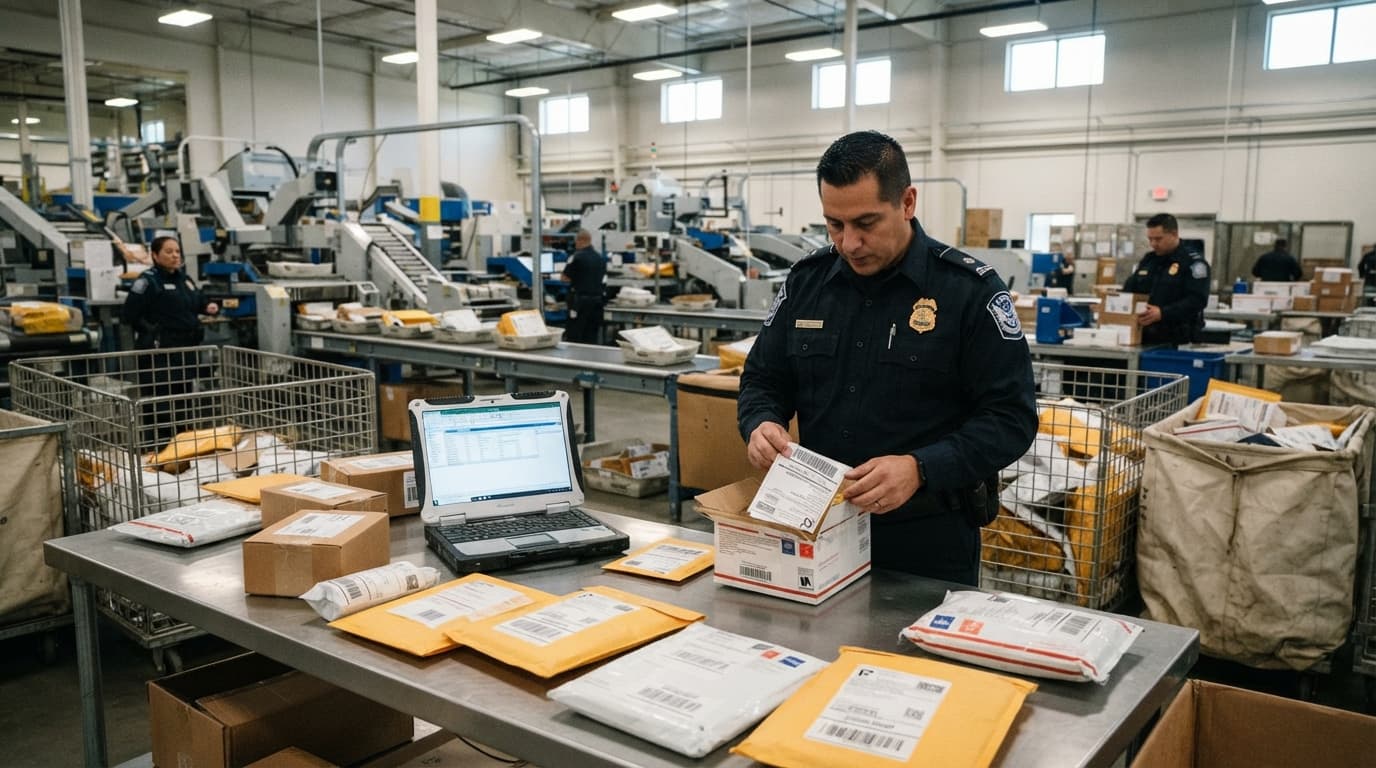

Executive Summary The $800 de minimis exemption—long the backbone of low-cost e-commerce shipping to the United States—is indefinitely suspended. On June 24, 2026, CBP issued two interim final rules eliminating duty-free treatment for shipments valued at $800 or less across all modes of entry, including the international postal network. The rules replace de minimis with a new interim mail entry process for shipments valued at $2,500 or less (requiring Excel spreadsheet submissions to CBP), a September 22 test of electronic Entry Type 13 in ACE, and a mandatory CPSC eFiling requirement for mail shipments by October 22. The Court of International Trade upheld the suspension on August 13, 2026, and the statutory repeal is set for July 1, 2027. This is not a temporary measure—it is a permanent restructuring of low-value import processing. This analysis examines the new rules, the compliance cascade, and what e-commerce importers and logistics providers must do now.
De Minimis Is Gone—Now What? A Post-$800 World Survival Guide for E-Commerce Importers
(小额豁免已成历史——800美元时代终结后,跨境电商进口商生存指南)
1 · What Happened to De Minimis?
The Legal Timeline
The de minimis exemption, codified at 19 U.S.C. § 1321(a)(2)(C) , allowed duty-free treatment for imports valued at $800 or less imported by one person on one day. It was the legal foundation for the direct-to-consumer cross-border e-commerce model. A statutory change enacted through the One Big Beautiful Bill Act (OBBA) separately gave the President authority to eliminate the exemption outright starting July 1, 2027—the permanent repeal date referenced throughout this analysis.
The exemption’s demise unfolded in stages, starting with China specifically before expanding worldwide:
| Date | Action |
|---|---|
| May 2, 2025 | Executive Order 14256 ends de minimis treatment for China and Hong Kong shipments specifically |
| July 30, 2025 | Executive Order 14324 suspends de minimis for all remaining countries, effective Aug. 29, 2025 |
| Aug. 29, 2025 | Worldwide suspension takes effect |
| Feb. 20, 2026 | Supreme Court strikes down IEEPA-based tariffs (a separate legal authority); the same day, Executive Order 14388 confirms the de minimis suspension itself continues, since it rests on different legal grounds and was not affected by the ruling |
| June 24, 2026 | CBP issues two interim final rules indefinitely suspending de minimis |
| Aug. 13, 2026 | Court of International Trade upholds the suspension |
| July 1, 2027 | Statutory repeal takes effect under OBBA |
Why This Distinction Matters: the Supreme Court’s February 2026 ruling struck down tariffs imposed under the International Emergency Economic Powers Act—a separate and distinct legal question from the de minimis suspension itself, which rests on different statutory and executive authority. Importers who assumed the SCOTUS ruling might revive de minimis were mistaken; Executive Order 14388, issued the same day, made clear the suspension continues regardless.
The Two Interim Final Rules
CBP issued two interim final rules to implement the suspension across all entry modes:
Rule 1: Non-Postal Modes (Effective June 24, 2026)
This rule amends CBP regulations to implement an indefinite suspension of the de minimis exemption for imports valued at $800 or less arriving via all modes other than the international postal network. All such shipments must now use formal or informal entry procedures.
Rule 2: International Postal Network (Effective July 24, 2026)
This rule implements the suspension for shipments arriving through the international postal network. Compliance with certain provisions is not required until October 22, 2026, giving affected parties a several-month runway.
The CIT Ruling
On August 13, 2026, the Court of International Trade upheld the administration’s authority to suspend de minimis treatment. The court’s decision left the worldwide suspension in place ahead of the statutory repeal date of July 1, 2027.
⚠️ Critical Takeaway: De minimis is not “paused”—it is suspended indefinitely and will be permanently repealed by statute in July 2027. Importers should plan for a permanent post-de minimis world.
2 · The New Interim Mail Entry Process
What It Covers
The postal rule establishes a new interim process for informal mail entries valued at $2,500 or less—including shipments that previously qualified for de minimis treatment. This is not a return to duty-free treatment; it is a new procedural pathway for low-value mail.
The Documentation Mechanism: Excel Spreadsheet
⚠️ Filers must understand this requirement before attempting to use the interim process.
Under this process, filers must email CBP an Excel spreadsheet containing information specified in the rule, rather than transmitting data through ACE or the Automated Broker Interface. This represents a manual, interim solution rather than a fully automated one.
Key operational implications:
- Administrative burden: Preparing and submitting properly formatted spreadsheets for each qualifying shipment or batch
- Manual processing: No automated data transmission through ACE
- Formatting requirements: Entries submitted without the spreadsheet, or with an incomplete or improperly formatted one, will not be processed
Who May Act as Filer
CBP has explicitly limited eligibility to parties holding the right to make entry—specifically:
- Owners or purchasers of the goods
- Designated and licensed customs brokers acting on their behalf
Freight forwarders, consolidators, or other intermediaries who are not licensed customs brokers and are not themselves the owner or purchaser do not qualify to file under this interim process.
The Bonding Requirement
Filers using this interim process must maintain a basic importation and entry bond sufficient to secure the entries being filed. This means that even for shipments below the $2,500 threshold, the filer cannot file entries without financial backing.
Excluded Shipments
Not every low-value shipment qualifies for this streamlined pathway. The following must go through formal entry regardless of value:
- Shipments subject to quotas
- Shipments subject to AD/CVD
- Shipments subject to HTSUS Chapters 98 and 99 duties
- Shipments subject to PGA requirements
- Shipments claiming duty-free treatment under HTSUS Chapter 98 or an FTA
3 · Entry Type 13: The Automated Alternative
The September 22 Test
Recognizing that the spreadsheet-based interim process is a manual stopgap, CBP announced its intention to begin a test of a new electronic informal entry type 13 for international mail shipments valued at $2,500 or less, starting September 22, 2026.
What Entry Type 13 Provides
| Feature | Detail |
|---|---|
| Electronic filing in ACE | Unlike the spreadsheet process, allows electronic transmission |
| Voluntary participation | Filers may continue using the interim spreadsheet process |
| Indefinite duration | Runs until concluded by Federal Register announcement |
| Expanded coverage | Temporarily creates an informal entry pathway for low-value mail subject to PGA data requirements or non-Chapter 1-97 duties |
What Remains Excluded
Shipments subject to AD/CVD or quotas remain ineligible for this test and must be entered under formal entry procedures.
The Path Forward
CBP has stated that it plans to eventually replace the interim spreadsheet-based process with a fully automated process. The Entry Type 13 test represents this evolution in progress. Importers and brokers building compliance processes around the spreadsheet method should treat that approach as genuinely temporary.
4 · The CPSC eFiling Mandate: October 22 Deadline
The Requirement
Beginning October 22, 2026, the CPSC will require eFiled certificates for mail shipments via a full or reference message set in ACE. This requirement applies to all CPSC-regulated consumer products and substances that require certification—including de minimis shipments.
The Six Data Elements
Importers must electronically file:
- Identification of the finished product
- The party certifying compliance
- Each consumer product safety rule to which the product has been certified
- The date and place the product was manufactured
- When and where the product was most recently tested
- Contact information for the person maintaining test records
The De Minimis Exception Is Gone
The eFiling requirement applies regardless of shipment value. Shipments that previously qualified for duty-free de minimis treatment are not exempt from CPSC eFiling. For e-commerce sellers shipping toys, electronics, clothing, furniture, and hundreds of other CPSC-regulated categories, every shipment must have certificate data on file.
The Product Registry Requirement
For mail shipments, certificate data must be logged in the CPSC Product Registry prior to cargo arrival in the U.S. —adding an additional layer of timing complexity.
5 · The Compliance Cascade: What This Means for E-Commerce
The Triple Burden
E-commerce importers now face a triple compliance burden:
| Layer | Requirement | Deadline |
|---|---|---|
| De Minimis Suspension | All shipments owe duties; formal/informal entry required | Already effective |
| Entry Type 13 / Interim Process | New entry procedures for mail shipments | Sept. 22 (test) / Oct. 22 (compliance) |
| CPSC eFiling | Certificate data for regulated products | October 22, 2026 |
The Cost Impact
The financial impact is cumulative:
| Cost Component | Pre-De Minimis | Post-De Minimis |
|---|---|---|
| Duties | $0 (if under $800) | Full duty rate applies |
| MPF | Exempt | $34.58 minimum per entry |
| Customs Broker | Often avoided | $2–$5 per package |
| Compliance Costs | Minimal | Significant |
The Operational Reality
For high-volume e-commerce sellers, the new requirements mean:
- Every shipment must be entered—no more “free pass”
- Every package must have documentation
- Every regulated product must have eFiled certificate data
- Every filer must have a bond and the right to make entry
6 · What E-Commerce Importers and Logistics Providers Must Do Now
1. Assess Your Product Portfolio
Review your product catalog against CPSC-regulated categories. The CPSC has flagged approximately 600 HTSUS numbers for eFiling requirements.
2. Obtain the Six CPSC Data Elements
For each regulated product, obtain and verify:
- Product identification
- Certifying party
- Applicable safety rules
- Date and place of manufacture
- Date and place of testing
- Test record custodian contact information
3. Register Products in the CPSC Product Registry
For mail shipments, certificate data must be logged before cargo arrives in the U.S.
4. Prepare for Entry Type 13
The test launches September 22, 2026. Logistics providers should test the new entry type in the ACE Certification environment and train staff accordingly.
5. Meet the October 22 Deadline
The CPSC eFiling requirement for mail shipments becomes mandatory on October 22, 2026. Ensure systems are capable of transmitting eFiling data via ACE.
6. Confirm Your Filing Eligibility
If you are a freight forwarder or intermediary that is not a licensed customs broker, confirm whether you qualify to file under the interim process. If not, consider restructuring relationships to route filing responsibility through a licensed broker partner.
7. Build Spreadsheet Submission Capacity
For the interim process, ensure you have clear internal processes for compiling the required data fields accurately and consistently, minimizing errors that could delay processing.
8. Prepare for the Permanent Repeal
The statutory repeal takes effect July 1, 2027. Importers should model the long-term cost impact of a permanent post-de minimis environment and consider strategic shifts toward bulk ocean freight, U.S. warehousing, and local fulfillment.
7 · Conclusion: A Permanent New Reality
The de minimis exemption is not coming back. The suspension is indefinite, the CIT has upheld it, and the statutory repeal is set for July 1, 2027. E-commerce importers must now operate in a world where every shipment owes duties, every package requires documentation, and every regulated product must have eFiled certificate data.
Key Takeaways
| Factor | Detail |
|---|---|
| De Minimis Status | Indefinitely suspended (CIT upheld Aug. 13, 2026) |
| Statutory Repeal | July 1, 2027 |
| Interim Mail Process | Excel spreadsheet emailed to CBP; $2,500 threshold |
| Entry Type 13 Test | September 22, 2026 (voluntary) |
| CPSC eFiling Mandate | October 22, 2026 |
| Filer Eligibility | Owners, purchasers, or licensed customs brokers only |
| Bond Requirement | Basic importation and entry bond required |
The Bottom Line
For e-commerce importers, the post-$800 world is not a temporary inconvenience—it is a permanent restructuring of the low-value import landscape. The sellers who adapt fastest—by securing proper IOR status, building compliance infrastructure, and shifting toward bulk and local fulfillment models—will be best positioned to survive and thrive.
The message is clear: The $800 free pass is gone. Compliance is now the price of admission to the U.S. market.
This analysis reflects CBP’s interim final rules on de minimis suspension (published June 24, 2026), the Entry Type 13 test program (effective September 22, 2026), the CPSC eFiling mandate (effective October 22, 2026), and the CIT ruling of August 13, 2026. Specific requirements, deadlines, and implementation details are subject to CBP and CPSC guidance. Importers and logistics providers should consult with customs brokers and trade compliance professionals for guidance tailored to their specific products and operations.