
Executive Summary
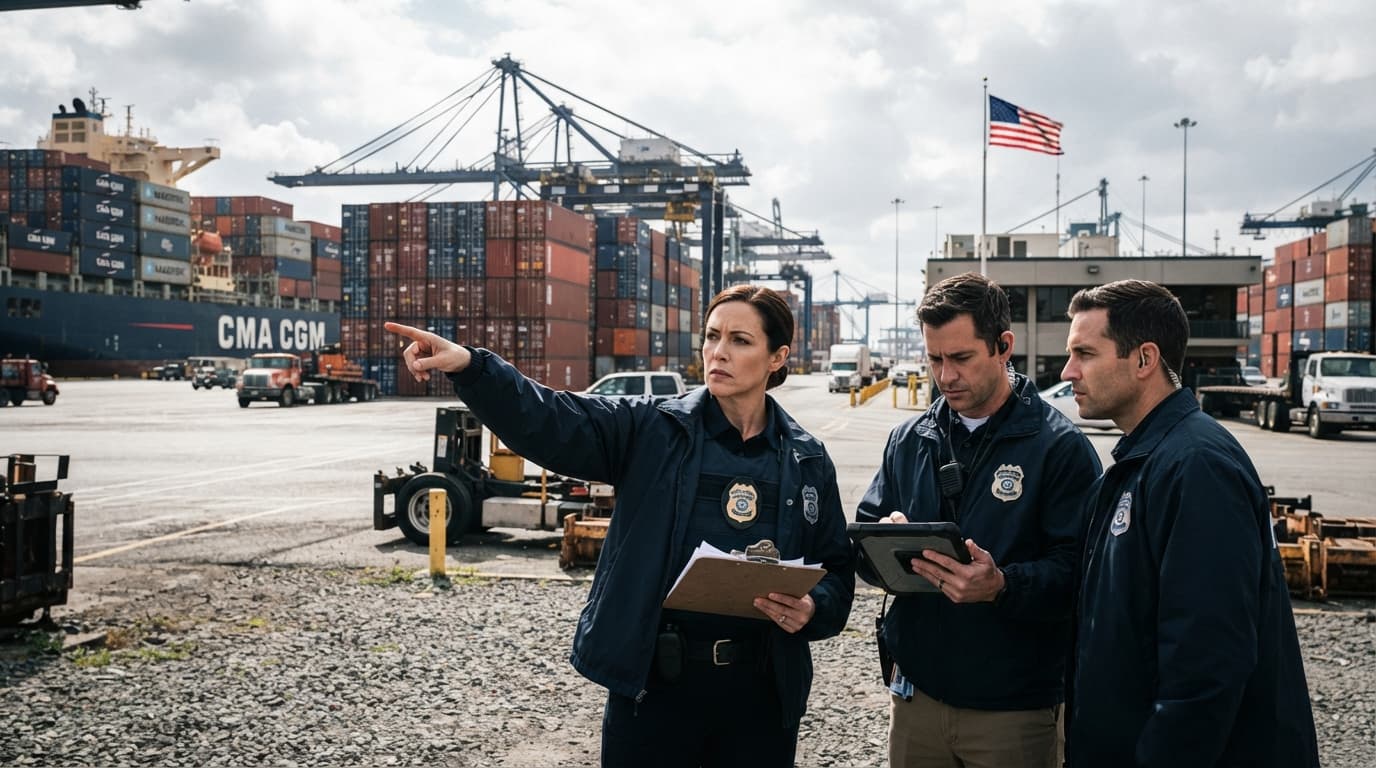
The Department of Justice has spent much of 2025 and 2026 steadily institutionalizing trade and customs fraud as a top-tier federal enforcement priority, and recent developments make that focus difficult to miss. DOJ’s interagency Trade Fraud Task Force, launched in August 2025, has already surpassed $1 billion in combined civil and criminal recoveries. In July 2026, DOJ created a dedicated Global Trade and Commerce Enforcement Section and, jointly with the Department of Homeland Security, published a detailed 31-page Resource Guide to Trade Fraud Enforcement identifying 16 active enforcement priorities. That trade-focused infrastructure now sits inside DOJ’s newly expanded National Fraud Enforcement Division, which an August 13, 2026 memorandum from Assistant Attorney General Colin M. McDonald confirmed will grow to roughly 500 attorneys and staff by August 24, with continued rapid growth planned over the following two years. This analysis examines how these pieces fit together and what importers should do to prepare for a more sophisticated and better-resourced federal enforcement posture.
DOJ Puts Trade Fraud at the Center of Its New National Fraud Enforcement Division
(美国司法部将贸易欺诈列为新设国家反欺诈执法局的核心优先事项)
1 · A Steadily Building Institutional Focus
From Stated Priority to Standing Infrastructure
Recent developments within the Department of Justice highlight a strengthening, and increasingly institutionalized, federal focus on trade and customs enforcement. This has not been a single announcement but rather a sustained build-out over roughly eighteen months.
In early 2025, DOJ announced that its Criminal Division’s enforcement priorities for prosecuting corporate and white-collar crimes would include trade and customs fraudsters, including those who commit tariff evasion. DOJ subsequently put teeth into that effort by launching, in August 2025, a revitalized interagency Trade Fraud Task Force (TFTF) with a nationwide mandate to investigate and prosecute trade fraud and related cases—a joint initiative between DOJ and DHS, drawing on the investigative resources of Homeland Security Investigations (HSI) and CBP.
The Task Force’s Track Record
In just under a year, the Trade Fraud Task Force reported surpassing $1 billion in combined civil and criminal recoveries, penalties, forfeitures, and publicly charged losses—a milestone DOJ described as reflecting a fundamental shift toward rigorous criminal prosecution and civil enforcement under the False Claims Act.
Worth noting for context: roughly half of that headline figure traces to a single settlement whose related criminal convictions actually date to 2021, years before the task force existed—a $549.5 million agreement resolving allegations that a company and related entities evaded antidumping and countervailing duties on more than 2.2 million aluminum extrusions by misrepresenting them to CBP as finished “pallets.” A separate, more recent case illustrates the task force’s own investigative work more directly: in December 2025, Ceratizit USA agreed to pay $54.4 million to settle allegations that it transshipped tungsten carbide through a third country and falsely declared the product’s origin. Together, these cases illustrate the range of conduct DOJ is targeting—from long-running valuation and classification schemes to more straightforward transshipment and origin fraud.
2 · A Dedicated Litigating Section for Trade Fraud
The Global Trade and Commerce Enforcement Section
On July 14, 2026, DOJ announced the creation of a new Global Trade & Commerce Enforcement Section (GTCES)—a permanent, dedicated litigating component specifically focused on criminal trade and customs fraud. The creation of GTCES signals that trade fraud enforcement is no longer treated as a temporary initiative or a secondary responsibility folded into other divisions, but rather a fixed institutional priority.
DOJ has described the mission of GTCES as investigating and prosecuting criminal import, trade, and other fraud offenses that undermine U.S. industries, evade external revenue collection, threaten consumers’ health and safety, finance foreign adversaries, promote forced labor through illegal trade practices, and violate U.S. laws and regulations governing domestic and foreign commerce.
The Joint DOJ-DHS Resource Guide
On the same day, July 14, 2026, DOJ and DHS jointly released “A Resource Guide to Trade Fraud Enforcement”—a 31-page document representing, in DOJ’s own description, an unprecedented joint undertaking to provide the public, trade and enforcement attorneys, and the business community with detailed information regarding the government’s shared enforcement approach and priorities.
The Resource Guide identifies 16 active enforcement priorities, including manifest fraud, false country of origin claims, false HTS classification, undervaluation of imported goods, antidumping and countervailing duty evasion, shell company fraud, customs broker fraud, drawback fraud, and forced labor-related trade violations, among others. The guide addresses who and what is covered by customs regulations and laws against trade fraud, as well as the different types of civil and criminal resolutions available in trade fraud enforcement—and it makes clear that the False Claims Act, in particular, has emerged as the centerpiece of modern trade fraud enforcement, given its treble-damages structure and whistleblower qui tam provisions.
Why This Matters: the Resource Guide is meant to function less as an abstract policy statement and more as a practical roadmap. It pairs statutory requirements with real-world examples of past enforcement actions, giving importers and their counsel a clearer sense of exactly what conduct DOJ and DHS consider actionable—and what evidentiary trail (entry filings, broker communications, origin certificates, and related records) tends to surface in these cases.
3 · The National Fraud Enforcement Division: Scale and Structure
From April Launch to August Expansion
DOJ’s trade fraud enforcement infrastructure now sits within a larger institutional structure: the National Fraud Enforcement Division (NFED), formally established on April 7, 2026, by then-Acting Attorney General Todd Blanche, following a January 2026 White House announcement. The division consolidates and prioritizes DOJ’s efforts to prosecute fraud involving public trust and financial integrity, health care, internal revenue, global trade and commerce, and corporate misconduct.
On August 13, 2026, Assistant Attorney General Colin M. McDonald—who leads the division—issued a memorandum detailing NFED’s structure and enforcement agenda. Among its disclosures: the division is on track to reach approximately 500 attorneys and staff by August 24, 2026, with an explicitly “aggressive plan” for continued rapid growth over the following two years. It’s worth being precise here: August 24 marks a staffing milestone, not the division’s formal establishment—NFED has been operational since April, and DOJ published a further final rule formalizing the division’s authority on August 18, 2026.
Why DOJ Is Investing at This Scale
The McDonald memorandum grounded this expansion in Government Accountability Office estimates that the federal government loses between $233 billion and $521 billion annually to fraud across all categories—a figure DOJ cited as justification for consolidating fraud expertise, reassigning personnel, and investing heavily in data analytics designed to identify and pursue fraud nationwide.
The Division’s Structure
NFED operates through several specialized litigating sections, including Health Care Fraud, Public Trust and Financial Integrity, Tax, Global Trade & Commerce Enforcement, National Enforcement, Corporate Enforcement, Asset Recovery, and Appellate, supported by a National Fraud Detection Center and dedicated data science capabilities. Career prosecutors are being deployed nationwide alongside U.S. Attorneys’ Offices, with each office directed to assign an experienced prosecutor to work with the division.
Trade’s Place Among Five Priorities
With respect to trade specifically, the McDonald memorandum stated that the Fraud Division will lead the department’s coordinated criminal enforcement strategy, targeting trade and customs violations and supply chains polluted by forced labor. Prosecutors are directed to focus on systemic, high-impact noncompliance that threatens U.S. economic and national security, including by prioritizing the investigation and prosecution of illicit transshipment schemes, country-of-origin fraud, the undervaluation of imported goods designed to evade duties, sanctions evasion, and foreign forced labor schemes.
4 · Reading the Signals: What This Institutional Buildout Suggests
A Pattern, Not a One-Off Announcement
Taken individually, any single one of these developments—the Task Force’s launch, its billion-dollar recovery milestone, the creation of GTCES, the Resource Guide’s publication, or NFED’s staffing expansion—might be read as a discrete policy update. Taken together, they describe a consistent pattern: DOJ has moved from stating trade fraud as a priority, to building dedicated investigative infrastructure around it, to publishing detailed public guidance about how that infrastructure will be used, to substantially resourcing the division responsible for it.
The Enforcement Toolkit Is Expanding, Not Just the Headcount
The Resource Guide’s emphasis on the False Claims Act is particularly significant for importers to understand. Unlike a standard customs penalty proceeding, an FCA case can involve treble damages, per-violation penalties, and the possibility of a whistleblower-initiated qui tam action—meaning that current or former employees, competitors, or business partners with knowledge of noncompliant practices have a direct financial incentive to report them.
Data-Driven Detection Is a Growing Feature
Several of DOJ’s public statements about NFED emphasize data-driven investigative tools alongside traditional whistleblower and agency referral channels. For importers, this suggests that detection may increasingly stem from pattern analysis across entry data, valuation trends, and classification anomalies—rather than solely from a single tip or referral.
5 · What Importers Should Do
Strengthen Compliance Measures Proactively
Taken together, these developments indicate that importers should expect more—and more in-depth and sophisticated—federal investigations of trade and customs fraud. Importers are well-advised to ensure they have strong compliance measures in place to withstand this increased scrutiny and avoid the financial and reputational costs that violations and resulting penalties could incur.
Consult the Resource Guide Directly
As part of these efforts, importers should consult “A Resource Guide to Trade Fraud Enforcement,” issued jointly by DOJ and DHS, which addresses who and what is covered by customs regulations and trade fraud laws, as well as the range of civil and criminal resolutions available in trade fraud enforcement. Reviewing the guide’s 16 identified enforcement priorities against your own supply chain and documentation practices is a reasonable starting point for a proactive internal review.
Prioritize Documentation and Recordkeeping
Given the Resource Guide’s emphasis on entry filings, broker communications, origin certificates, and related records as evidentiary building blocks, importers should treat thorough, consistent recordkeeping as a core compliance function rather than an administrative afterthought.
Pay Particular Attention to High-Priority Conduct Categories
Based on DOJ’s stated priorities, importers with any exposure to the following areas should consider heightened internal review: country-of-origin documentation and claims, valuation methodology and support for declared values, antidumping and countervailing duty compliance, transshipment risk within multi-country supply chains, and forced labor due diligence across the full supply chain.
Understand the False Claims Act Exposure
Given the Resource Guide’s emphasis on the False Claims Act as a centerpiece enforcement tool, importers should understand that internal knowledge of a compliance gap—including a documented but unaddressed inconsistency—can materially affect exposure if that gap is later identified by DOJ or reported by a whistleblower.
Monitor Continued Institutional Growth
With NFED’s headcount continuing to expand over the next two years and GTCES still a relatively new section, importers should expect continued growth in federal investigative capacity in this area—not a temporary surge that will recede.
6 · Conclusion: A More Sophisticated Enforcement Environment
The Bigger Picture
The creation of the National Fraud Enforcement Division, the dedicated Global Trade and Commerce Enforcement Section within it, the Trade Fraud Task Force’s billion-dollar recovery milestone, and the detailed joint Resource Guide collectively describe a federal enforcement environment that is more institutionalized, better resourced, and more publicly transparent about its priorities than in years past.
The Strategic Takeaway
For importers, the message is less about any single new rule and more about the durability and sophistication of the enforcement apparatus now in place. A compliance program that was adequate under a less centralized, less data-driven enforcement environment may not be adequate going forward. Organizations that proactively review their trade compliance programs against DOJ and DHS’s own stated priorities—rather than waiting to be identified through an investigation—will generally be far better positioned to manage this risk.
If your organization would benefit from a compliance program review informed by DOJ and DHS’s current trade fraud enforcement priorities, our trade compliance team is available to help you assess your exposure.
This analysis reflects DOJ and DHS public announcements and guidance through August 2026, including the Trade Fraud Task Force’s enforcement results, the Resource Guide to Trade Fraud Enforcement published July 14, 2026, and the National Fraud Enforcement Division’s enforcement priorities memorandum issued August 13, 2026. Specific enforcement outcomes and institutional developments continue to evolve. Importers should consult with trade counsel and compliance professionals for guidance tailored to their specific circumstances.