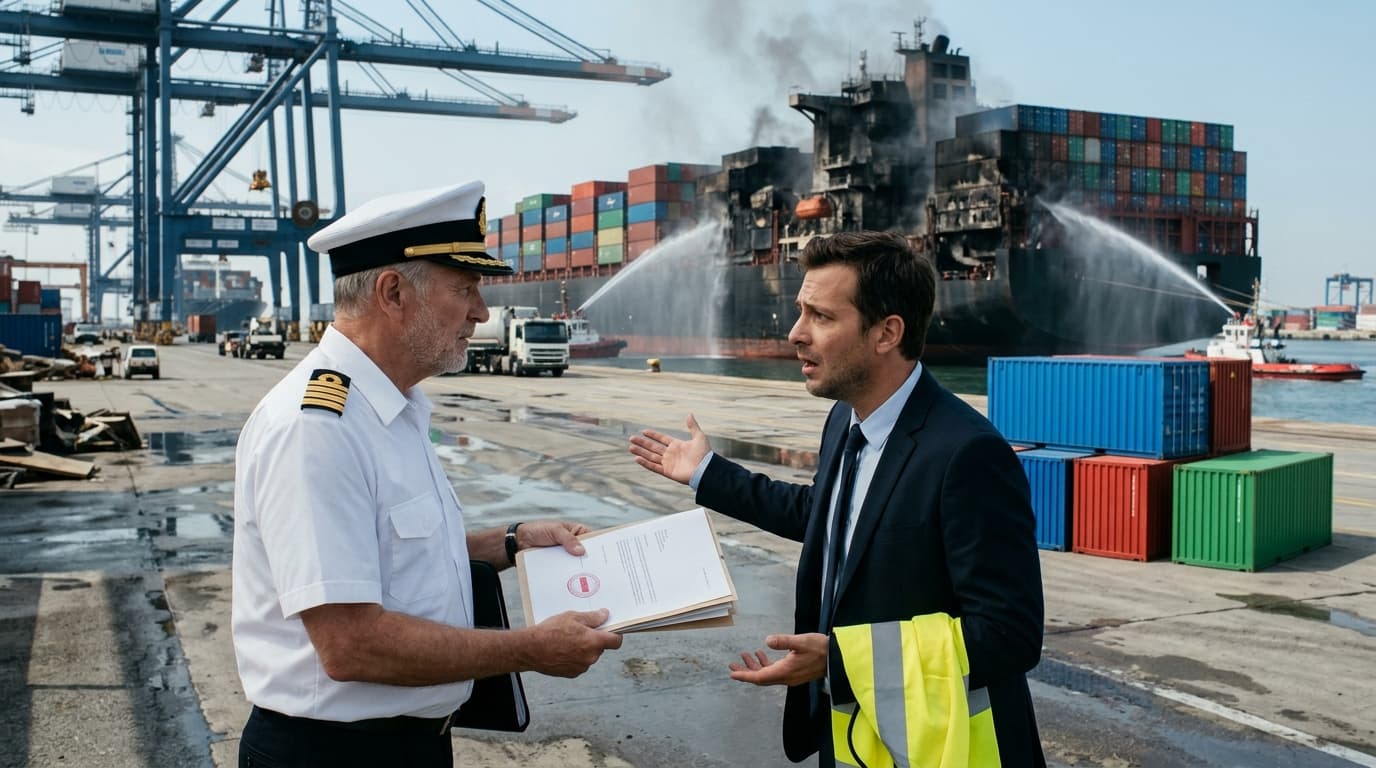
Executive Summary Imagine your container is sitting undamaged on a ship when a fire breaks out in a hold on the other side of the vessel. Firefighting, towage, and salvage keep the ship afloat, and your goods arrive safely. Then you receive a notice: before your cargo can be released, you must provide security toward the cost of saving the voyage. This is general average (GA), one of the oldest principles in maritime law. When extraordinary sacrifices or expenses are intentionally and reasonably made to save a ship and its cargo from a common peril, the cost is shared among all parties with property at risk, in proportion to the value of what was saved. Cargo owners contribute even if their goods were not damaged, and often even if the incident was caused by the vessel’s crew, because standard bills of lading include clauses that preserve contribution. In April 2024, after the container ship Dali struck Baltimore’s Francis Scott Key Bridge, the vessel’s owner declared general average, bringing thousands of cargo owners into the cost of salvage. This guide explains how general average works, how contributions are calculated, what security cargo owners are asked to provide, and why marine cargo insurance is the main protection.
General Average Explained: When a Vessel Incident Makes Your Cargo Pay for Someone Else’s Loss
(共同海损详解:船舶事故如何让您的货物为他人损失买单)
1 · What General Average Is
A Principle Older Than Modern Shipping
General average traces back to ancient Mediterranean seafaring. The classic example is jettison: in a storm, the crew throws some cargo overboard to lighten the ship and save everyone else’s goods. It would be unfair for the owner of the jettisoned cargo to bear the entire loss, so all parties who benefited share it.
The same idea applies today, though the costs now tend to be salvage fees, towage, firefighting, port of refuge expenses, and cargo transshipment, rather than cargo thrown overboard.
The Core Conditions
| Condition | Meaning |
|---|---|
| Common peril | A real danger threatening the ship and cargo together |
| Intentional act | A deliberate decision to make a sacrifice or incur an expense |
| Reasonableness | The action was reasonable under the circumstances |
| Extraordinary nature | Beyond the ordinary costs of the voyage |
| Successful result | Some property was saved; contributions are based on saved values |
The Rules That Govern Adjustment
In international shipping, general average is usually adjusted under the York-Antwerp Rules, an internationally recognized set of rules that are incorporated into bills of lading and charter parties by contract. The bill of lading typically states which version of the rules applies and where the adjustment will take place. General average is also recognized in U.S. maritime law.
⚠️ Critical Takeaway: General average is a contractual and legal obligation built into ocean carriage. Shipping goods by sea means accepting that your cargo may be called on to share in the cost of saving the voyage.
2 · What Counts as a General Average Loss
Sacrifices and Expenditures
General average losses fall into two broad categories.
| Category | Examples |
|---|---|
| Sacrifices | Cargo jettisoned; damage from water used to fight a fire; damage to the ship’s machinery from efforts to refloat |
| Expenditures | Salvage rewards; towage to a port of refuge; costs of entering and leaving a port of refuge; discharging, storing, and reloading cargo to make repairs; crew wages and fuel during detention at a port of refuge |
What Is Not General Average
| Not General Average | Why |
|---|---|
| Damage caused directly by the incident (e.g., cargo burned in the fire itself) | This is “particular average,” a loss borne by the owner of the damaged property (and its insurer) |
| Ordinary voyage costs | Fuel, port charges, and crew costs in normal operations |
| Third-party liabilities | Damage to a bridge, pier, or another vessel is a liability matter, not GA |
| Delay losses | Loss of market or late delivery is generally not recoverable in GA |
In the Dali case, for example, general average concerned the costs of refloating and salvaging the vessel and cargo, while the costs of the bridge collapse were a separate liability matter. The incident was investigated by the National Transportation Safety Board (NTSB).
⚠️ Critical Takeaway: A cargo owner can face two separate exposures from one incident: its own goods may be damaged (particular average), and it may also have to contribute to GA for the costs of saving the voyage.
3 · Why Cargo Owners Pay, Even When It Is Not Their Fault
Undamaged Cargo Still Contributes
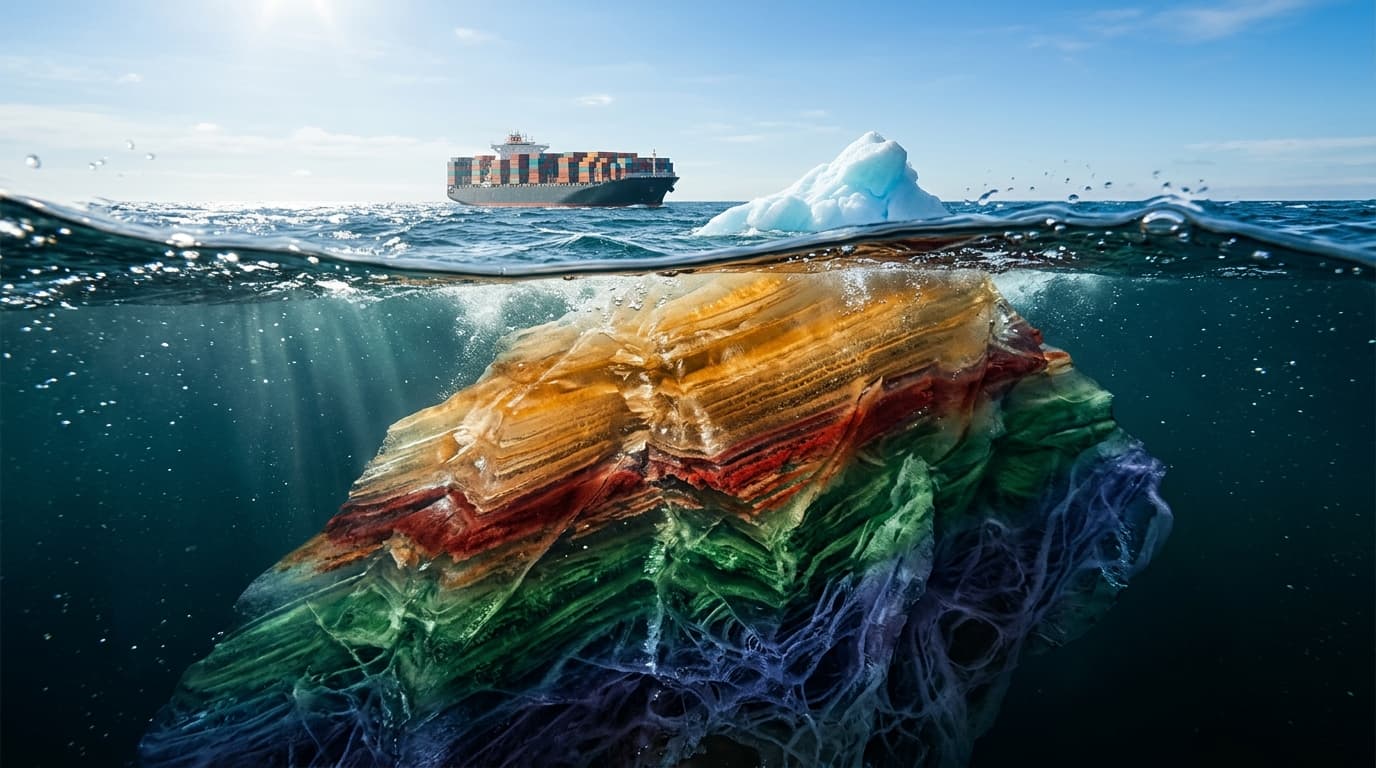
General average is based on benefit, not damage. If your goods were saved because of the sacrifice or expense, you share in the cost, even if your container was never touched. This is the part most importers find surprising.
What If the Carrier Was at Fault?
Under U.S. law, the Carriage of Goods by Sea Act (COGSA) (46 U.S.C. 30701 note) exempts carriers from liability for certain causes of loss, including errors in navigation or management of the ship, provided the carrier exercised due diligence to make the ship seaworthy. Bills of lading commonly include a “New Jason Clause,” which requires cargo to contribute in general average even when the peril resulted from the crew’s negligence, as long as the carrier is not otherwise liable under the contract or law.
Cargo interests may have a defense if the incident resulted from a cause for which the carrier is liable, such as a failure to exercise due diligence to make the vessel seaworthy before the voyage. Those disputes can take years to resolve, and in the meantime, cargo owners are usually still required to provide security to obtain release of their goods.
⚠️ Critical Takeaway: “It wasn’t my fault” is rarely a reason to avoid providing GA security. Any challenge based on carrier fault usually comes later, after the cargo has been released.
4 · How a General Average Case Unfolds
The Typical Sequence
| Stage | What Happens |
|---|---|
| 1. Incident | Fire, grounding, collision, machinery failure, or severe weather |
| 2. Response | Salvage, firefighting, towage, or diversion to a port of refuge |
| 3. Declaration | The shipowner declares general average and appoints an average adjuster |
| 4. Security collection | Cargo owners are asked to provide GA (and often salvage) security before cargo is released |
| 5. Cargo release | Cargo is delivered once acceptable security is provided |
| 6. Adjustment | The adjuster calculates total GA losses and each party’s share |
| 7. Settlement | Contributions are collected and paid; deposits are refunded or applied |
Salvage Security Is Often Separate
When professional salvors are involved, they may require salvage security in addition to general average security. Salvage and GA are related but distinct claims, and cargo owners may receive requests from both the average adjuster and the salvors’ representatives.
Timing
The adjustment of a large general average case can take several years, particularly when many cargo interests are involved, values must be verified, and disputes arise. The practical impact on importers, however, is immediate: cargo can be held until security is provided.
⚠️ Critical Takeaway: The financial settlement of GA can take years, but the security demand comes at the moment you need your cargo released.
5 · How Contributions Are Calculated
The Basic Formula
Each party’s contribution is proportional to the value of its property saved, relative to the total saved value.
| Element | Description |
|---|---|
| Total GA losses | All allowable sacrifices and expenses |
| Contributory values | Value of the ship, cargo, and sometimes freight or fuel at the end of the voyage (or at the place where the adventure ended) |
| GA percentage | Total GA losses ÷ total contributory values |
| Each party’s contribution | Its contributory value × GA percentage |
A Simplified Example (Hypothetical)
| Item | Value |
|---|---|
| Total general average losses | $20,000,000 |
| Contributory value of vessel | $60,000,000 |
| Contributory value of all cargo | $140,000,000 |
| Total contributory value | $200,000,000 |
| GA percentage | 10% |
| Your cargo’s contributory value | $80,000 |
| Your contribution | $8,000 |
In real cases, the percentage depends entirely on the incident. Minor incidents may produce low percentages; major fires or salvage operations can lead to high ones. Because contributions are tied to cargo value, not freight paid, high-value cargo can face a large contribution even if the freight cost was modest.
⚠️ Critical Takeaway: A GA contribution can exceed the cost of the ocean freight many times over, because it is based on the value of the goods.
6 · GA Security: What Cargo Owners Are Asked to Provide
Common Forms of Security
| Security Type | Who Provides It | Purpose |
|---|---|---|
| GA bond (average bond) | Cargo owner (consignee or shipper) | Agreement to pay the cargo’s share once adjusted; provides required information |
| GA guarantee | Cargo insurer | Insurer’s undertaking to pay the cargo’s proper contribution |
| Cash deposit | Uninsured cargo owner | Funds held against the eventual contribution |
| Salvage security | Cargo insurer or cargo owner | Security for the salvors’ claim |
Insured vs. Uninsured Cargo
| Situation | Typical Process |
|---|---|
| Insured cargo | The cargo insurer issues a GA guarantee (and salvage guarantee if needed); the cargo owner signs a GA bond and provides commercial invoices and other documents |
| Uninsured cargo | The cargo owner usually must provide a cash deposit, often a percentage of cargo value estimated by the adjuster, before release |
For uninsured cargo, the required deposit can be large and must be paid before the goods can be released, which creates both a cash-flow burden and delivery delays. Any excess is usually refunded after the final adjustment, but that can take a long time.
Documents Commonly Requested
- Commercial invoice showing cargo value
- Bill of lading details
- Insurance policy or certificate details
- Signed GA bond
- Insurer’s GA guarantee (if insured)
⚠️ Critical Takeaway: Insured cargo is usually released through an insurer’s guarantee. Uninsured cargo often requires a cash deposit, which is where general average hurts most.
7 · How Cargo Insurance Responds
What Marine Cargo Insurance Typically Covers
Standard marine cargo insurance policies commonly cover:
| Coverage Element | What It Means for General Average |
|---|---|
| GA contributions | The insurer pays the cargo’s share of general average |
| Salvage charges | The insurer pays the cargo’s share of salvage |
| Security provision | The insurer provides guarantees so cargo can be released |
| Particular average | Physical loss or damage to the insured goods, subject to policy terms |
Coverage depends on the policy terms, the insured value, and any exclusions. Our international cargo insurance guide explains the main policy types and claims process in detail.
Why Carrier Liability Is Not a Substitute
Some importers rely on the carrier’s liability rather than buying cargo insurance. That approach leaves a gap for general average. Carrier liability is limited by law and contract, and general average is not a carrier liability claim: it is the cargo owner’s own obligation to contribute. Without insurance, the cargo owner faces the GA demand directly.
Insured Value and Underinsurance
If cargo is insured for less than its contributory value, the insurer may pay only a proportion of the GA contribution, leaving the cargo owner to cover the difference. Insured value is commonly based on the commercial invoice value plus freight and a margin; the right basis depends on the policy.
⚠️ Critical Takeaway: General average is one of the clearest reasons to carry marine cargo insurance. Without it, the cargo owner must fund the security and contribution directly.
8 · Why General Average Matters More in the Container Era
Larger Ships, More Cargo Interests
Modern container ships carry many thousands of containers belonging to thousands of shippers and consignees. When general average is declared on a large vessel, the number of cargo interests involved can be enormous, and the process of collecting security from all of them can delay cargo release.
Common Triggers
| Trigger | Why It Leads to GA |
|---|---|
| Container ship fires | Firefighting, salvage, and port-of-refuge costs |
| Groundings | Refloating and salvage operations |
| Collisions and allisions | Salvage and repair-related costs |
| Machinery failure at sea | Towage to a port of refuge |
| Severe weather | Diversion and emergency measures |
Ports and routes facing congestion or weather risks can also influence how incidents unfold. See our analysis of hurricane closures at Mexico’s Pacific ports for how disruptions concentrate risk.
Effect on the Supply Chain
| Impact | Description |
|---|---|
| Delayed delivery | Cargo held until security is provided and the ship reaches a discharge port |
| Transshipment | Cargo may be moved to another vessel at additional cost |
| Storage and demurrage | Extra charges may accrue at ports of refuge or destination; see our demurrage and detention guide |
| Inventory disruption | Goods may miss seasonal selling windows |
| Cash flow | Uninsured cargo owners may have to fund deposits |
⚠️ Critical Takeaway: On a large container ship, general average turns one vessel’s incident into thousands of separate cargo owners’ problems at once.
9 · Practical Considerations
Questions Importers and Exporters Commonly Review
| Area | Consideration |
|---|---|
| Insurance in place | Is marine cargo insurance arranged for every shipment, including GA and salvage coverage? |
| Who insures | Under the Incoterms used, is the buyer or the seller responsible for insurance? |
| Insured value | Is the insured value sufficient to avoid underinsurance? |
| Documentation readiness | Can commercial invoices and policy documents be produced quickly if GA is declared? |
| Contact points | Who will respond to adjuster and salvor requests on your behalf? |
| Contract terms | Which version of the York-Antwerp Rules does the bill of lading incorporate? |
| Landed cost planning | Is insurance included in cost calculations? See our landed cost guide |
The Role of Logistics Providers
When general average is declared, freight forwarders and NVOCCs often help their customers by passing on notices, coordinating documents, and working with insurers and adjusters. If the forwarder arranged cargo insurance, it may also help coordinate the guarantee. Once cargo is released, warehouse and transportation partners help get delayed goods back into the supply chain. Our freight forwarder selection handbook discusses what to expect from these relationships.
Incoterms and Responsibility
Incoterms determine who bears risk during the ocean voyage and, for some terms, who must arrange insurance. Under terms where the buyer bears risk during the voyage, a buyer that has not insured the cargo may face GA demands directly, even if the seller arranged the freight. Clarity on responsibility before shipment avoids confusion after an incident.
10 · Conclusion: Shared Risk, Shared Cost
General average reflects a simple principle of fairness: when part of a voyage is sacrificed to save the rest, everyone who benefits shares the loss. In practice, that principle can mean unexpected costs and delays for cargo owners whose goods were never damaged.
Key Takeaways
| Factor | What to Know |
|---|---|
| Definition | Intentional, reasonable, extraordinary sacrifice or expense to save ship and cargo from a common peril |
| Who pays | All parties with property saved, in proportion to saved value |
| Undamaged cargo | Still contributes |
| Carrier fault | Often does not prevent contribution because of COGSA defenses and the New Jason Clause; disputes resolved later |
| Governing rules | Usually the York-Antwerp Rules, as incorporated in the bill of lading |
| Calculation | GA percentage = total GA losses ÷ total contributory values |
| Security | GA bond plus insurer guarantee, or a cash deposit for uninsured cargo |
| Salvage | Often requires separate salvage security |
| Timeline | Security needed immediately; final adjustment can take years |
| Protection | Marine cargo insurance typically covers GA contributions and salvage |
The Bottom Line
For importers and exporters moving goods by sea, general average is a low-frequency but high-impact risk. The organizations least affected are those that insure every shipment, keep their documentation in order, and work with logistics partners that respond quickly when a declaration arrives. When an incident does delay cargo, a partner with warehousing and inland capabilities at major U.S. gateways can help recover the schedule once goods are released.
The message is clear: when a ship is saved, every cargo owner on board shares the bill, and cargo insurance is what turns that bill from a crisis into paperwork.
This guide provides general information on general average and does not constitute legal or insurance advice. U.S. references include the Carriage of Goods by Sea Act (46 U.S.C. 30701 note). Information on the Dali incident reflects public reporting and the investigation by the National Transportation Safety Board. The application of general average depends on the bill of lading, the applicable version of the York-Antwerp Rules, governing law, and the specific facts of each incident. Organizations should consult with marine insurance professionals and maritime counsel for guidance tailored to their circumstances.