
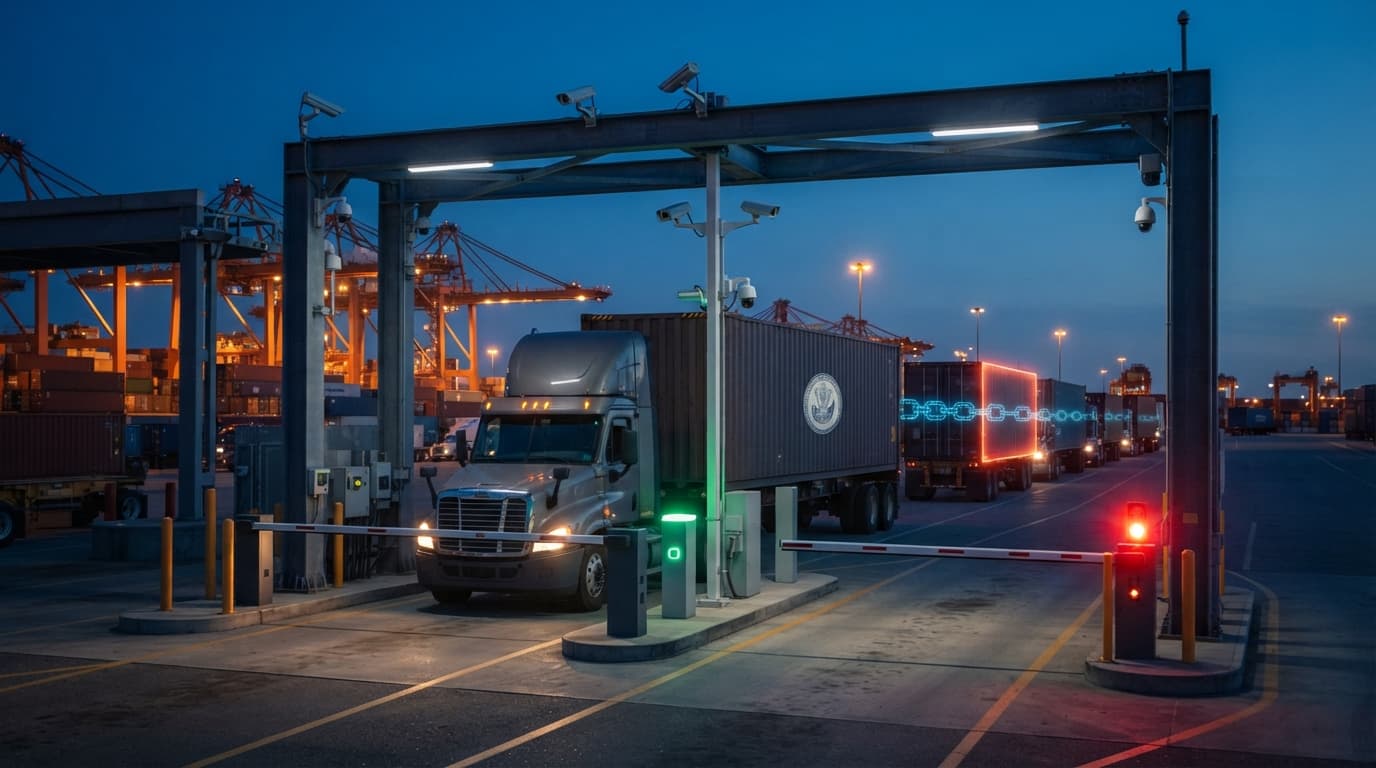
Executive Summary Executive Order 14411, signed June 3, 2026, introduces a new “good standing” requirement for every Importer of Record (IOR) in the United States. Under Section 2(d) of the order, all IORs must maintain good standing with CBP, and CBP will define that standard based on the IOR’s and its affiliates’ history of compliance with U.S. customs and trade laws, along with payment of required customs liabilities. The consequence of losing good standing is severe: an IOR that falls out of good standing may be prohibited from importing goods or designating a customs broker to act on its behalf. This is not merely an administrative burden—it is an entry-continuity risk that can halt a company’s ability to import entirely. This analysis examines what “good standing” requires, what proof CBP will demand, and what importers must do to avoid the trap.
The “Good Standing” Trap: What U.S. Importers Must Prove Under EO 14411
(“良好信誉"陷阱:EO 14411下美国进口商必须证明的事项)
1 · What Is the “Good Standing” Requirement?
The Statutory Foundation
Section 2(d) of Executive Order 14411 directs the Secretary of Homeland Security to “require all IORs to maintain ‘good standing’ with CBP” within 180 days of the order’s date—approximately late November to early December 2026. The order specifies that CBP shall define “good standing” based on:
- The IOR’s history of compliance with U.S. customs and trade laws and regulations
- The IOR’s affiliates’ history of compliance with those same laws and regulations
- Payment of required customs liabilities, “among other relevant considerations”
A Concrete Example, Straight From the Order: the executive order does not leave “good standing” entirely undefined. It specifies at least one automatic disqualifier: IORs that CBP has found to have illegally imported fentanyl, nitazene, or other illicit substances or contraband—including precursor chemicals for manufacturing illicit substances—will not be considered in good standing, “consistent with applicable law.” This is the clearest signal so far of where CBP’s good-standing determinations are likely to start, even as the broader definition remains to be filled in through forthcoming CBP guidance.
The Affiliate Dimension
The inclusion of affiliates in the good standing assessment is one of the most consequential aspects of the requirement. As legal analysts have noted, this means that a compliance failure by one affiliate could jeopardize the good standing of the entire corporate family. Importers with complex corporate structures—common among Chinese and multinational companies—must ensure that compliance is maintained across the enterprise, not just at the importing entity level.
The Consequence: A Bar on Importing
The order is explicit about the consequence of losing good standing. An IOR that is not in good standing “may be prohibited from importing goods or designating a broker to act on their behalf”. In practical terms, this means:
- The IOR cannot file entries
- The IOR cannot use a customs broker to file entries on its behalf
- The IOR’s import operations effectively cease
⚠️ Critical Takeaway: “Good standing” is not a one-time certification—it is a continuously maintained status. Importers must be able to demonstrate compliance not just at the time of application, but on an ongoing basis.
2 · What Must an IOR Prove?
The Four Pillars of Good Standing
Based on the executive order and subsequent CBP guidance, importers should expect to prove four categories of information to establish and maintain good standing.
Pillar 1: Compliance History
The IOR and its affiliates must demonstrate a history of compliance with U.S. customs and trade laws. This includes:
- No unresolved customs penalties or enforcement actions
- No pattern of compliance violations (e.g., repeated misclassification, undervaluation, or origin misrepresentation)
- No involvement in forced labor violations, transshipment schemes, or other trade fraud
- Accurate and complete Form 5106 information on file with CBP
CBP has already begun enhanced verification of IOR data. As of September 18, 2026, CBP may immediately void an IOR number if it determines that Form 5106 information is inaccurate or incomplete. Physical addresses, email addresses, telephone numbers, and taxpayer identification information must belong directly to the importer, and a broker submitting the form must hold a power of attorney executed directly with that importer.
Pillar 2: Payment of Customs Liabilities
Good standing requires full payment of all customs liabilities. This includes:
- Duties and tariffs owed on prior entries
- AD/CVD cash deposits and final assessments
- Penalties and liquidated damages
- Any outstanding bills from CBP
Importers with unpaid balances—whether from disputes, audits, or administrative errors—may find their good standing at risk.
Pillar 3: Tangible Domestic Assets or Bonding
The order requires that an IOR maintain “a minimum level of tangible domestic assets, bonding, or both” as determined by CBP to ensure compliance with U.S. customs and trade laws. This provision is particularly significant for foreign IORs, which may lack substantial U.S. assets.
The order also directs CBP to increase the minimum required bond coverage for all IORs. For importers that have historically maintained minimal bonds, this could mean a substantial increase in bonding costs.
Pillar 4: Ownership and Affiliation Disclosure
Importers must provide CBP with additional data and identification information, including:
- Anticipated import volumes
- Year organized
- Ownership and beneficial ownership disclosures
- Business affiliation disclosures
- Domestic asset disclosures
- Any other data CBP deems necessary
This represents a significant expansion of the information importers must provide—and a corresponding increase in the verification burden.
3 · The Vetting Cascade: How Brokers Become Gatekeepers
The CTPAT Connection
Section 2(c)(i) of EO 14411 creates a direct linkage between good standing and the CTPAT program. Foreign IORs will be required to be validated in CTPAT; if they are not, they must use a licensed CTPAT-validated customs broker (CVCB) to file entries with CBP.
This creates a vetting cascade: CBP vets brokers, brokers vet importers, and importers must prove their good standing to both.
What Brokers Will Ask
CBP has issued guidance outlining the due diligence that CTPAT-validated customs brokers are expected to perform on foreign clients. Importers should expect their brokers to request:
| Information Category | Specific Requests |
|---|---|
| Legal Identity | Ownership structure, beneficial owners, business affiliations |
| U.S. Assets | Tangible assets held in the United States |
| Compliance Record | Import history, prior penalties or enforcement actions |
| Financial Capacity | Evidence of ability to pay duties, taxes, and fees |
| Supply Chain | Manufacturers, locations, production conditions |
| Product Details | Classification, valuation methodology, country of origin support |
Brokers are required to maintain records of all vetting activities, including the vetting file, power of attorney, and related communications, to demonstrate to CBP that they exercised appropriate due diligence.
The Broker’s Penalty Exposure
Brokers who fail to conduct required due diligence, repeatedly represent noncompliant or unverifiable clients, or fail to cooperate with CBP information requests face significant penalties, including:
- Financial penalties
- Increased audit frequency
- Suspension or removal from the CTPAT program
Additionally, Section 4(c) establishes a minimum penalty floor of 50 percent of the assessed penalty for violations, while eliminating mitigation options for repeat offenders.
⚠️ Critical Takeaway: Brokers cannot serve as a workaround for debarred importers. An IOR that loses good standing is barred from designating a broker to act on its behalf.
4 · What Importers Must Do Now
Step 1: Conduct a Corporate-Wide Compliance Audit
Because good standing is assessed at the affiliate level, importers must review compliance across the entire corporate family. This includes:
- Identifying all affiliates that may be considered part of the IOR’s compliance profile
- Reviewing compliance histories for each affiliate
- Resolving any outstanding penalties, disputes, or unpaid liabilities
- Documenting the resolution of any issues identified
Step 2: Verify and Update Form 5106 Information
With CBP’s enhanced verification beginning September 18, 2026, importers should immediately verify that their Form 5106 information is:
- Accurate (legal name, address, contact information)
- Complete (ownership details, business affiliations)
- Directly owned by the importer (not a third-party agent’s information)
- Supported by a valid power of attorney if a broker is involved
Step 3: Assess Bonding Adequacy
Importers should review their current bond coverage and assess whether it is sufficient for the increased minimums CBP is expected to require. For foreign IORs, this is particularly critical—the order directs enhanced bonding requirements for foreign entities.
Step 4: Compile Ownership and Asset Documentation
Importers should begin compiling:
- Ownership structure charts
- Beneficial ownership documentation
- Domestic asset schedules
- Affiliation disclosures
- Anticipated import volume projections
Step 5: Coordinate with Customs Brokers
Importers should proactively engage with their customs brokers to:
- Understand what information the broker will need to complete vetting
- Provide documentation proactively rather than waiting for requests
- Confirm that the broker is CTPAT-validated (required for foreign IORs)
- Establish a process for ongoing compliance verification
Step 6: Monitor Regulatory Developments
CBP is expected to issue formal regulations defining “good standing” in detail. Importers should monitor:
- Federal Register notices on IOR eligibility regulations
- CBP CSMS messages on implementation timelines
- Industry guidance from trade associations and legal counsel
A Related Development to Watch: Section 2(e) of the same executive order separately directs CBP to update the IOR registry within the same 180-day window—removing inactive IORs, confirming active IORs are compliant with applicable regulations and disclosures, and creating risk-based tiers for IORs based on compliance history, enforcement actions, and audit results. This tiering system is likely to work hand-in-hand with the good standing determination: importers assigned to a higher-risk tier should expect more frequent audits and closer scrutiny, even short of an outright loss of good standing.
5 · The Strategic Implications
The End of “Importing as a Right”
CBP Commissioner Rodney Scott characterized the philosophy behind EO 14411 directly: “Importing into the U.S. has for too long been treated as a right, not a privilege”. The good standing requirement operationalizes that philosophy—importing is now conditional on maintaining compliance.
The Competitive Advantage for Compliant Importers
For importers that have maintained strong compliance programs, the good standing requirement creates a competitive advantage. As brokers become gatekeepers, importers with clean compliance records will find it easier to secure broker representation and maintain uninterrupted import operations. Those with compliance issues may find themselves locked out of the U.S. market.
The Affiliate Risk for Chinese Companies
For Chinese companies with complex corporate structures—including multiple affiliates, joint ventures, and related entities—the affiliate-level assessment poses a significant risk. A compliance issue at one affiliate could jeopardize the good standing of the entire group, potentially halting imports for all related entities.
6 · Conclusion: Preparing for the Good Standing Era
The “good standing” requirement under EO 14411 represents a fundamental shift in U.S. customs enforcement. Importing is no longer a right—it is a privilege conditioned on continuous compliance.
Key Takeaways
| Factor | Detail |
|---|---|
| Legal Authority | EO 14411, Section 2(d) |
| Deadline | ~180 days from June 3, 2026 (late Nov–early Dec 2026) |
| Assessment Basis | IOR and affiliates’ compliance history; payment of liabilities |
| Consequence of Loss | Barred from importing; barred from designating a broker |
| Key Requirements | Tangible U.S. assets/bonding; ownership disclosure; accurate Form 5106 |
| Broker Role | CTPAT-validated brokers must vet foreign IORs |
| Penalty Floor | 50% minimum; no mitigation for repeat offenders |
The Bottom Line
The good standing trap is real. Importers that fail to prepare—by auditing compliance, verifying Form 5106 data, assessing bonding, and coordinating with brokers—risk losing the ability to import entirely. For U.S. and Chinese companies alike, the message is clear: compliance is no longer a back-office function—it is a condition of market access.
The message is clear: In the new era of customs enforcement, good standing is not optional. It is the price of admission.
This analysis reflects Executive Order 14411, “Strengthening Customs Enforcement,” signed June 3, 2026, and related CBP guidance and industry analysis as of September 2026. Specific regulatory requirements, deadlines, and definitions are subject to CBP rulemaking and subsequent guidance. Importers should consult with customs counsel and trade compliance professionals for guidance tailored to their specific corporate structures and compliance profiles.