
Executive Summary
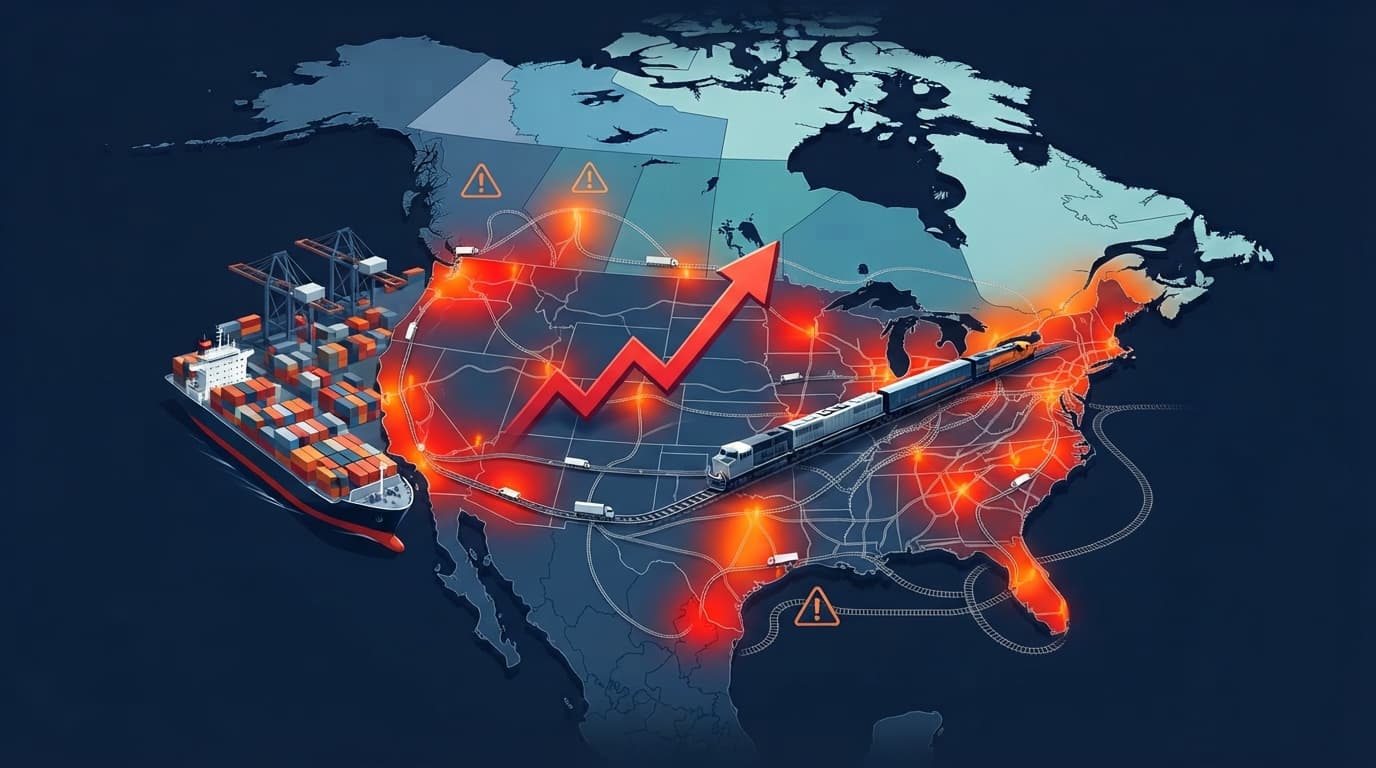
North American intermodal freight is experiencing a significant demand surge in 2026, driven primarily by rising truckload rates and tightening truck capacity that are pushing shippers toward cost-effective rail alternatives. Domestic intermodal volumes are running well above the prior year, with early 2026 marking some of the strongest months for domestic container volume in recent memory. The rate spread between truckload and intermodal has widened to compelling levels on many long-haul lanes. This modal shift is being driven less by organic demand growth and more by cost pressures in the truckload market. Understanding the underlying dynamics helps shippers evaluate when and how intermodal conversion makes strategic sense.
Intermodal Demand Surge: Truckload Rate Rises Fuel a Structural Modal Shift
(多式联运需求激增:卡车运费上涨推动结构性运输方式转变)
1 · The Market Context: A Modal Shift in Motion
The North American freight market is undergoing a significant structural transformation as rising truckload costs drive shippers to reevaluate their mode strategies and increasingly turn to intermodal rail as a cost-effective alternative.
The Tightening Truckload Market
Capacity Pressures and Rate Surges: The truckload market has experienced meaningful tightening throughout 2026, driven by a combination of regulatory pressures, carrier exits, and structural supply constraints. Truckload spot rates have climbed substantially on a per-mile basis, while contract rates have also moved higher year-over-year. Tender rejection indices have climbed well above year-ago levels, reflecting less carrier willingness to accept freight at previously prevailing rates.
Truckload spot rates have now crossed above contract rates in aggregate—a clear signal that contract renewals are likely to see meaningful increases as agreements roll over.
The tightening reflects multiple structural factors. Regulatory actions regarding English proficiency requirements, immigration policies affecting non-domiciled commercial driver’s licenses, and tighter enforcement targeting less reputable operators are removing capacity from the market. Less reputable driver training institutes are increasingly being forced out of business, narrowing the pipeline of new entrants.
Secondary Impacts Across Modes: The truckload tightening does not remain contained within its own mode. Industry reporting has noted a shift of freight out of the truckload mode and into others, particularly intermodal. This conversion, in turn, can lead to tighter capacity and firmer rates across multiple modes as the shift plays out.
Intermodal’s Counter-Cyclical Performance
Volume Growth Amid Market Volatility: While truckload markets have tightened, intermodal volumes have demonstrated notable resilience and growth. Through the first several months of 2026, total intermodal volume has run modestly ahead of the prior year, with domestic containers performing particularly well and posting a meaningfully stronger annual increase.
The domestic intermodal market has been especially strong. Domestic intermodal volume has been running well into double-digit percentage growth year-over-year at points during the year—an unusually strong showing. Early 2026 marked a record month for domestic volume on some measures, with momentum carrying through the spring.
The July 2026 Picture: Industry volume indices for July 2026 have registered among the highest readings of the year, offering a real-time gauge of intermodal market conditions ahead of official monthly data releases. Analysts following the intermodal sector have noted that the strength observed is real and continuing to show up in current-month data, with expectations that domestic-led growth will persist, fed by steady demand and ongoing capacity restrictions in long-haul trucking.
2 · The Rate Spread: Intermodal’s Compelling Cost Advantage
The widening gap between truckload and intermodal rates represents the primary driver of the current modal shift, creating compelling economics for shippers willing to convert appropriate freight to rail.
Current Rate Dynamics
Truckload Rates: Truckload spot rates, inclusive of fuel, are holding well above year-ago levels nationally. Tender rejection rates have moved to levels not seen consistently since the post-pandemic period.
Intermodal Rates: In contrast, intermodal spot rates have remained comparatively stable, representing a significant discount versus truckload on a per-mile basis. Industry commentary has described trucking spot rates as staging a meaningful recovery while intermodal rates remain relatively anchored near cycle lows—creating a rate spread that analysts describe as a structural advantage supporting modal shift.
Savings by Lane and Region
Transcontinental Savings: The cost advantage of intermodal over trucking has reached compelling levels on key long-haul lanes. Outbound lanes from Southern California, for example, are showing meaningful percentage savings via intermodal compared to truckload—savings that represent a significant cost reduction for shippers moving freight from the West Coast to inland markets.
Regional Eastern Savings: Regional eastern lanes are also delivering notable savings versus truckload, with the gap widening compared to where it stood at the end of last year.
Broader Lane Savings: Industry sources consistently cite savings in the range of 20 to 30 percent on many key long-haul lanes through intermodal conversion, reflecting the underlying gap between per-mile truckload and intermodal linehaul economics.
The Lag Effect and Future Pricing
Intermodal’s Pricing Lag: One of the most important dynamics in the current market is the lag between truckload and intermodal rate movements. Intermodal rates typically do not move in lockstep with truckload; there is usually a delay before intermodal pricing catches up to shifts in the truckload market. This lag creates a window in which savings are at their peak, though the gap can widen further if trucking rates continue moving faster than rail.
The Coming Catch-Up: Industry analysts generally expect intermodal rates to eventually rise to reflect the new market reality, even as truckload pricing is projected to increase at a faster near-term pace than intermodal. This suggests that the current favorable rate environment for intermodal, while durable in the near term, is unlikely to persist indefinitely.
3 · Domestic vs. International: A Structural Shift
One of the most significant developments in the intermodal market is the changing composition of volume, with domestic freight increasingly driving growth while international volumes face different dynamics.
Domestic Intermodal’s Exceptional Strength
Record-Breaking Performance: Domestic intermodal has been the primary driver of current market strength, with domestic container volumes posting some of their strongest annual growth rates in years through the first several months of 2026. Momentum has generally carried through the spring months, with the pre-summer peak higher than the prior year in many markets—underscoring robust demand for containerized rail freight.
Key Drivers: Strong service levels and widening rate spreads versus truckload are fueling shipper interest. With ample container capacity in some networks, domestic intermodal providers have been adjusting rates to drive backhaul volume and better utilize assets.
Industry analysts have described the current dynamic as two things happening simultaneously in intermodal: international volumes tempered by tariff-related import disruption, coupled with tailwinds on the domestic side tied in part to elevated fuel costs pushing shippers toward rail.
International Intermodal’s Different Trajectory
Volatile Landscape: International intermodal is navigating a more variable environment shaped by tariff-driven swings in import activity. International volumes have generally run somewhat above year-ago levels, though this strength partly reflects easier comparisons against prior-year tariff disruptions rather than pure organic growth.
Structural Change: Analysts following the sector have characterized the current environment as something of a break from how intermodal has historically worked, given the overall rise in domestic share relative to international volume—representing a meaningful structural shift in the intermodal freight mix.
Fuel and Tariff Drivers
Fuel Price Impact: Elevated fuel prices for much of 2026 have had a meaningful impact on domestic intermodal demand, with industry stakeholders shifting freight from long-haul trucking to intermodal as diesel costs have remained elevated.
Tariff Effects: It remains somewhat uncertain whether diesel prices or tariff-related import shifts are the larger driver of the current modal shift, and the two factors likely reinforce each other. Regardless of the precise weighting, the effect is clear: domestic intermodal is gaining share while international intermodal follows a different, more policy-influenced path.
4 · Capacity Constraints: The Emerging Challenge
As intermodal volumes surge, capacity is becoming increasingly constrained in key markets, creating new challenges for shippers seeking to capture cost savings.
Regional Capacity Tightening
Markets Under Pressure: Markets experiencing notable increases in intermodal demand include Atlanta, Chicago, Dallas, Houston, Jacksonville, Los Angeles, and Toledo. Several of these markets have been identified as capacity-constrained, with rail carriers beginning to prioritize container reservations for committed customers.
West Coast Constraints: Shippers seeking committed contract rates out of Southern California should generally expect limited near-term availability, with new long-term agreements often delayed until later in the year given current market constraints. In the meantime, shippers moving freight out of California face higher rates and tighter capacity. Other regions are seeing more moderate capacity pressure and pricing increases.
Rail Network Strain
Slowing Train Speeds: The surge in intermodal volume is beginning to strain rail networks. Average intermodal train speeds on several major railroads have moved to multi-month or multi-year lows even as volumes continue climbing—a sign that network capacity is being tested by the pace of demand growth.
Volume Growth vs. Network Capacity: Major railroads have reported meaningful intermodal volume increases on a year-over-year basis, underscoring strong demand even as these gains place additional stress on existing network capacity.
Peak Season Considerations
Elevated Concern Across Regions: Industry freight indices tracking port and rail ramp conditions have flagged elevated concern across regions as capacity exits and rising fuel costs converge. Volumes running meaningfully above year-ago levels reflect shippers seeking relief from rising truckload costs—a migration that is adding pressure to inland rail networks.
Planning Considerations: With capacity tightening in key markets, earlier planning can help protect both savings and service reliability, particularly for shippers hoping to secure intermodal capacity before the busiest periods of the year.
5 · Carrier and Railroad Responses
Railroads and intermodal providers are responding to surging demand with capacity investments, pricing adjustments, and service enhancements.
Service Reliability and Investment
Strong Service Performance: Railroads have generally capitalized on the current environment with improved service reliability, following through on multi-year efforts to enhance network performance. Strong service levels combined with the widening rate spread versus truckload continue to fuel shipper interest in converting appropriate freight to rail.
Infrastructure Investment: Several Class I railroads have invested in new or reopened intermodal corridors intended to cut transit times and unlock additional capacity. These investments, while requiring substantial capital, are aimed at accommodating growth in intermodal traffic while freeing capacity for other freight types on shared corridors.
Pricing Strategy Evolution
Dynamic Capacity Management: Railroads have been implementing more dynamic capacity management strategies, including programs that set volume baselines for committed customers and apply surcharges to volumes above those baselines in constrained markets.
Rate Adjustments: Domestic intermodal providers have been adjusting rates in various markets to drive backhaul volume and better utilize available assets. As intermodal demand strengthens further, rail pricing is expected to gradually follow, though generally with the characteristic lag behind truckload rate movements.
Intermodal as a Profit Driver
Provider Performance: For asset-based intermodal providers, intermodal services have remained a significant profit contributor, with volume gains in some cases driven as much by company-specific share wins as by broad market strength. Providers continue to add intermodal capacity, giving customers greater opportunity to capture the cost and sustainability benefits that intermodal offers, with some committing to substantial multi-year fleet growth targets.
6 · Strategic Considerations for Shippers
Organizations navigating the current intermodal surge may find value in considering several strategic approaches to capture cost savings while managing capacity risks.
Modal Conversion Assessment
Lane-by-Lane Evaluation: The move to intermodal is best treated as a selective lever rather than a wholesale migration. Logistics professionals commonly point to potential rail savings in the range of 10 to 20 percent on the right lanes, with the most compelling opportunities generally found in the 550–1,500 mile range, where freight that previously shifted back to truckload during softer market conditions is now returning to rail.
Freight Characteristics Matter: Not all freight behaves like the boxed, palletized freight that moves cleanly to rail. Specialized freight types, such as certain chemical or temperature-sensitive shipments, may not translate as easily to intermodal networks. Truckload capacity remains the backbone of many networks that also lean on rail, and modal conversion decisions are generally best made lane by lane rather than as a blanket shift.
Fuel Program Optimization
Modal-Specific Fuel Structures: A key structural distinction remains important for shippers evaluating modal options. Intermodal fuel surcharges are typically percentage-based and tied to linehaul rates, while truckload fuel surcharges are generally calculated on a per-mile basis. Applying truckload fuel structures to intermodal movements can unnecessarily inflate costs. Shippers that align fuel programs with intermodal-specific methodologies are generally better positioned to preserve savings in a high-fuel-cost environment.
Linehaul Rate Planning: Linehaul rate increases for intermodal typically lag truckload movements by a matter of months, keeping current pricing comparatively favorable for the time being. The duration of this favorable window is difficult to predict with precision, which is a useful consideration when evaluating longer-term contract commitments.
Capacity Planning
Advance Planning Value: With capacity tightening in key markets, planning further in advance can help protect both cost savings and service reliability. Considerations include securing committed capacity for high-volume, predictable lanes, extending planning horizons to account for reduced carrier availability, and developing backup strategies for critical lanes where intermodal capacity may be limited during peak periods.
Contract and Rate Strategy
Balancing Commitment and Flexibility: Current intermodal rates remain comparatively favorable relative to truckload, though the window for the widest savings may not remain open indefinitely. A balanced approach to contracting—mixing committed volumes with spot market flexibility—can provide cost optimization while preserving the ability to adapt as rate relationships between modes continue to evolve.
7 · Market Outlook and Future Projections
Understanding likely future developments can help inform longer-term strategic planning and positioning.
Near-Term Projections
Continued Domestic Strength: Industry observers generally anticipate that domestic-led intermodal growth will continue in the near term, supported by steady demand and ongoing capacity restrictions in long-haul trucking. These factors are likely to persist into the third quarter, keeping intermodal demand elevated as the broader peak shipping season approaches.
International Comparisons: Comparisons for international intermodal volumes are expected to become somewhat more difficult later in the year as prior-year disruptions roll off the calculation base, potentially moderating reported year-over-year growth rates even if underlying volumes remain firm.
Medium-Term Structural Changes
Market Growth: The broader intermodal freight transportation market is generally projected to see continued expansion over the coming years, driven in part by companies increasingly outsourcing transportation execution risk to specialized providers offering multimodal capabilities.
Capacity Development: While railroads continue investing in network capacity, the pace of investment may not always keep pace with demand growth in the near term. With intermodal train speeds already under pressure on several major railroads, near-term capacity constraints are likely to persist even as longer-term infrastructure investments proceed.
The Next Contract Cycle
Anticipated Rate Increases: The upcoming contract cycle is generally expected to bring higher intermodal rates as the pricing lag relative to truckload movements continues to close. Shippers may wish to anticipate somewhat higher rates in future contract renewals while recognizing that intermodal is likely to remain competitive with truckload even after adjustments.
Strategic Positioning: Organizations may find value in viewing the current rate environment as a window of opportunity to build intermodal more deeply into their long-term supply chain strategies. The structural factors driving truckload tightening—regulatory pressures, limited fleet expansion, and elevated operating costs—show limited signs of reversing in the near term.
8 · Conclusion: A Structural Shift with Strategic Implications
Market Realities
The North American intermodal market is experiencing a significant demand surge in 2026, driven primarily by rising truckload rates and tightening truck capacity. Domestic intermodal volumes have been running well ahead of the prior year for extended stretches, with several months in early 2026 marking some of the strongest domestic container volume readings in recent memory.
The rate spread between truckload and intermodal has widened to compelling levels on many long-haul lanes, particularly outbound from Southern California and on regional eastern corridors. This modal shift is being driven less by organic demand growth and more by cost pressures building in the truckload market.
Strategic Themes
Modal Optimization: The widening gap between truckload and intermodal costs makes modal optimization a worthwhile ongoing exercise. Shippers benefit from systematically evaluating lanes for intermodal conversion, with particular focus on the 550–1,500 mile range where the value proposition tends to be strongest.
Planning Ahead: With capacity tightening in key markets, earlier planning has become increasingly valuable for protecting both cost savings and service reliability. Shippers that wait too long may face more limited options and potentially eroding cost advantages as the market continues to evolve.
Fuel Program Alignment: Aligning fuel programs with modal-specific methodologies is an important detail for preserving savings, since applying truckload fuel structures to intermodal movements can unnecessarily inflate costs.
Contract Strategy: The current rate environment represents a window worth considering carefully, with some shippers choosing to lock in favorable terms while maintaining flexibility to adapt as conditions evolve.
The Longer View
The structural factors driving the current modal shift—regulatory pressures on trucking, elevated operating costs, and tightening capacity—show limited signs of reversing in the near term. This suggests that the shift toward intermodal represents not merely a temporary response to a cyclical rate spike, but potentially a more durable reconfiguration of how freight moves across North America.
Organizations that approach intermodal strategically—with a clear understanding of lane-level economics, appropriate planning, and ongoing monitoring of market developments—are well positioned to capture meaningful cost savings while building more resilient, flexible supply chains for the years ahead.
This analysis reflects North American intermodal market conditions as of July 2026 based on available data and industry reporting. Market conditions evolve continuously and specific circumstances vary by shipper, lane, and commodity. Organizations evaluating intermodal strategies may wish to consult with logistics providers, rail specialists, and supply chain professionals for guidance tailored to their specific requirements and circumstances.