Executive Summary
For decades, logistics providers, freight forwarders, and carriers have generally operated under an assumption that customs compliance was principally the importer of record’s concern. That assumption increasingly appears outdated. The Department of Justice and Department of Homeland Security’s jointly issued Resource Guide to Trade Fraud Enforcement makes fairly explicit what many in the industry have begun to sense in practice: liability for trade fraud now extends meaningfully across the entire supply chain—including third-party logistics providers, freight forwarders, and transporters with no direct role in filing customs entries. Under federal law governing goods imported contrary to law, any party that knowingly receives, conceals, buys, sells, or facilitates the transportation of such merchandise faces potential criminal exposure alongside substantial civil penalties. The era of treating “we simply move the boxes” as a sufficient defense appears to be drawing to a close. This analysis examines the legal framework, illustrative enforcement cases, and practical steps logistics providers may wish to consider in this evolving enforcement environment.
Logistics Providers Face New Liability Under the Trade Fraud Enforcement Guide
(物流服务提供商在贸易欺诈执法指南下面临新的责任风险)
1 · A Fundamental Shift: From Administrative Concern to Enforcement Priority
A Notable Milestone in Mid-July 2026
In mid-July 2026, the Department of Justice announced that the Trade Fraud Task Force—launched in partnership with DHS in August 2025—had surpassed $1 billion in combined civil and criminal recoveries, penalties, forfeitures, and publicly charged losses in less than a year of operation. DOJ leadership framed this shift in fairly direct terms, characterizing prior treatment of customs violations as a mere cost of doing business as no longer acceptable, and describing this milestone as a clear signal that the integrity of the country’s borders and markets will not be compromised for illicit profit—a message intended to reach all supply-chain actors, not merely importers of record.
Around the same time, DOJ and DHS jointly released the first Resource Guide to Trade Fraud Enforcement—a substantial document consolidating the government’s overall approach to customs and trade violations. While not itself legally binding, the guide sends a fairly clear enforcement-intent signal: customs and trade violations are increasingly viewed as serious civil and criminal matters, rather than purely administrative infractions to be resolved quietly.
Why This Matters Specifically for Logistics Providers
The guide states fairly explicitly that federal law reaches well beyond the importer of record alone. Companies that receive, purchase, sell, or transport goods imported contrary to law may face liability if they knew—or in certain circumstances deliberately avoided learning—that the goods entered the United States unlawfully. This framing explicitly covers third-party logistics providers, distributors, and retailers with no direct role in customs filing whatsoever.
The practical implication here is fairly significant: a logistics provider does not need to import goods directly to incur meaningful risk. Simply moving freight that was illegally imported can expose a company to civil penalties, criminal prosecution, or both—depending on what the company knew, or reasonably should have known, about the underlying shipment.
2 · The Legal Framework: How Logistics Providers Can Face Prosecution
Title 18, Section 545: A Genuinely Expansive Tool
The guide highlights Section 545 of Title 18 as one of the government’s most powerful enforcement mechanisms. The statute carries a 20-year statutory maximum and requires forfeiture of smuggled goods or their equivalent value.
Critically, the statute’s second paragraph carries particular significance for supply chain participants operating well beyond the initial importer: it criminalizes knowingly receiving, concealing, buying, selling, or in any manner facilitating the transportation, concealment, or sale of merchandise known to have been imported contrary to law.
This provision is not limited to the initial importer of record—it reaches freight forwarders, carriers, warehouse operators, and downstream distributors who meet the underlying knowledge requirement.
The False Claims Act: Treble Damages and Whistleblower Incentives
Beyond potential criminal exposure, logistics providers can also face meaningful civil liability under the False Claims Act. The FCA imposes treble damages plus additional penalties on parties who knowingly cause what’s often described as a reverse false claim—essentially, failing to pay duties genuinely owed to the government.
Notably, the term “knowingly” under the FCA encompasses considerably more than actual knowledge alone—it also extends to deliberate ignorance, willful blindness, and reckless disregard. This distinction matters considerably, since it means passive compliance postures carry genuine risk: a logistics provider that consistently avoids asking obvious questions about supply chain irregularities may still satisfy the FCA’s knowledge standard in practice.
The FCA also allows private citizens to file qui tam, or whistleblower, suits on behalf of the government. Successful plaintiffs receive a meaningful portion of the government’s ultimate recovery—creating a direct financial incentive for employees, competitors, and other industry insiders to report suspected violations they become aware of.
Section 592: CBP’s Primary Administrative Tool
CBP’s authority under Section 592 (codified at 19 U.S.C. § 1592) prohibits the entry or attempted entry of goods through materially false statements, omissions, or acts—or aiding others in committing such violations. Penalties generally scale according to whether the underlying conduct involved negligence, gross negligence, or outright fraud. In the current fiscal year alone, CBP has already assessed more than $2.1 billion in commercial trade penalties under this and related administrative authorities.
The Willful Blindness Standard in Practice
The guide states fairly clearly that willful blindness, reckless disregard, and inadequate oversight may themselves be treated as evidence supporting enforcement actions, rather than functioning as a defense against them. DOJ officials have been fairly direct on this point, suggesting that companies ignoring supply chain red flags in order to preserve margins should expect to be held accountable regardless of stated intent.
The practical implication for logistics providers is meaningful. A logistics company generally cannot avoid liability simply by declining to ask questions. If a shipment carries fairly obvious red flags—abnormally low declared values, origin claims inconsistent with known manufacturing history, or suppliers that consistently resist reasonable documentation requests—failing to investigate these signals can itself be treated as evidence of willful blindness.
3 · The Enforcement Mandate: Coverage Across the Entire Supply Chain
An Explicitly Broad Scope
The Trade Fraud Task Force’s mandate explicitly covers the entire supply chain. DOJ has stated that this coverage extends to customs brokers, distributors, downstream purchasers, end-users, and other supply chain actors who knowingly profit from merchandise imported contrary to law. The guide identifies numerous distinct fraud typologies representing active enforcement priorities, including false origin declarations, transshipment schemes, undervaluation, misclassification, antidumping and countervailing duty evasion, forced labor violations, and false product safety certifications.
Prosecution Venue Flexibility
Notably, federal law generally allows trade fraud cases to be prosecuted not only at the original port of entry, but in any district the goods subsequently move through during their journey to end users. This means a logistics provider in one city, a distributor in another, or an end-user in yet another location can all potentially face prosecution connected to the same underlying fraud—provided they knew, or reasonably should have known, that the goods entered the country unlawfully.
4 · Illustrative Cases: What Enforcement Actually Looks Like in Practice
A Substantial Warehousing-Related Settlement
One of the largest recoveries to date involved a $549.5 million False Claims Act settlement, announced in May 2026, with California-based Perfectus Aluminum Inc. and four affiliated warehousing companies — believed to be the largest customs-fraud FCA settlement in history. Over a multi-year period (2011–2014), the companies had imported more than 2.2 million aluminum extrusions from China and declared them on customs entry forms as finished pallets — a classification not subject to antidumping and countervailing duties. Investigators determined the extrusions had simply been spot-welded together to superficially resemble pallets, with no genuine customers ever identified and none of the “pallets” ever actually sold. A federal jury had already convicted the companies criminally in 2021; the civil settlement resolved related False Claims Act whistleblower suits, with relators sharing 17.5% of the recovery.
The relevant lesson for logistics providers: warehousing and distribution companies that store or handle fraudulently declared goods can be swept into enforcement actions of this kind, even when they did not personally file the underlying customs entries.
A Transshipment-Related Settlement
North Carolina-based Ceratizit USA, LLC, a distributor of tungsten carbide products, paid $54.4 million in December 2025 after DOJ alleged the company had routed Chinese-made products through Taiwan and re-declared them as Taiwanese-origin specifically to avoid Section 301 tariffs. The company also allegedly misclassified certain products under incorrect tariff codes and skipped applicable country-of-origin marking duties in the process. The whistleblower who filed the underlying qui tam suit received roughly $9.75 million of the settlement.
The relevant lesson here: transshipment schemes—routing goods through intermediate countries specifically to conceal true origin—remain a genuinely top enforcement priority. Logistics providers that facilitate such routing, even without full awareness of the underlying purpose, face meaningful risk exposure.
A Case Involving Continued Orders After a Known Warrant
In one particularly instructive case, Boise Cascade paid a $6.4 million fine—roughly twice the profit DOJ determined it had made on the relevant goods—after its supplier, Horizon Plywood, shipped Chinese-origin plywood through Malaysia, where it was repacked into new containers and sent onward to the U.S. as though it had genuinely originated there. Critically, prosecutors alleged Boise Cascade continued placing new orders for this plywood even after federal agents had already executed a search warrant at Horizon Plywood’s warehouse—conduct the company ultimately acknowledged in pleading guilty, specifically characterized as actions manifesting willful blindness toward the supplier’s smuggling and false declarations.
The relevant lesson: downstream purchasers—including logistics providers that transport or store affected goods—can face genuine criminal prosecution if they knowingly, or through willful blindness, continue handling goods known or strongly suspected to have been illegally imported.
5 · Practical Steps Logistics Providers May Wish to Consider
Verifying Documentation Independently
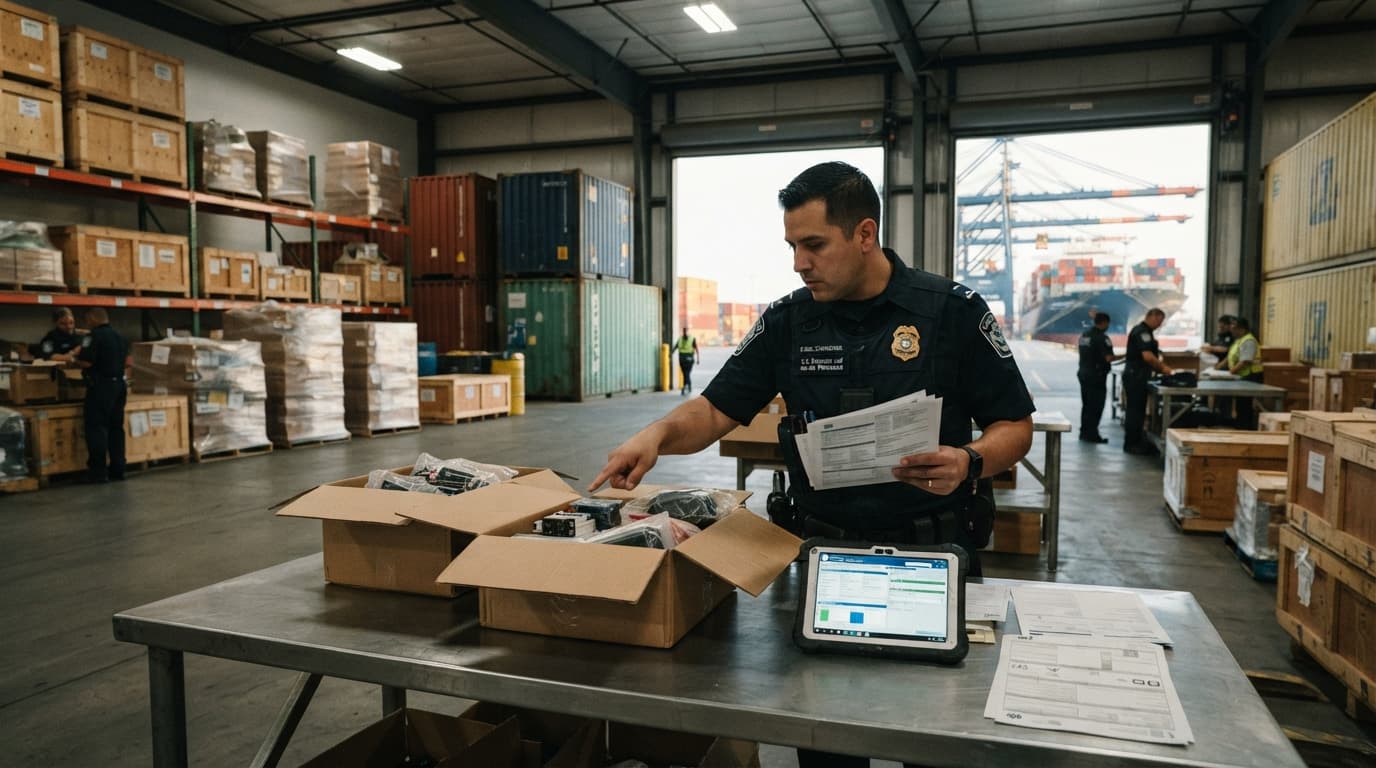
Freight forwarders, customs brokers, and carriers generally benefit from verifying paperwork independently rather than simply accepting and filing whatever documentation is provided by clients or suppliers. The guide notes that missing or inconsistent documentation can itself become part of the evidentiary record against a company. Maintaining commercial invoices, country-of-origin certifications, and broker correspondence within a centralized, auditable system—rather than scattered across disparate email threads and shared drives—generally supports stronger documentation practices.
Training Employees Broadly to Recognize Red Flags
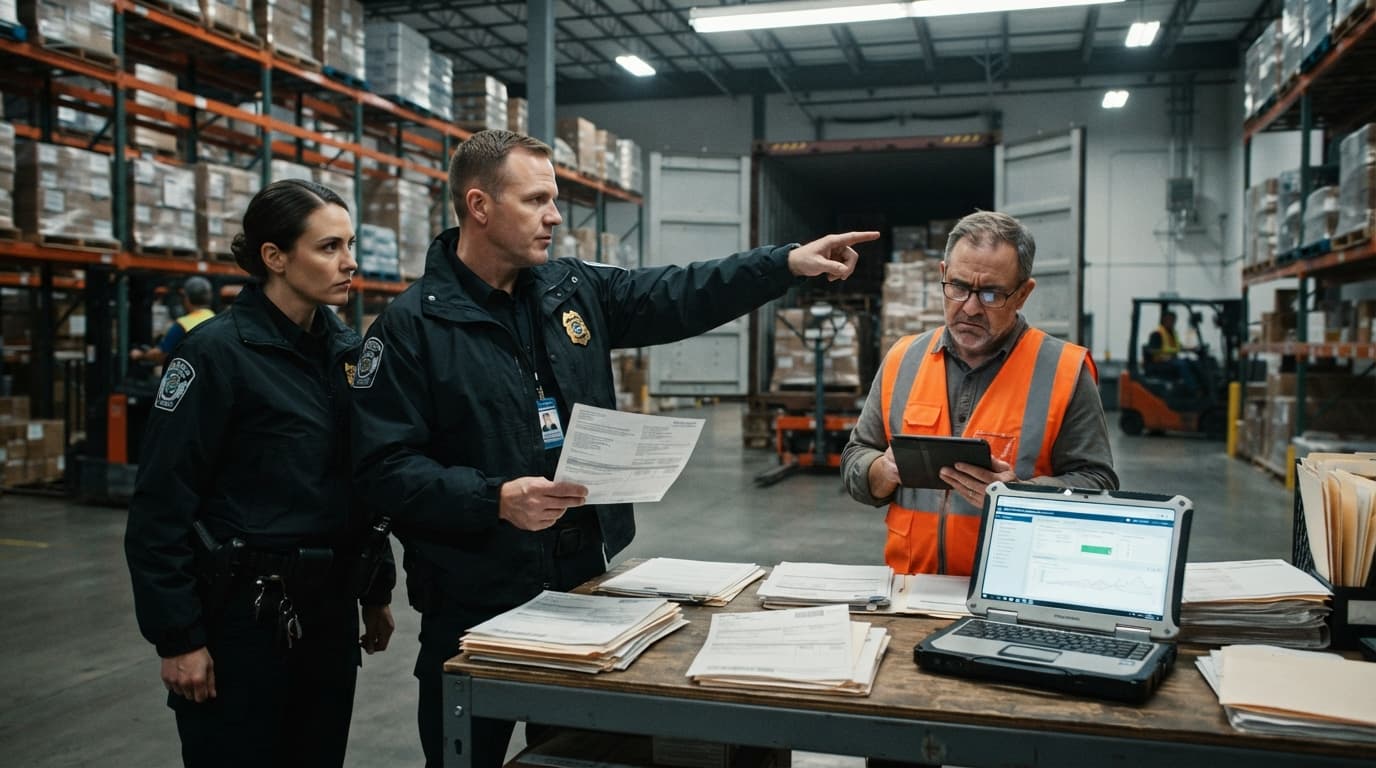
The guide emphasizes training all employees who handle import-related documentation, not merely dedicated compliance staff, to identify and appropriately escalate potential red flags. For logistics providers specifically, this generally means dispatchers, warehouse staff, freight coordinators, and operations personnel all benefit from basic training on warning signs, including abnormally low declared values, origin claims inconsistent with known manufacturing history, suppliers who resist reasonable documentation requests, frequent unexplained routing changes or last-minute origin switches, and inconsistent or incomplete paperwork more generally.
Building Contractual Safeguards
Where practical, logistics providers may benefit from requesting origin documentation from suppliers before finalizing purchase or service agreements, and including right-to-audit clauses within relevant contracts. This approach helps create a documented trail of genuine due diligence that can prove valuable in demonstrating reasonable care if questions later arise.
Maintaining Complete Records
Importers, brokers, and other relevant parties are generally required to maintain records for five years under existing customs regulations. Logistics providers should ensure their record-keeping systems are robust enough to produce complete, consistent documentation on demand—since a notably weak or incomplete paper trail can, in some circumstances, be perceived as evidence of concealment rather than mere administrative oversight.
Treating Compliance as an Enterprise-Wide Responsibility
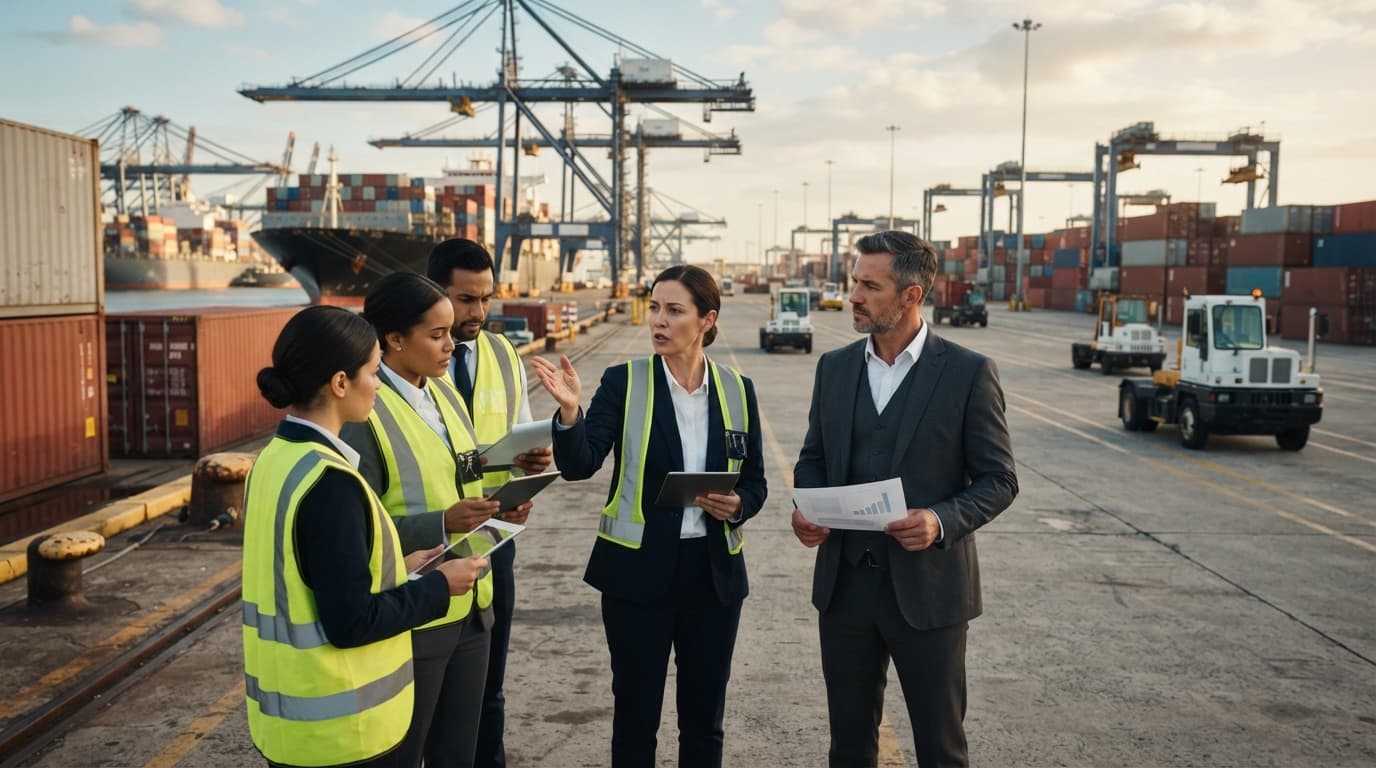
The guide makes reasonably clear that customs compliance is not simply a function belonging to customs brokers alone. Logistics providers generally benefit from ensuring that executives, compliance personnel, procurement teams, and logistics staff all understand that trade compliance represents a genuinely enterprise-wide responsibility rather than a narrow, siloed function.
Preparing for Heightened Broker Scrutiny
Executive Order 14411, “Strengthening Customs Enforcement,” signed June 3, 2026, directs CBP to increase audit activity and impose meaningfully higher standards on customs brokers, including a minimum penalty floor set at not less than 50% of any assessed penalty (absent exceptional circumstances tied to national security). The order separately directs DHS to seek maximum penalties on brokers who fail to conduct adequate due diligence on their clients, repeatedly represent non-compliant clients, or fail to cooperate promptly with CBP information requests.
6 · The Broader Trajectory: What the Future Likely Holds
A More Permanent Enforcement Structure
The creation of a dedicated Global Trade and Commerce Enforcement Section within DOJ’s National Fraud Enforcement Division suggests the current enforcement intensity reflects a genuinely structural change rather than a temporary campaign likely to fade over time. The guide itself does not appear to be a one-off publication—it increasingly looks like an institutionalized framework likely to shape enforcement priorities for years to come.
Expanding Whistleblower Incentives
Earlier in 2025, DOJ expanded its corporate whistleblower awards pilot program to specifically include trade, tariff, and customs fraud as a designated priority category. This creates meaningful financial incentives for insiders to report suspected violations—meaning logistics providers generally should not assume that internal compliance failures will remain hidden indefinitely.
A Diminishing ‘Cost of Doing Business’ Defense
DOJ officials have been fairly direct on this specific point: trade fraud is increasingly framed as something other than a routine cost of doing business. Companies that continue treating customs compliance as secondary or purely administrative appear to carry meaningfully greater risk than in prior years. The underlying message seems reasonably clear—willful ignorance is increasingly unlikely to function as an effective defense.
7 · Conclusion: From ‘Just Moving Boxes’ to Genuine Compliance Partner
The era in which logistics providers could reasonably claim they simply move the boxes, without meaningful attention to underlying compliance questions, appears to be drawing to a close. The DOJ-DHS Resource Guide to Trade Fraud Enforcement makes fairly explicit what many in the industry have already begun to sense: liability for trade fraud now extends meaningfully across the entire supply chain.
For logistics providers, the stakes involved are genuinely significant. Potential criminal prosecution under Section 545 carries up to 20 years of potential imprisonment. Civil liability under the False Claims Act carries treble damages. Administrative penalties under Section 592 can reach the full domestic value of affected merchandise. And reputational harm, alongside potential debarment from federal contracting opportunities, can meaningfully affect a company’s ongoing viability.
That said, this evolving enforcement environment also presents a genuine opportunity. Logistics providers that build robust compliance programs, train their broader workforce meaningfully, verify documentation independently rather than passively, and maintain genuinely auditable records will likely not only reduce their own exposure—they may increasingly position themselves as trusted compliance partners for importers navigating these same challenging waters.
The relevant question for logistics providers is likely no longer whether accountability for trade fraud will extend meaningfully to their operations. It’s increasingly a question of when—and whether they will be adequately prepared when that moment arrives.
This analysis reflects the DOJ-DHS Resource Guide to Trade Fraud Enforcement and related enforcement developments as of August 2026. This article does not constitute legal advice. Organizations engaged in international trade and logistics should consult with customs counsel and trade compliance professionals for guidance tailored to their specific circumstances and potential exposure.