Executive Summary
Mexico’s role in North American supply chains has moved decisively from strategic talking point to active execution. Manufacturing exports to the United States have grown by $150 billion since 2021, reaching $535 billion in 2025, while foreign direct investment hit a record $40.87 billion for the year—up 10.8% year-over-year—and new investment commitments surged roughly 200% in the first nine months of 2025 alone. Mexico climbed six spots to 19th place in Kearney’s 2026 FDI Confidence Index, one of the largest gains of any country worldwide. This growth is not confined to the automotive sector that first put Mexico on the nearshoring map: non-automotive manufacturing exports grew 12.25% cumulatively through 2025, reaching 62% of total exports—the highest share since 2009. For U.S. logistics providers, the opportunity is concrete and already visible in the infrastructure being built to support it, from a proposed doubling of capacity at Laredo’s World Trade Bridge to record trade volumes moving through South Texas. This analysis examines the scale of the opportunity, where it is concentrated, and what logistics providers should do to position for it.
The Mexico Nearshoring Opportunity: Why Cross-Border Logistics Investment Makes Sense Now
(墨西哥近岸外包机遇:跨境物流投资正当其时)
1 · The Scale of the Shift
From Consideration to Execution
For several years, “nearshoring to Mexico” was a strategy many U.S. companies discussed but relatively few had fully executed. That has changed. New investment into Mexico surged approximately 200% in the first nine months of 2025, a pace that analysts describe as the clearest signal yet that the nearshoring window has shifted from strategic consideration to active execution. Mexico closed 2025 with a record $40.87 billion in foreign direct investment, up 10.8% year-over-year.
Manufacturing Exports Are Climbing Fast
The underlying trade data tells a consistent story. Mexico’s manufacturing exports to the United States have risen by $150 billion since 2021, reaching $535 billion in 2025. U.S. imports from Mexico overall increased 7.4% in 2025—evidence, as one industry analysis put it, of a long-term realignment in freight flows rather than a temporary blip.
Investor Confidence Is Rising in Parallel
Mexico climbed six spots—from 25th to 19th place—in Kearney’s 2026 Foreign Direct Investment Confidence Index, one of the largest gains recorded globally alongside Singapore. The jump reflects growing investor confidence in Mexico’s role as a manufacturing and supply chain partner to the United States, even amid broader global capital flows becoming more selective. A Deloitte study separately found that 62% of American companies are either considering or actively relocating part of their production to Mexico.
2 · Beyond Automotive: A Broadening Opportunity
The Diversification Story
Mexico’s nearshoring narrative began with automotive manufacturing, and autos remain the largest single export category at roughly 25.2% of Mexico’s total exports, followed by machinery (19.4%) and electrical equipment (17.1%). But the more significant recent development is how much the opportunity has broadened beyond that original base. Non-automotive manufacturing exports grew 12.25% cumulatively through 2025, reaching 62% of total exports—the highest share recorded since 2009.
What This Means For Logistics Planning
This diversification matters directly for logistics providers: it means demand for cross-border capacity is no longer concentrated in a handful of automotive corridors and shipper relationships. Electronics, medical devices, pharmaceuticals, consumer goods, and aerospace components are increasingly moving through the same border infrastructure that once served primarily automotive supply chains—creating a broader and more resilient base of potential freight customers for providers who build the right capabilities now.
3 · Where the Growth Is Concentrated
The Northern Border Corridor
Mexico’s northern border states—Nuevo León, Chihuahua, Baja California, Tamaulipas, Sonora, and Coahuila—collectively account for the majority of manufacturing-specific FDI and export activity. Within this corridor, a few cities stand out:
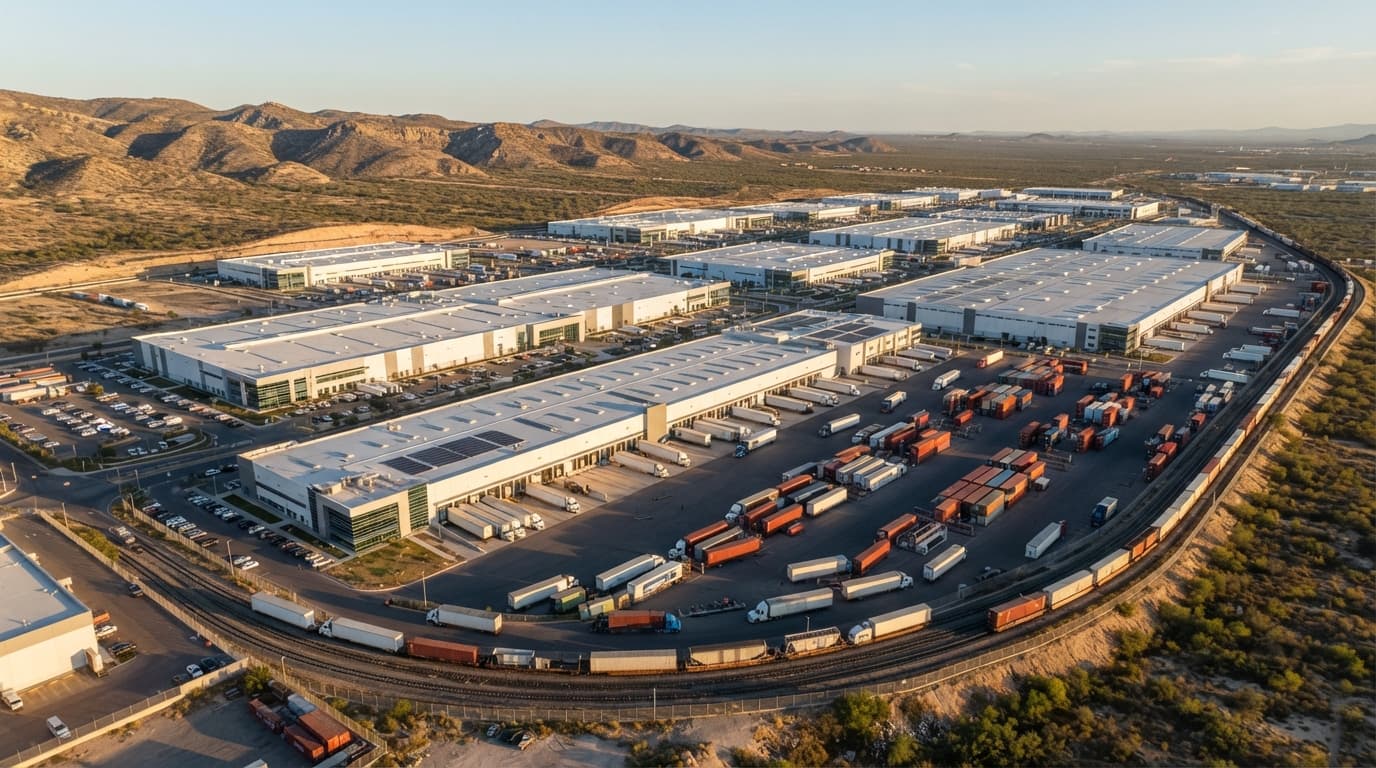
Monterrey has captured roughly 22% of total nearshoring investment from 2021 to 2024, the largest share of any single metro area. Industrial inventory reached 203 million square feet by the third quarter of 2025, with absorption up 28% quarter-over-quarter and vacancy easing to roughly 5.4%—a loosening from the sub-2% conditions of 2023, but still tight by North American standards.
Ciudad Juárez, paired closely with El Paso for cross-border trucking, saw absorption surge 63% year-over-year through the third quarter of 2025. Juárez has become a common entry point for electronics and medical device manufacturing moving into the U.S. market.
The Interior Manufacturing Hubs
Beyond the border itself, interior cities are drawing companies that prioritize specialized talent or sector-specific industrial clusters. Querétaro, strong in aerospace and automotive parts and benefiting from central Mexico’s broader logistics network, saw quarterly industrial absorption run 74% higher than the prior period. Guadalajara and Aguascalientes round out the interior cluster favored by companies seeking deeper talent pools.
4 · The Infrastructure Being Built to Support It
Laredo: A Record First Half and a Major Federal Investment
Nowhere is the scale of this shift more visible than at Laredo, the nation’s busiest inland port. Port Laredo generated close to $200 billion in trade during the first half of 2026 alone—the highest first-half volume in the port’s history. The composition of that trade underscores the diversification story above: imports of computer equipment rose 153.82%, aircraft parts rose 58%, and Laredo maintained its position as the #1 U.S. port for exports of engines and automotive parts.
In August 2026, Laredo and South Texas were awarded more than $1.2 billion in federal infrastructure funding across five projects, aimed at expanding inspection capacity and processing infrastructure along the Laredo–Nuevo Laredo trade corridor.
The World Trade Bridge: More Than Doubling Capacity
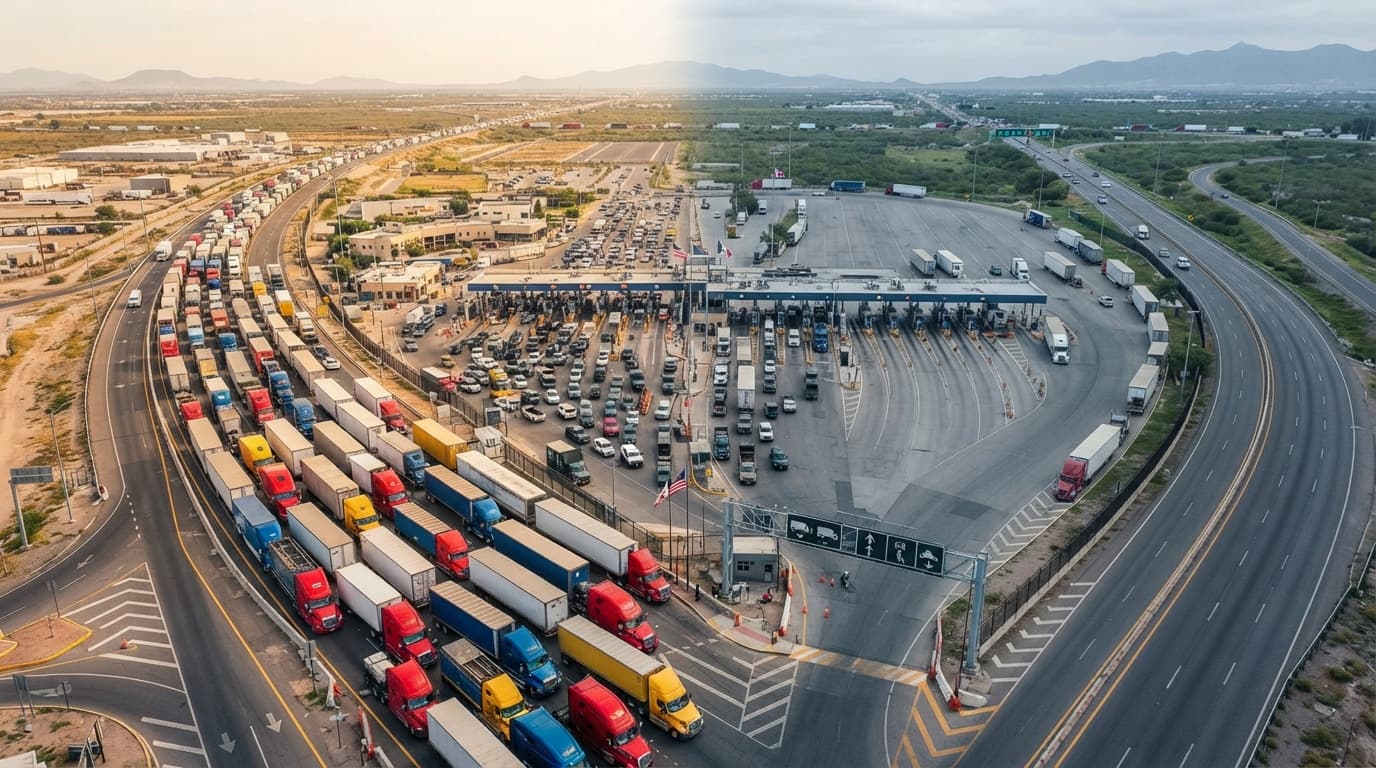
The most consequential single project for cross-border freight capacity may be the expansion of Laredo’s World Trade Bridge. In June 2026, U.S. and Mexican boundary officials completed a binational review and signed off on plans to add a new, dedicated eight-lane bridge for northbound commercial traffic alongside the existing span—plus two additional southbound lanes—increasing total crossing capacity from 8 lanes to 18. On the Mexican side, the project carries an investment of 1.4 billion pesos and was slated to begin construction in early 2026. Officials have targeted construction on the U.S. side to begin in late 2026, with completion targeted for late 2027.
Beyond adding raw capacity, the redesign is intended to address a specific operational bottleneck: CBP’s port director in Laredo has noted that the current bridge configuration forces trucks into sharp turns and lane reductions immediately after crossing, creating delays during peak hours. The redesign aims to create a more direct route from the bridge into CBP inspection facilities.
Why Infrastructure Investment at This Scale Matters for Logistics Providers
Why This Matters: infrastructure spending of this magnitude—over a billion dollars in federal funding at a single corridor, plus a binationally-approved bridge expansion more than doubling commercial capacity—is a strong signal that both governments expect cross-border freight volumes to keep growing for years, not merely through the current investment cycle. Logistics providers evaluating whether to expand cross-border capabilities now have a fairly clear signal that the underlying infrastructure will support sustained growth, not just a temporary surge.
5 · The USMCA Factor
A Pivotal Review Already Underway
Both Kearney and Morgan Stanley have separately flagged the 2026 USMCA review as a pivotal moment for investment flows. As we examined in an earlier analysis, the United States held its mandatory six-year joint review of the agreement on July 1, 2026, and declined to confirm an automatic 16-year extension, instead triggering an annual review process while pursuing separate bilateral negotiations with Mexico and Canada. Morgan Stanley has suggested that greater clarity around rules of origin, tariffs, and critical minerals in these negotiations could unlock investment that has been delayed pending that clarity, further accelerating nearshoring into Mexico.
What This Means Operationally
Why This Matters: for logistics providers, continued uncertainty in the bilateral negotiations is a genuine near-term risk factor worth monitoring—but it has not, to date, slowed the underlying investment and trade growth described above. Companies building cross-border logistics capabilities should treat the ongoing negotiations as a factor to track closely rather than a reason to delay, given that the trade and investment data already reflect a structural shift well underway independent of the negotiations’ ultimate outcome.
6 · The Remaining Constraints—and the Opportunity They Represent
Customs Efficiency as a Bottleneck
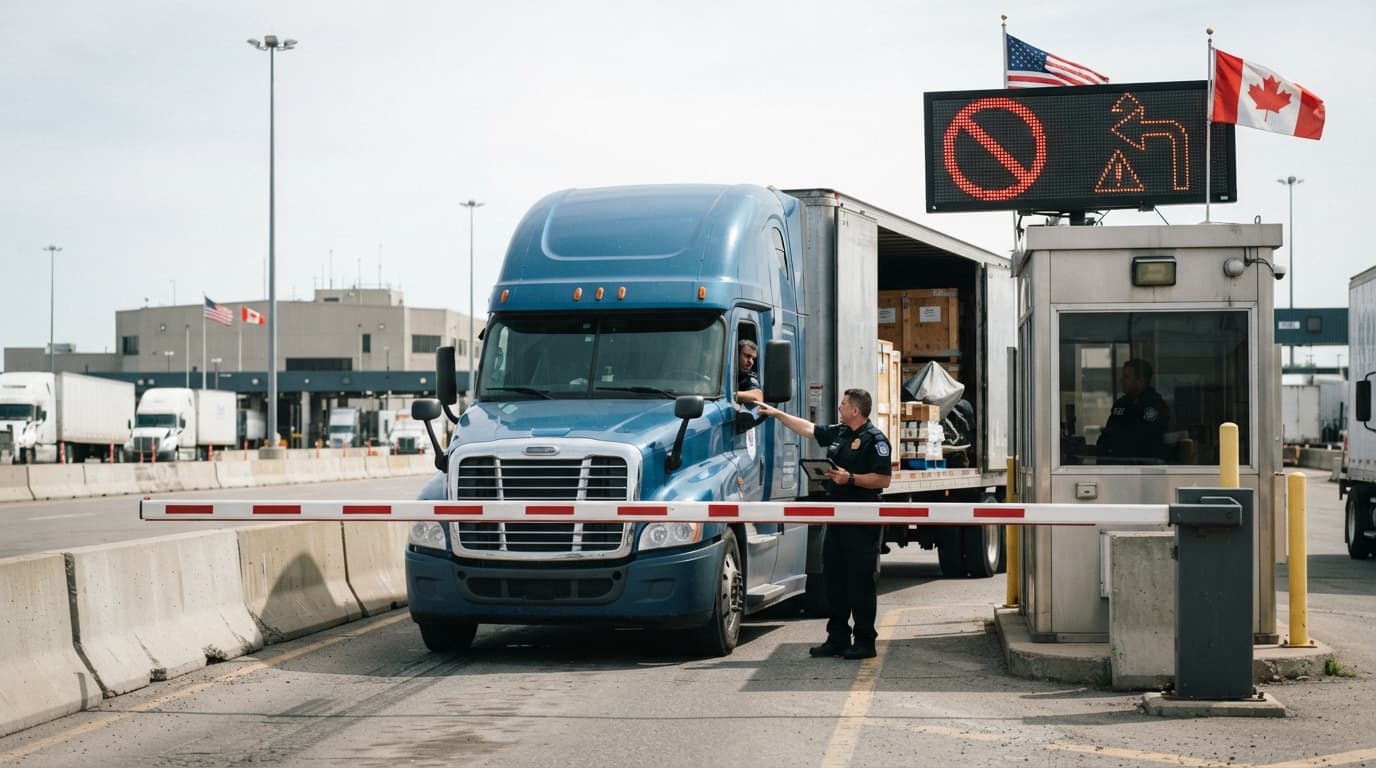
Industry groups tracking the nearshoring buildout have identified customs efficiency as a leading infrastructure constraint. Delays at border crossings and inland customs checkpoints raise the cost of the just-in-time manufacturing model that much of this nearshoring activity depends on.
Why This Is an Opportunity, Not Just a Problem
Why This Matters: for logistics providers, this constraint is precisely where genuine value can be added. Companies that combine trade compliance expertise, efficient customs brokerage, and reliable cross-border trucking and rail capacity are solving the exact bottleneck that industry analysts have flagged as the binding constraint on faster nearshoring growth. As one industry analysis put it, success in this environment depends on disciplined trade compliance, clear documentation strategy, and structured customs planning—capabilities that differentiate a logistics partner from a simple freight mover.
The Driver Capacity Question
Mexico’s own trucking sector faces a driver shortage estimated at roughly 28,000 positions, with retention challenges similar to those in the U.S. market. Reduced driver availability contributes to capacity and rate volatility on both sides of the border—another area where logistics providers with strong carrier networks and flexible capacity planning can differentiate themselves from less prepared competitors.
7 · What Logistics Providers Should Do Now
1. Map Client Exposure to Growth Corridors
Identify which current and prospective clients have manufacturing or sourcing operations in the northern border states or interior hubs described above, and assess whether existing service offerings match the specific needs of electronics, medical device, aerospace, or other diversifying manufacturing sectors—not just automotive.
2. Build or Strengthen Customs Compliance Capabilities
Given that customs efficiency is a widely cited constraint on nearshoring growth, logistics providers should treat trade compliance expertise—accurate classification, valuation support, and USMCA rules-of-origin documentation—as a core differentiator rather than a back-office function.
3. Evaluate Laredo and Other Key Corridor Positioning
With over a billion dollars in federal infrastructure investment flowing into the Laredo corridor and the World Trade Bridge expansion advancing toward construction, providers without an established presence in South Texas cross-border operations should evaluate whether the timing supports new investment in warehousing, brokerage, or trucking capacity in the region.
4. Develop Flexible Cross-Border Capacity Solutions
Given driver shortages on both sides of the border and ongoing rate volatility, providers that can offer flexible, multi-carrier cross-border capacity—rather than relying on a single trucking relationship—will be better positioned to serve nearshoring clients reliably.
5. Monitor the USMCA Bilateral Negotiations
While the underlying growth trend appears structural, providers should continue monitoring the bilateral U.S.-Mexico negotiations following the July 2026 joint review for developments on rules of origin and tariff treatment that could affect specific product categories or sourcing decisions.
6. Look Beyond the Automotive-Heavy Corridors
Given that non-automotive exports now represent 62% of Mexico’s total export mix, providers historically focused on automotive-adjacent freight lanes should evaluate whether their service offerings and industry expertise translate to the faster-growing electronics, medical device, and consumer goods segments.
8 · Conclusion: A Structural Opportunity, Not a Temporary Trend
The Data Points in One Direction
Record foreign direct investment, a six-spot jump in investor confidence rankings, manufacturing exports up $150 billion since 2021, and over a billion dollars in border infrastructure investment moving forward at a single corridor all point in the same direction: Mexico’s role in North American supply chains is expanding, and the logistics infrastructure connecting it to the United States is being built out to match.
The Strategic Takeaway
For U.S. logistics providers, the Mexico nearshoring opportunity is no longer a future consideration—it is a present reality with visible, measurable momentum behind it. Providers that build genuine cross-border capabilities now, particularly in trade compliance and flexible capacity, are positioning themselves to capture a broadening base of manufacturing freight that increasingly spans far more than the automotive sector that first defined the nearshoring story.
If your organization is evaluating cross-border logistics capacity or trade compliance capabilities to serve the Mexico nearshoring opportunity, our team is available to help you assess where the growth in your specific sector or corridor is headed.
This analysis reflects publicly reported trade, investment, and infrastructure data through September 2026, including Kearney’s 2026 FDI Confidence Index, Mexico’s Secretaría de Economía data, Port Laredo trade statistics, and reporting on the World Trade Bridge expansion. Specific investment figures and infrastructure timelines are subject to change. Logistics providers should consult with trade compliance professionals and customs brokers for guidance tailored to their specific cross-border operations.