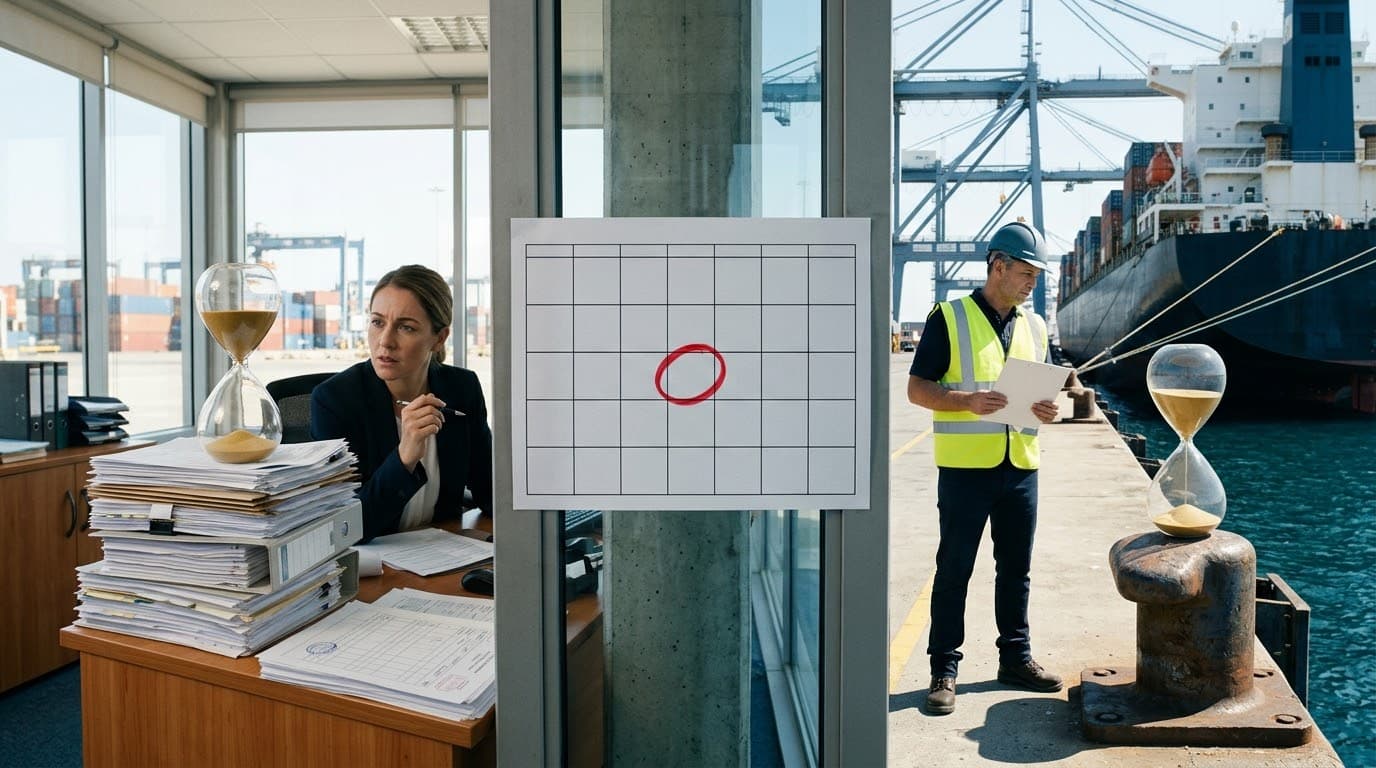

Executive Summary The first quarter of 2027 brings three dates that affect cargo moving from China to the United States, and they fall within four weeks of each other. January 9, 2027 is the date through which USTR has proposed to further suspend the Section 301 port fees on China-linked vessels (91 FR 67388, October 26, 2026). January 10, 2027 is the date U.S. officials gave in September 2026 for the extension of the broader U.S.-China trade truce, an extension that had not been set out in a published legal instrument as of early November 2026. February 6, 2027 is Lunar New Year, with China’s Spring Festival public holiday expected around February 5–11, subject to the State Council’s annual holiday notice. Each date works on a different clock: port fees attach to a vessel’s arrival, duties generally to the date of customs entry, and production to factory schedules. Because ocean transit takes weeks, cargo leaving China in December reaches U.S. ports around the January dates, and cargo produced before the holiday lands in late February and March. This analysis places all three on one calendar and explains the mechanics that connect them.
Planning Q1 2027 Inbound Shipments: The January Truce Deadline, Port Fees, and Lunar New Year on One Calendar
(2027年第一季度进口货运规划:1月贸易休战期限、港口费与春节同列一张日历)
1 · The Calendar at a Glance
| Date | Event | Status as of Early November 2026 | Legal or Practical Basis |
|---|---|---|---|
| November 9, 2026 | End of current Section 301 port fee suspension; end of current term of 178 Section 301 product exclusions | Fixed in published notices; further action pending | 90 FR 50947; 90 FR 55232 |
| November–December 2026 | China’s State Council typically publishes the next year’s public holiday schedule | Expected | Annual State Council notice |
| January 1, 2027 | New edition of the Harmonized Tariff Schedule typically takes effect | Routine annual update | USITC |
| January 9, 2027 | Proposed end of the extended port fee suspension (11:59 p.m. ET) | Proposed; final notice pending | 91 FR 67388 |
| January 10, 2027 | Date given by U.S. officials for the extended U.S.-China truce | Announced; no published instrument setting out terms | Official statements, September 2026 |
| February 5, 2027 | Lunar New Year’s Eve | Fixed by the lunar calendar | — |
| February 6, 2027 | Lunar New Year (Year of the Goat) | Fixed by the lunar calendar | — |
| ~February 5–11, 2027 | Expected China Spring Festival public holiday | Expected; pending State Council notice | Annual State Council notice |
| February 20, 2027 | Lantern Festival, end of the traditional 15-day festival period | Fixed by the lunar calendar | — |
| May 1, 2027 | End of Enhanced ACAS phased enforcement period (air cargo) | Fixed by CBP | CSMS #69486540 |
The table separates three kinds of dates: those fixed in law, those that are proposed or announced but not yet formalized, and those set by the calendar. That distinction is the thread running through the rest of this analysis.
⚠️ Critical Takeaway: A date that appears in a statement is not the same as a date that appears in a Federal Register notice. For planning purposes, the two carry different levels of certainty.
2 · January 9, 2027: The Port Fee Suspension
What the Fees Are
Under the Section 301 investigation of China’s targeting of the maritime, logistics, and shipbuilding sectors, USTR imposed service fees on vessels owned or operated by Chinese entities (Annex I), on Chinese-built vessels (Annex II), and on foreign-built vehicle carriers (Annex III), along with additional duties on Chinese ship-to-shore cranes and certain chassis (Annex V.A). The fees began on October 14, 2025 and were suspended from November 10, 2025 through November 9, 2026.
The Proposed Extension
On October 26, 2026, USTR proposed suspending these actions for two more months, from 12:00 a.m. ET on November 10, 2026 through 11:59 p.m. ET on January 9, 2027, citing continued engagement with China. Comments closed on October 30, 2026. During the suspension, no party would accrue liability for the fees or the Annex V.A duties. A final notice is required for the extension to take effect.
How the Fees Attach
Port fees are assessed on vessel operators, generally on a vessel’s arrival at its first U.S. port on a voyage, subject to an annual cap per vessel. What matters for the fee is therefore the vessel’s arrival date, not the date cargo was booked, loaded, or entered through customs. If the suspension were to end after January 9, 2027, the relevant question for a given sailing would be whether its vessel arrives on or after January 10.
Whether any fee reaches cargo owners depends on carrier pricing and the surcharge terms in service contracts and bills of lading. USTR’s notices have not stated whether, if collected again, fees would resume at the October 2025 levels or at the next step in the original schedule.
We covered the November 2026 decision point in our analysis of the Section 301 exclusions and port fee decision.
3 · January 10, 2027: The Truce Date
What Was Announced
In September 2026, U.S. officials stated that the U.S.-China arrangement first reached in Busan in late 2025 would be extended to January 10, 2027. As discussed in our analysis of the September 2026 summit outcome, the specific elements covered by that extension were not set out in a published legal instrument at the time.
Why the Two January Dates Differ
The port fee suspension (January 9) and the truce date (January 10) are related but not identical. The port fee date comes from a USTR proposal with its own legal text; the truce date comes from official statements. Each measure that might change on or after January 10 would do so through its own legal instrument: a USTR notice for Section 301 actions, a Commerce rule for export controls, or Chinese government measures for China’s side of the arrangement, including China’s own suspended fees on U.S.-linked vessels.
What This Means for Planning
Because the truce date is not tied to a single document, it does not by itself change any duty rate or fee on January 10. Changes, if any, would appear as specific notices with their own effective dates. Our earlier analysis noted that, absent further action, measures paused under the arrangement could become live again under whatever authority applies to each.
⚠️ Critical Takeaway: The January 10 date signals when the current negotiating window closes, not a specific rate change. The operative changes, if any, are the ones published in individual legal notices.
4 · February 6, 2027: Lunar New Year
The Dates
Lunar New Year falls on Saturday, February 6, 2027, with New Year’s Eve on February 5 and the Lantern Festival on February 20. China’s statutory Spring Festival holiday is set each year by the State Council, which typically publishes the following year’s schedule in November or December, including any adjusted weekend workdays. Calendar estimates place the 2027 public holiday around February 5–11, but the official dates should be confirmed from the State Council notice. Vietnam’s Tết holiday falls in the same period and is set by the Vietnamese government.
Why the Effect Is Longer Than the Holiday
The official holiday is about a week, but its effect on production and shipping commonly extends well beyond it:
| Phase | Commonly Observed Pattern |
|---|---|
| Weeks before the holiday | Factories work to complete orders before workers travel home; demand for ocean space often rises |
| Holiday week | Most manufacturing stops; ports generally keep operating, but trucking, documentation, and factory loading slow considerably |
| Weeks after the holiday | Production restarts gradually as workers return; some factories take longer to reach full output |
| Carrier response | Carriers often cancel (“blank”) sailings in the weeks after the holiday to match lower export volumes |
Because these patterns vary by region, industry, and year, they are best confirmed directly with suppliers and carriers rather than assumed.
How the Holiday Reaches U.S. Shores
A slowdown in Chinese production shows up in U.S. arrivals several weeks later, after ocean transit. The shipments loaded just before the holiday arrive in late February and early March, and the post-holiday restart is felt in U.S. arrivals into March and April.
5 · Putting the Dates Together: Transit Time Is the Link
Departure Versus Arrival
The January dates concern arrival and entry in the United States, while the Lunar New Year concerns production and departure in China. Ocean transit time is what connects them. Transit varies by carrier, service, and routing, but transpacific port-to-port voyages to the U.S. West Coast commonly take around two to three weeks, and to the East Coast via the Panama or Suez Canals commonly around four to six weeks. Cargo moving inland by rail, for example to Chicago, adds further days.
| Cargo Leaving China | Approximate U.S. West Coast Arrival | What It Meets |
|---|---|---|
| Early December 2026 | Late December | Holiday season at U.S. ports; within the proposed port fee suspension |
| Mid to late December 2026 | Early to mid January 2027 | Arrives around the January 9 and January 10 dates |
| January 2027 | Late January to mid February | Pre-holiday production; after the January dates |
| Late January to early February 2027 | Mid February to early March | Last shipments before Spring Festival |
| Mid to late February 2027 | March | Post-holiday restart |
Illustrative only. Actual schedules depend on carrier, service, vessel, routing, port congestion, and weather; East Coast and inland points arrive later.
Duties Follow the Entry Date
For customs duties, the general rule is that the applicable rate depends on the date of entry, and entry for cargo arriving by vessel cannot take effect before the vessel arrives. When a tariff change takes effect, cargo already on the water is treated according to the terms of the notice: some recent actions have included provisions for goods in transit, while others have not. This is why the specific wording of any notice published around the January dates would matter more than the date itself.
Fees Follow the Vessel
Port fees, by contrast, attach to the vessel’s arrival, as described in Section 2. Two shipments on the same date could therefore be treated differently depending on which vessel they move on and when that vessel calls at a U.S. port.
Warehousing and Timing
Goods placed in a customs bonded warehouse are not entered for consumption until withdrawn, and duties are assessed at the rate in effect at withdrawal. This allows importers to separate the arrival of cargo from the timing of duty payment, though it also means that any rate change taking effect before withdrawal would apply. Our earlier analysis of bonded warehouses and foreign trade zones explains how these programs work. Separately, U.S. arrivals that are not entered or placed in a bonded facility within the regulatory timeframe can move to general order, as discussed in our analysis of the 15-day clock.
⚠️ Critical Takeaway: The same shipment can be measured against three different clocks: the vessel’s arrival for port fees, the entry or warehouse withdrawal date for duties, and the factory calendar for production. Planning around Q1 2027 means reading each clock separately.
6 · Practical Considerations
The following points are commonly reviewed by importers, exporters, and logistics providers planning cargo for the first quarter. They are offered for information, not as a checklist.
Building a Shipment-Level Timeline
Many businesses map each expected order against three dates: when the supplier expects goods to be ready, when the vessel is scheduled to depart and arrive, and when customs entry is expected. Seeing the three together shows which shipments fall near the January dates or the Spring Festival period.
Confirming Supplier Holiday Plans
Suppliers usually set their own closure and restart dates around the official holiday. Confirming these, along with any make-up working days announced by the State Council, gives a clearer picture than calendar estimates.
Reviewing Carrier and Contract Terms
For the port fees, importers and exporters commonly look at how service contracts and rate agreements treat government-imposed surcharges, and which vessels are deployed on their regular services. For blank sailings, contract terms on rolled cargo and space allocation are relevant.
Considering Routing and Storage
West Coast, East Coast, and inland gateways each involve different transit times and costs. Some businesses also consider how storage, consolidation, or transloading near the port of arrival fits their distribution plans, as described in our analysis of CFS transloading.
Following the Primary Sources
The dates in this calendar will be confirmed or changed through specific publications: USTR notices in the Federal Register for the port fees and other Section 301 actions, CBP’s CSMS messages for implementation, and China’s State Council notice for the holiday schedule.
⚠️ Critical Takeaway: The most useful planning information, namely supplier readiness, vessel schedules, contract terms, and entry timing, is within reach of each business regardless of how the policy dates are resolved.
7 · Conclusion: Three Clocks, One Quarter
The first quarter of 2027 opens with two policy dates in early January and a fixed calendar event in early February. The port fee date has a published proposal behind it; the truce date rests on official statements; the Lunar New Year date is set by the calendar, with the holiday window confirmed by China’s State Council. Ocean transit connects them, so December departures meet the January dates on arrival, and the Spring Festival slowdown appears in U.S. arrivals into March.
Key Takeaways
| Factor | Detail |
|---|---|
| Port Fee Suspension | Proposed through 11:59 p.m. ET, January 9, 2027 (91 FR 67388); final notice required |
| Port Fee Trigger | Vessel arrival at first U.S. port; assessed on vessel operators |
| Truce Date | January 10, 2027, per official statements; terms not set out in a published instrument as of early November 2026 |
| Lunar New Year | Saturday, February 6, 2027; Lantern Festival February 20 |
| China Holiday | Expected around February 5–11, 2027; confirmed by State Council notice |
| Duty Trigger | Generally the date of entry (or warehouse withdrawal), subject to the terms of any notice |
| Typical Ocean Transit | Roughly two to three weeks to the West Coast; roughly four to six weeks to the East Coast; longer for inland points |
| Where Dates Are Confirmed | Federal Register, CBP CSMS, China State Council |
The Bottom Line
For importers and exporters moving goods between China and the United States, the first quarter of 2027 is shaped less by any single date than by the way three dates interact with transit time. Reading each on its own clock, and checking which ones are fixed, proposed, or only announced, makes it easier to plan shipments that fall near them. Businesses that would like support with routing, warehousing, or customs entry timing around these dates may find it useful to work with a logistics partner experienced in China-U.S. trade lanes.
The message is clear: January 9, January 10, and February 6, 2027 run on different clocks—vessel arrival, legal instruments, and the factory calendar—and ocean transit time is what links them.
This analysis reflects USTR’s Request for Comments on Further Suspension of Section 301 Action in the maritime, logistics, and shipbuilding investigation (91 FR 67388, October 26, 2026), USTR’s Notice of Product Exclusion Extensions (90 FR 55232, December 1, 2025), official statements on the U.S.-China arrangement as of September 2026, the lunar calendar for 2027, and our earlier analyses of the Section 301 November 2026 decision point, the September 2026 summit outcome, and Enhanced ACAS enforcement. Information is current as of early November 2026. USTR may finalize, modify, or decline the proposed suspension; further U.S. or Chinese government actions may change the measures described; and China’s official 2027 holiday schedule is set by the State Council. Transit times are illustrative and vary by carrier and routing. Organizations should consult with licensed customs brokers, carriers, and trade counsel for guidance tailored to their specific shipments.