Executive Summary On September 27, 2026, the U.S.-China Board of Trade published its “30-for-30” lists of products recommended for reciprocal tariff reductions—77 U.S. tariff lines covering roughly $30 billion in Chinese imports, and 1,619 Chinese tariff lines covering roughly $30 billion in U.S. exports (both valued using 2024 bilateral trade). The lists include toys, household appliances, and consumer goods on the U.S. side, and agricultural products, seafood, wood products, cosmetics, and medical devices on the Chinese side. But USTR Greer has confirmed what many in the trade community suspected: there is no timeline for implementation. “We have to stick to our legal processes,” Greer said at the G20 Trade Ministerial in Milwaukee, adding that the recommendations require public input, a comment process, and a legal determination before any tariff actually changes. This analysis examines what the lists contain, what the legal process requires, and why importers should calibrate their expectations accordingly.
The U.S.-China “30-for-30” Tariff Framework: Expectations vs. Reality
(中美"30对30"关税框架:预期与现实)
1 · What Was Announced: The “30-for-30” Lists
The Framework
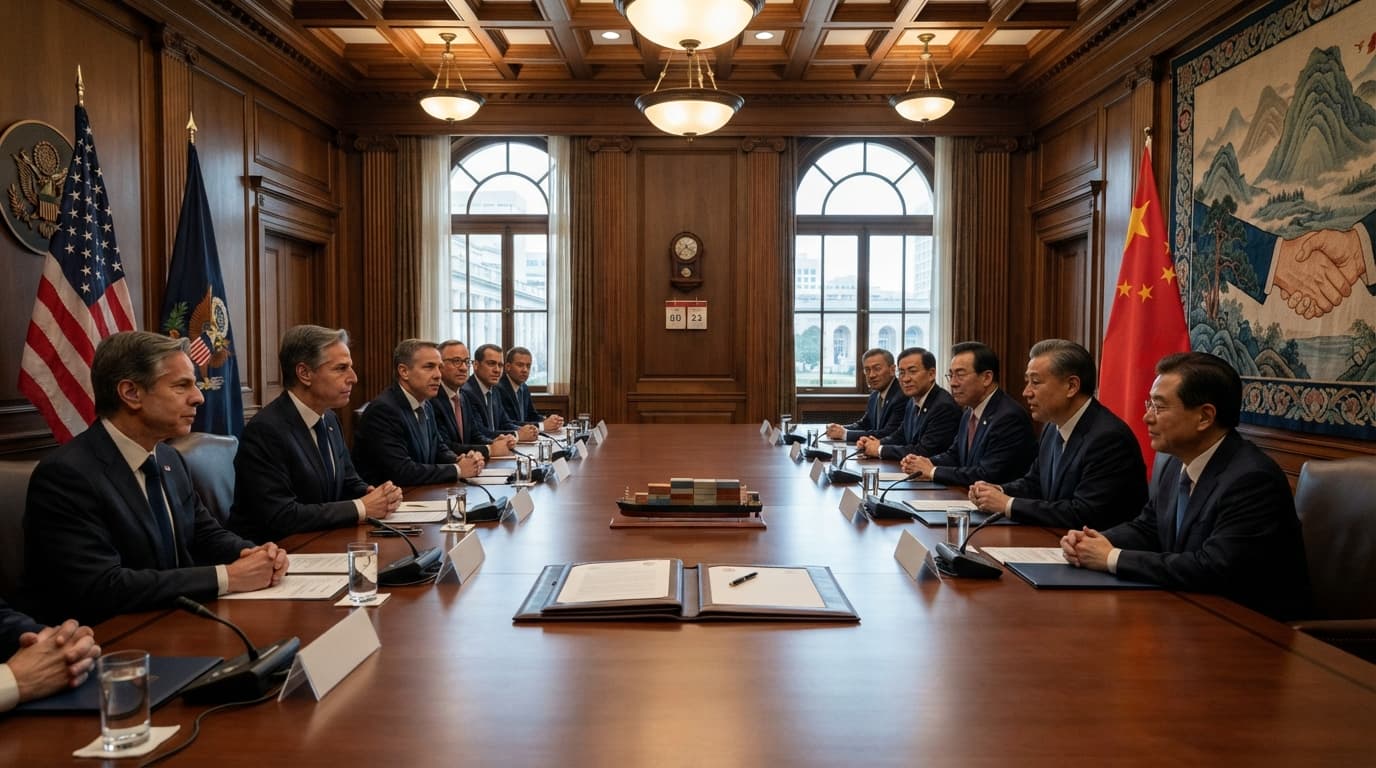
The “30-for-30” framework grew out of the U.S.-China Board of Trade, a mechanism proposed during President Trump’s May 2026 visit to Beijing, opened to public comment by USTR on June 2, and formally operationalized at the September 2026 Trump-Xi summit in Washington, alongside a new Board of Investment. The framework envisions each country considering reduced tariff treatment for approximately $30 billion of “non-sensitive” goods from the other—a total of $60 billion in two-way trade, as discussed in our earlier analysis of the summit’s outcome.
A Note on What “$30 Billion” Means: the terms of reference value each list using calendar-year 2024 bilateral trade. The figure is a historical benchmark for the covered products—it is not $30 billion in tariff savings, new Chinese purchases, or a purchasing guarantee.
The U.S. List: 77 Tariff Lines
The U.S. list covers 77 HTSUS subheadings of Chinese consumer goods, including:
| Category | Examples |
|---|---|
| Household & Kitchen | Plastic tableware and kitchen accessories, blankets, bed and table linens, curtains, wall hangings, microwave ovens, other small appliances, electric shavers |
| Seasonal & Decorative | Holiday decorations |
| Children’s Products | Toys, children’s car seats |
| Sporting & Outdoor Goods | Inflatable balls, fishing equipment, sleeping bags, umbrellas |
Selected examples from public reporting and White House materials; importers should check the full list at the HTS-subheading level.
Why the Layers Matter: the Board of Trade has not said what “reduced tariff treatment” means in practice. In addition to most-favored-nation (MFN) duties, some products on the U.S. list are also subject to country-specific tariffs, including Section 301 duties—so it remains unclear which layer, if any, would be reduced.
The Chinese List: 1,619 Tariff Lines
China’s list is far broader, covering 1,619 tariff lines of U.S. products:
| Category | Examples |
|---|---|
| Agricultural Products | Corn, wheat, sorghum, rice, cotton, beef, pork, poultry, dairy products, soybean oil and soybean meal |
| Seafood | Fish and seafood products |
| Wood Products | Logs, lumber, and wood products |
| Cosmetics | Personal care and cosmetic products |
| Medical Devices | Medical devices |
China’s list is a 38-page document, and the 1,619 figure counts tariff lines—not distinct products—which helps explain why the Chinese list looks so much longer than the 77-line U.S. list.
The Coal Commitment
Separately from the product lists, the U.S. has stated that China agreed to import at least 10 million metric tons of U.S. coal in 2027 and again in 2028. According to some press reports, China has not independently confirmed this commitment.
⚠️ Critical Takeaway: The lists are recommendations only. No tariff rate has changed. No effective date has been set. The White House release explicitly states that the two countries “will consider” the lists “with a view toward providing reduced tariff treatment… consistent with their respective domestic laws and processes”.
2 · The Reality Check: No Timeline, No Rates, No Effective Date
USTR Greer’s Statement
In early October 2026, at the G20 Trade Ministerial in Milwaukee, USTR Jamieson Greer confirmed what the legal language implied: there is no timeline for implementing the tariff reductions.
“We have to stick to our legal processes.” — USTR Jamieson Greer
Greer explained that implementing the Board of Trade’s recommendations would require public input, a comment process, and a legal determination on whether to adopt them. The White House release itself says only that the two countries “will consider” the lists “with a view toward providing reduced tariff treatment,” consistent with each country’s domestic laws and processes—language that stops well short of a commitment.
What the Legal Process Requires
Two steps are confirmed by Greer’s own description. The later steps below are the typical sequence for a U.S. tariff action, shown for illustration only—USTR has not announced them for this arrangement:
| Step | Status |
|---|---|
| 1. Public input and comment process | Confirmed by Greer |
| 2. Legal determination on whether to adopt the recommendations | Confirmed by Greer |
| 3. Formal action (e.g., Federal Register notice) | Typical process; not yet announced |
| 4. Effective date | Not set |
The terms of reference also indicate that tariff modifications under the arrangement are not expected to be adjusted more than once a year, and that the lists are non-exhaustive and could be expanded in the future.
What’s Missing
Three critical elements remain unannounced:
| Element | Status |
|---|---|
| New Tariff Rates | Not specified—the lists identify products, not rates |
| Effective Date | No timeline set |
| Implementation Mechanism | Legal process pending |
⚠️ Critical Takeaway: The “30-for-30” lists are a political deliverable, not an operational reality. Importers should not adjust landed cost models, pricing, or sourcing decisions based on the lists until rates and effective dates are formally announced.
3 · The Soybean Omission: A Political Signal
What Was Left Out
Perhaps the most notable product missing from China’s list is the bulk commodity that dominates U.S. agricultural trade with China: whole, non-seed soybeans. The list does include soybean seed, soybean oil, soybean meal, and soybean cake—but not the commercial soybeans used for crushing. Analysts and industry groups had widely expected soybeans to be included, since U.S. soybeans still face a 10% tariff in China.
The Reaction
The American Soybean Association said it was “disappointed” by the exclusion, noting that it leaves China’s 10% retaliatory tariff in place and limits opportunities for private Chinese buyers. Individual farmers were blunter:
“This was a missed opportunity for the American farmer.” — John Bartman, Illinois soybean farmer
Bartman added that the existing 10% tariff makes U.S. soybeans “more uncompetitive” against South American suppliers such as Brazil.
The Purchase Commitment Context
The omission sits alongside an existing commitment: China agreed under last year’s Busan framework to buy 25 million metric tons of U.S. soybeans, and USDA export sales show nearly 10.2 million metric tons committed so far for the 2026-27 crop. Purdue University analysis cited in press coverage suggests that even if China meets its purchase commitments, shipments would still be about 14% below the 2020–2024 annual average of 29 million tonnes.
How to Read the Omission
Commentators have offered several explanations—ranging from China preserving soybeans as a bargaining chip, to the arithmetic of keeping each list near $30 billion—but none has been confirmed by either government. What can be said with confidence is that the framework is not a comprehensive agricultural deal, and that the two sides also agreed to set up an agricultural trade working group to continue discussions.
⚠️ Critical Takeaway: The soybean omission is a reminder that the “30-for-30” framework is not a reset of the U.S.-China trade relationship. It is a narrow, non-sensitive goods arrangement that leaves the most politically sensitive agricultural product untouched.
4 · The Truce Extension: A Short-Term Stabilizer
The January 10, 2027 Deadline
The “30-for-30” framework was announced alongside a two-month extension of the U.S.-China trade truce—from November 10, 2026 to January 10, 2027.
The truce is the “Busan Agreement” reached on October 30, 2025, which suspended certain tariff increases and trade restrictions. The extension keeps those suspensions in place; it does not cut any existing tariff rate. China continues to apply a 10% tariff on most U.S. goods, while U.S. tariffs on Chinese goods remain layered across several authorities—including the long-standing Section 301 duties, Section 232 tariffs, and the Section 301 forced-labor tariff that took effect on July 24, 2026, as we covered in earlier analyses.
What the Extension Means
| Factor | Status |
|---|---|
| Existing Tariffs | Remain in effect; the extension cuts no rates |
| Truce Expiry | January 10, 2027 (extended from November 10, 2026) |
| Next Negotiation Window | Now through January 10, 2027 |
| Risk If No Further Action | The suspended measures could become live again on January 10 |
The Strategic Calculus
The extension provides breathing room for both sides to negotiate a more comprehensive arrangement. But it also creates a binary risk scenario for importers:
- If extended again: Stability continues; tariff reduction framework can proceed
- If not extended: Tariffs could snap back, creating severe disruption
⚠️ Critical Takeaway: The truce extension is a short-term stabilizer, not a permanent solution. Importers should plan for the January 10, 2027 deadline as a critical decision point.
5 · What This Means for Logistics Providers and Importers
The “Expectation Gap”
The gap between the September 27 announcement and Greer’s early-October reality check is a case study in expectation management. The lists were announced with fanfare, but the operational reality is that nothing has changed for importers and logistics providers.
What has changed:
- The political narrative (a “framework” exists)
- The product lists (77 U.S. tariff lines, 1,619 Chinese tariff lines)
- The truce extension (to January 10, 2027)
What has not changed:
- Tariff rates
- Effective dates
- Implementation mechanisms
- Landed cost calculations
Practical Implications
| Function | Impact |
|---|---|
| Landed Cost Modeling | No change—do not adjust models until rates are announced |
| Sourcing Decisions | No change—the lists are recommendations, not commitments |
| Pricing Strategy | No change—do not pass through savings that do not yet exist |
| Inventory Planning | No change—monitor the January 10, 2027 truce deadline |
| Compliance | No change—existing tariff rates and rules remain in effect |
What to Monitor
Logistics providers and importers should monitor:
- USTR Federal Register notices—for the formal rulemaking process
- Public comment opportunities—USTR has indicated a comment process will be part of the legal determination
- The January 10, 2027 truce deadline—for extension or expiration
- Board of Trade meetings—for updates on implementation progress
6 · The Strategic Outlook: What Comes Next
How Long Could This Take?
No one outside USTR can say. Greer has set no timetable, and the arrangement depends on a comment process and a legal determination whose duration has not been announced. The safest planning assumption is that implementation is months away, not weeks—and that it may never deliver the cuts some headlines implied. Importers should plan around the one hard date on the calendar: the January 10, 2027 truce deadline.
The Broader Trade Policy Context
The “30-for-30” framework exists alongside several other trade policy developments we have covered in earlier analyses:
| Development | Status |
|---|---|
| Section 301 Forced-Labor Tariffs | In effect since July 24, 2026; litigation by a coalition of states pending at the Court of International Trade |
| Section 232 Expansion | BIS proposed adding 14 derivative products (August 2026) |
| De Minimis Suspension | Permanent statutory repeal set for July 1, 2027 |
| Busan Truce | Extended to January 10, 2027 |
The Competitive Landscape
For logistics providers, the “30-for-30” framework creates a strategic differentiator opportunity:
- Providers that understand the legal process can help clients navigate the timeline
- Providers that monitor USTR notices can alert clients to comment opportunities
- Providers that model both scenarios (tariff reduction vs. no reduction) can help clients plan
The message is clear: The “30-for-30” lists are a beginning, not an end. The companies that understand the difference between announcement and implementation will be best positioned to advise their clients.
7 · Conclusion: Calibrating Expectations
The “30-for-30” tariff framework represents a positive step in U.S.-China trade relations. The product lists are concrete, the truce extension provides stability, and the Board of Trade mechanism creates a structured channel for negotiation.
But the reality is that no tariff has changed, no effective date has been set, and no implementation timeline exists. USTR Greer’s statement—“We have to stick to our legal processes”—is the operative reality.
Key Takeaways
| Factor | Detail |
|---|---|
| Announcement Date | September 27, 2026 |
| U.S. List | 77 HTSUS lines (~$30 billion in Chinese imports) |
| China List | 1,619 tariff lines (~$30 billion in U.S. exports) |
| Key U.S. Imports | Toys, appliances, household goods, sporting equipment |
| Key China Imports | Agriculture, seafood, wood products, cosmetics, medical devices |
| Soybeans | Whole non-seed soybeans excluded from China’s list (seed, oil, and meal included) |
| Truce Extension | To January 10, 2027 |
| Implementation Timeline | None set |
| Legal Process | Public comment → legal determination → rulemaking |
The Bottom Line
For logistics providers and importers, the message is clear: do not plan for tariff reductions that have not been enacted. The “30-for-30” framework is a political commitment, not an operational reality. The companies that understand this distinction—and help their clients navigate the gap between announcement and implementation—will be the ones that earn trust and build lasting relationships.
The message is clear: The lists are out, but the tariffs are not. Expectation management is now the most valuable service a logistics provider can offer.
This analysis reflects the “30-for-30” product lists published by the U.S.-China Board of Trade on September 27, 2026, USTR Greer’s statements at the G20 Trade Ministerial in early October 2026, and related developments as of October 7, 2026. Specific product lists, tariff rates, and implementation timelines are subject to USTR rulemaking and subsequent guidance. Importers and logistics providers should monitor Federal Register notices and consult with trade counsel for guidance tailored to their specific products and supply chains.