
Executive Summary
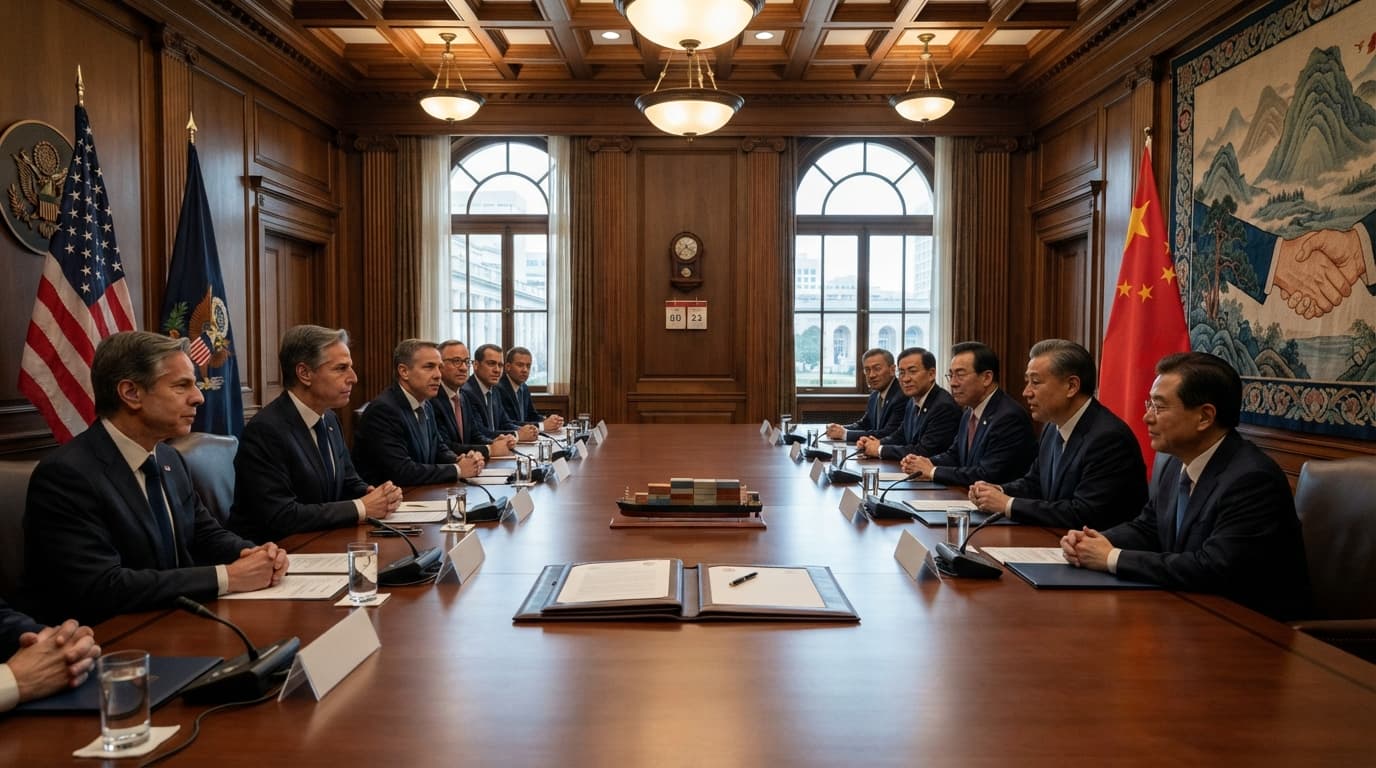
President Trump and President Xi Jinping’s Washington summit last week produced a two-month extension of the US-China trade truce—from its original November 10, 2026 expiration to January 10, 2027—along with the operational launch of the U.S.-China Board of Trade and a recommended $30 billion reciprocal tariff framework covering everything from toys and holiday decorations to seafood and medical devices. As we noted in our earlier analysis of this framework’s development, the scope remains narrow relative to roughly $585 billion in annual two-way trade. What the summit did not fully resolve is arguably more important than what it did: it remains genuinely unclear whether “more favorable tariff treatment” means actual cuts to existing duties, or merely protection from future tariff increases, and no official documentation has yet confirmed the precise scope of what was extended. China’s rare earth export controls—a top U.S. priority—remain “under discussion” rather than resolved. This analysis examines what was confirmed, what remains ambiguous, and what importers should do while the details get worked out.
US-China Truce Extended to January 10: What the Trump-Xi Summit Actually Delivered
(中美贸易休战延长至1月10日:特习会谈的实际成果)
1 · The Truce Extension: Confirmed, But Not Yet in Writing
What Was Announced
Senior U.S. officials said that the United States and China agreed to extend, through January 10, 2027, the trade truce first reached in Busan, South Korea on October 30, 2025—the framework that had suspended further tariff increases and certain export restrictions between the two countries. Treasury Secretary Scott Bessent confirmed the extension directly: “We will extend what we call the ‘Busan Agreement’—the economic détente between the two countries that was scheduled to end on Nov. 10—that is going to be extended until Jan. 10.” The extension reportedly includes a continued suspension of Section 301 shipping-related fees.
The Documentation Gap
Why This Matters: as of this writing, no official documentation has been issued confirming the extension’s precise terms, and it is not entirely clear which specific elements of the original Busan framework are being extended, or whether all of them are. This is a genuinely important gap for importers to understand: verbal confirmations from senior officials at a summit are not the same as a published agreement, and the specific tariff rates, export control suspensions, and other provisions that importers are relying on for planning purposes remain, technically, unconfirmed in writing.
Nothing Here Is Self-Executing
If the two governments do not take further action before January 10, 2027, the suspended tariff threats and paused measures are set to revert to being live again on that date, under whatever legal authorities apply at the time. The two-month extension buys negotiating time; it does not resolve the underlying dispute.
2 · The $30 Billion Framework: What’s Actually on the List
The Board of Trade Is Now Operational
The U.S.-China Board of Trade, first proposed during Trump’s May 2026 visit to Beijing, was formally operationalized during this summit—meaning its mission, composition, leadership, meeting schedule, and roles and responsibilities have now been established. Its first assigned task is to “develop a proposal for consideration regarding trade in select goods with a view toward providing reduced tariff treatment to those goods in a reciprocal manner.”
What the U.S. Would Import Under More Favorable Terms
The two sides reached consensus on recommendations covering $30 billion of non-sensitive goods in each direction. On the U.S. import side, the recommended list includes: plastic ware, blankets, bed and table linens, sleeping bags, curtains and wall hangings, umbrellas, small appliances, toys, holiday decorations, children’s car seats, game and sport equipment, fishing equipment, artists’ brushes, and vacuum flasks and vessels.
What China Would Import Under More Favorable Terms
On the Chinese import side, the recommended list covers agricultural products, fish and seafood, logs and wood products, cosmetics, and medical devices. USTR Ambassador Jamieson Greer characterized this side of the arrangement as “unlocking improved market access” for roughly 30% of U.S. exports to China.
How Adjustments Will Work Going Forward
Officials will monitor and assess bilateral trade in the covered products and could propose adjustments—including expanding the arrangement to additional products—though adjustments are not expected more frequently than annually. This suggests the $30 billion list, whatever its final form, is likely to remain relatively fixed for extended periods rather than shifting frequently.
3 · The Critical Ambiguity: Are Tariffs Actually Being Cut?
Two Conflicting Signals
This is the detail that matters most for importers modeling landed costs, and it remains genuinely unresolved. The terms of reference for the arrangement refer to “future tariff reductions,” and China’s Ministry of Commerce has stated these reductions could bring rates down to most-favored-nation (MFN) levels—a meaningful cut from current tariff levels for most covered products.
However, USTR Jamieson Greer was cited in several press reports characterizing the arrangement differently: rather than reducing existing tariffs on covered goods, the arrangement may instead exempt covered goods from any potential future tariff increases—a materially different and less generous outcome than an actual rate cut.
Why This Distinction Is Not a Technicality
Why This Matters: these are two fundamentally different outcomes for an importer’s cost model. An actual reduction to MFN rates would lower landed costs on covered products starting whenever implementation occurs. An exemption from future increases changes nothing about current costs—it simply provides insurance against a future escalation that may or may not have happened anyway. Importers with meaningful exposure to the listed product categories should not assume cost relief is coming until the specific mechanism is confirmed in an official, implemented rule, given that the U.S. and Chinese characterizations of the same arrangement currently point in different directions.
4 · Rare Earths: Still Just “Under Discussion”
The U.S. Priority That Wasn’t Resolved
China’s export controls on rare earths and related measures—suspended as part of the original November 2025 Busan framework—remain one of the top U.S. priorities in this relationship, given rare earths’ importance to electronics, defense, and clean energy manufacturing. The White House’s own characterization of this summit’s outcome on rare earths was notably modest: these restrictions “remain under discussion,” with the stated goal of “ensuring shipment levels return to appropriate levels.”
Why This Matters: this is meaningfully short of a resolution. Companies with supply chains dependent on Chinese rare earth exports should treat this as an unresolved risk factor rather than a settled matter, and should continue monitoring for further developments rather than assuming current shipment levels are secure through any extended timeframe.
5 · The Other Deliverables
A Large Coal Purchase Commitment
The U.S. stated that China has agreed to import at least 10 million metric tons of U.S. coal in 2027, and again in 2028. Notably, according to some press sources, China has not yet confirmed this commitment independently—another instance of the documentation gap described above, where U.S. characterizations of summit outcomes are running ahead of confirmed bilateral agreement.
A New Board of Investment
The two countries also established a Board of Investment, intended to discuss potential investment opportunities and investment-related impediments, and to provide a structured channel for addressing commercially meaningful investment-related issues between the two economies. This parallels the Board of Trade structurally and suggests both governments are institutionalizing ongoing bilateral engagement mechanisms rather than relying solely on periodic summits.
An AI Dialogue Channel
Separately from the trade-specific outcomes, the two countries also agreed to establish a channel for handling AI-related incidents and to hold talks on the technology’s risks and benefits—reflecting the broader scope of issues now being folded into the U.S.-China bilateral relationship beyond traditional trade and tariff questions.
6 · What This Means for Importers and Logistics Providers
Treat the Extension as Breathing Room, Not Resolution
The two-month extension to January 10, 2027, provides continued stability through the immediate term, but it explicitly does not resolve the underlying dispute—it buys negotiating time. Importers and logistics providers should treat this window as an opportunity to prepare for either outcome (further extension or reversion to escalated tariffs) rather than as a sign that the relationship has stabilized long-term.
Don’t Model Cost Savings Until the Mechanism Is Confirmed
Given the unresolved question of whether the $30 billion framework delivers actual duty cuts or merely protection against future increases, importers with products on either country’s covered list should hold off on updating landed cost models until CBP or USTR issues implementing guidance clarifying which mechanism applies.
Identify Your Exposure to the Covered Lists Now
Regardless of the mechanism ultimately used, importers should identify now whether their products fall within the listed categories—plastic ware, textiles and linens, small appliances, toys, and related consumer goods for U.S. imports; agricultural products, seafood, wood products, cosmetics, and medical devices for Chinese imports—so they are positioned to act quickly once implementation details are confirmed.
Monitor for Official Documentation
Given that senior officials’ summit statements have not yet been confirmed through official documentation, importers should watch for the actual terms of reference, Federal Register notices, or USTR guidance that would convert these verbal commitments into an enforceable, implementable framework.
Continue Rare Earth Supply Chain Contingency Planning
Companies dependent on Chinese rare earth supply chains should continue contingency and diversification planning, given that this summit left export control restrictions “under discussion” rather than resolved.
7 · Conclusion: Real Progress, Real Ambiguity
What Actually Changed
The Trump-Xi Washington summit delivered a confirmed two-month truce extension to January 10, 2027, an operational U.S.-China Board of Trade, and a recommended $30 billion reciprocal tariff framework with specific product lists on both sides. These are genuine, incremental steps forward relative to where the relationship stood before the summit.
What Remains Unresolved
At the same time, the summit left several consequential questions open: whether the tariff framework delivers actual rate cuts or merely caps against future increases, whether China will independently confirm the coal purchase commitment, and how China’s rare earth export controls will ultimately be resolved. None of the summit’s headline outcomes have yet been documented in official, implemented form.
The Strategic Takeaway
For importers and logistics providers, the appropriate response to this summit is neither to treat it as a breakthrough that resolves trade uncertainty, nor to dismiss it as insubstantial. It is genuine, incremental progress with a specific, confirmable next step: watch for the official documentation and implementing guidance that will resolve the ambiguities described above, and be ready to act quickly once they arrive.
If your organization needs help assessing exposure to the products covered by the $30 billion framework or planning for the January 10, 2027 truce deadline, our trade compliance team is available to help.
This analysis reflects statements from senior U.S. and Chinese officials following the Trump-Xi Washington summit held the week of September 21, 2026, including remarks from Treasury Secretary Scott Bessent and USTR Ambassador Jamieson Greer, White House fact sheets, and Chinese Ministry of Commerce statements. As of this writing, no official documentation has been issued confirming the precise terms of the truce extension or the tariff framework’s implementation mechanism. Importers should consult with customs brokers and trade counsel and monitor official Federal Register and USTR guidance for confirmed implementation details.