Executive Summary A customs bond is the financial guarantee behind almost every commercial import into the United States. Under 19 CFR Part 113, it is a contract in which a surety guarantees that the principal, usually the importer of record, will pay duties, taxes, and fees and comply with CBP requirements, with CBP as beneficiary. Importers choose between a single transaction bond (STB), which covers one entry and is generally set at entered value plus duties, taxes, and fees, and a continuous bond, which covers all entries for a year and is set at the greater of $50,000 or 10% of duties, taxes, and fees paid over the previous 12 months, according to CBP’s public guide How CBP Sets Bond Amounts (Publication 3569-0224). CBP periodically reviews continuous bonds for sufficiency and may require a larger bond when duty payments grow. The end of de minimis has extended bonding into the low-value environment: CBP’s postal informal entry process, effective July 24, 2026, requires a basic importation and entry bond; Entry Type 13 for certain mail becomes mandatory on January 20, 2027; and CBP’s October 8, 2026 Low-Value Shipments proposal would require a bond for every informal entry. Executive Order 14411 also directs CBP to raise bond minimums and to restrict continuous bonds for foreign importers of record, with implementing rules still pending. This guide explains how bonds work and what has changed.
Complete Guide to U.S. Customs Bonds: Single-Entry vs. Continuous Bonds, Sufficiency, and What Has Changed Since De Minimis Ended
(美国海关保证金完整指南:单次与连续保证金、额度充足性及小额豁免终止后的变化)
1 · What a Customs Bond Is
A Three-Party Contract
CBP’s guidance describes a bond as a performance contract taken out by a party doing business with CBP, to protect the revenue and ensure compliance with applicable law. There are three parties:
| Party | Role |
|---|---|
| Principal | The party engaging in the activity, typically the importer of record, identified by its IRS number (with a two-digit suffix), Social Security number, or CBP-assigned number |
| Surety | A Treasury-approved surety company that guarantees the principal’s obligations up to the bond amount |
| CBP | The third-party beneficiary, which may claim against the bond if the principal does not pay or comply |
A bond is not insurance for the importer. If a surety pays a claim, it generally seeks repayment from the principal. CBP’s regulations also allow cash or U.S. obligations in lieu of a surety (19 CFR 113.40), in an amount equal to the bond that would otherwise be required.
What the Bond Guarantees
The basic importation and entry bond conditions in 19 CFR 113.62 cover obligations such as paying duties, taxes, and fees; producing required documents; redelivering merchandise when CBP demands it; and complying with other entry requirements. When a condition is breached, CBP may assess liquidated damages against the bond.
When a Bond Is Required
In general, formal entries (commercial shipments valued over $2,500, and certain lower-value goods) require a bond. Bonds are also required for a range of other activities, including Importer Security Filings, the operation of bonded warehouses and container freight stations, in-bond carriage, and foreign trade zone operations. Historically, most informal entries could be filed without a bond in many situations, a point that is changing, as Section 5 explains.
Bond Types by Activity Code
CBP organizes bonds by activity code. Those most relevant to importers and logistics providers are:
| Activity Code | Bond | Typical Principal | Minimum (Continuous) |
|---|---|---|---|
| 1 | Basic Importation and Entry (19 CFR 113.62) | Importers of record; brokers in certain capacities | $50,000 or 10% formula |
| 1a | Drawback Payment Refunds (19 CFR 113.65) | Claimants requesting accelerated drawback | 100% of estimated accelerated drawback |
| 2 | Basic Custodial (19 CFR 113.63) | Bonded carriers, bonded warehouses, CFS operators, cartmen | $25,000 (per building or area for warehouses) |
| 3 | International Carrier (19 CFR 113.64) | Vessel operators, airlines, NVOCCs | Generally $50,000 |
| 4 | Foreign Trade Zone Operator (19 CFR 113.73) | FTZ operators | $50,000 per activated location |
| 16 | Importer Security Filing (19 CFR Part 113, App. D) | ISF filers without an applicable bond | $50,000 continuous; $10,000 single transaction |
Source: CBP, A Guide for the Public: How CBP Sets Bond Amounts (Publication 3569-0224, February 2024).
For importers, the bond that matters most is the Activity Code 1 bond, which can be taken out either as a single transaction bond or as a continuous bond.
2 · Single Transaction Bonds vs. Continuous Bonds
The Basic Comparison
| Feature | Single Transaction Bond (STB) | Continuous Bond |
|---|---|---|
| Coverage | One transaction (one entry) | All covered transactions over a one-year term, at all ports |
| Term | Ends with the transaction it secures | Renews automatically on its anniversary until terminated |
| Typical amount | Entered value plus duties, taxes, and fees | Greater of $50,000 or 10% of duties, taxes, and fees in the prior 12 months |
| Administration | A new bond for each entry | One bond on file in ACE |
| Number per principal | As many as there are transactions | One per activity code for each 11-digit identification number (19 CFR 113.12(b)) |
How CBP Sets Single Transaction Bond Amounts
According to CBP’s guide, the Activity Code 1 STB amount is generally not less than the total entered value plus all applicable duties, taxes, and fees, with several exceptions:
| Situation | STB Amount Under CBP’s Guide |
|---|---|
| Ordinary dutiable merchandise | Entered value plus duties, taxes, and fees |
| Unconditionally duty-free merchandise | May be 10% of entered value |
| Restricted merchandise | Three times the value of the restricted merchandise (not less than $100) |
| Merchandise regulated by certain partner agencies (e.g., FDA, CPSC, EPA, DOT) | Either entered value plus duties, taxes, and fees, or domestic value, depending on the program; three times value if restricted or prohibited |
| Alcoholic beverages; quota or visa merchandise; certain USDA marketing-order goods | Three times the value |
| Temporary Importation under Bond (TIB) | Generally two times estimated duties and fees |
| AD/CVD risk | Additional STB in an amount tailored to the evidence of risk |
Source: CBP Publication 3569-0224, sections 6.4.2 and Appendix A. Where a line qualifies for a partner agency disclaimer because it is not a regulated product, the agency-specific bond amount does not apply.
CBP’s guide also notes that a single transaction bond amount can be increased only during the period between entry and entry summary.
How CBP Sets Continuous Bond Amounts
For an Activity Code 1 continuous bond, CBP’s guide sets the minimum at $50,000 or 10% of the total estimated duties, taxes, and fees in the previous 12-month period, whichever is greater, for all principals, co-principals, and users on the bond. Bonds are set in increments of $10,000 up to $100,000, and in increments of $100,000 above that. An importer with no import history is bonded on its own estimate of duties, taxes, and fees for the next 12 months, and never below $50,000.
| Duties, Taxes, and Fees in the Prior 12 Months | 10% | Continuous Bond Amount |
|---|---|---|
| $300,000 | $30,000 | $50,000 (minimum) |
| $640,000 | $64,000 | $70,000 (rounded up to the next $10,000) |
| $1,350,000 | $135,000 | $200,000 (rounded up to the next $100,000) |
Illustrative calculations applying the “Reviewer formula” in CBP Publication 3569-0224, section 6.4.1 and Appendix B.
Which Entry Types Count
CBP’s guide lists entry types that are not included in the continuous bond sufficiency computation, including informal entries (types 11 and 12), warehouse and FTZ admission or withdrawal types such as 26 and 31, drawback (47), and the former Section 321 type 86. In other words, the formula is driven primarily by duties, taxes, and fees on formal consumption entries.
Choosing Between Them
The choice usually turns on frequency and predictability. A business importing only occasionally may find single transaction bonds simpler, while one importing regularly typically finds that one continuous bond reduces administration and avoids arranging a bond for each shipment. Premiums are set by sureties, not by CBP, and depend on the bond amount and the principal’s financial profile. A licensed customs broker or surety agent can compare the options for a particular import pattern.
⚠️ Critical Takeaway: The continuous bond amount is not fixed for life. It is tied to the duties, taxes, and fees the importer actually pays, so a change in tariff rates or import volume flows through to the bond.
3 · Bond Sufficiency
Who Reviews Bonds
CBP’s Office of Finance – Revenue Division conducts periodic sufficiency reviews. According to CBP’s guide, a review may consider recent CBP activity and volume for all parties on the bond, liquidated damages history, payment of duties, taxes, and fees, unpaid bills or other obligations, and the kind and character of the merchandise. Only the Director of the Revenue Division issues notices of continuous bond insufficiency.
The Two Formulas
| Formula | What It Adds |
|---|---|
| Reviewer formula | 10% of duties, taxes, and fees in the previous 12 months, subject to the $50,000 minimum and rounding rules |
| Analytical formula | The Reviewer amount plus 10% of delinquent bills not protested and under 210 days past due (or protested); plus 100% of delinquent bills not protested and over 210 days past due (or associated with a denied protest); plus 100% of unpaid debit vouchers |
Source: CBP Publication 3569-0224, section 6.4.1.4 and Appendix B.
Unpaid bills therefore raise the required bond amount directly. CBP’s guide states that if those bills are paid before the deadline set in the insufficiency notice, and the Revenue Division is timely notified, it will recompute the bond amount.
What an Insufficiency Notice Means
When CBP determines that a continuous bond is insufficient, it notifies the principal and surety and sets a deadline by which the principal must terminate and replace the bond with one in the required amount (19 CFR 113.13). Separately, a Port Director, Center Director, or the Revenue Division may require additional security, usually a single transaction bond on top of the continuous bond, when it documents that accepting a transaction under the existing bond would place the revenue at risk.
Why Tariff Changes Reach the Bond
Because the formula looks back over 12 months of duties, taxes, and fees, periods of higher tariffs increase the amounts used in the calculation, often with a lag. An importer whose duties rose because of new Section 232, Section 301, or other duties may find that its bond, set when duties were lower, is now insufficient under the same formula. The reverse is also true: lower duty payments over time reduce the calculated amount, though changing a bond is a separate step taken through the surety.
⚠️ Critical Takeaway: Sufficiency is calculated, not negotiated. Duty volume, unpaid bills, and debit vouchers all feed the formula, and each can be monitored in advance.
4 · How Bonds Reach CBP
Since 2015, approved sureties and surety agents have been able to transmit bonds electronically to ACE under CBP’s eBond test, and ACE is the system of record for bonds transmitted that way. Bonds not transmitted through eBond are submitted by email, fax, or, for some single transaction bonds, to the port. CBP’s guide notes that any party required to have a bond must have an active importer identity record, established through CBP Form 5106, before a bond can be submitted.
That link has grown more significant since CBP began enhanced verification of Form 5106 data under Executive Order 14411, including the possibility of voiding importer numbers where information is inaccurate or incomplete, as announced in its August 19, 2026 Federal Register notice. CBP has also proposed regulations to make most bond transmissions electronic, as discussed in our analysis of CBP’s regulatory agenda.
5 · What Has Changed Since De Minimis Ended
The Timeline
| Date | Development | Bond Relevance |
|---|---|---|
| July 4, 2025 | Legislation (Pub. L. 119-21) provides for statutory repeal of the commercial de minimis privilege effective July 1, 2027 | Low-value commercial shipments move permanently into the entry system |
| August 29, 2025 | Executive Order 14324 suspension of de minimis treatment for all countries takes effect | Low-value shipments require informal or formal entry |
| June 24, 2026 | CBP interim final rule indefinitely suspends de minimis for mail and creates a new postal informal entry process | Postal informal entries require a basic importation and entry bond |
| July 24, 2026 | New postal informal entry process takes effect | Bond must be in place before a postal informal entry is accepted |
| September 22, 2026 | Entry Type 13 (Informal Mail Entry) test begins in ACE | Filer’s bond is obligated on each Type 13 entry |
| October 8, 2026 | CBP proposes the “Low-Value Shipments” rule (91 FR 64532) | Would require a bond for all Type 11 and Type 13 entries |
| October 14, 2026 | CBP extends mandatory Entry Type 13 date | Mandatory for mail subject to Section 201, 232, or 301 duties or PGA jurisdiction from January 20, 2027 |
| July 1, 2027 | Statutory repeal of commercial de minimis takes effect | — |
The Postal Informal Entry Process
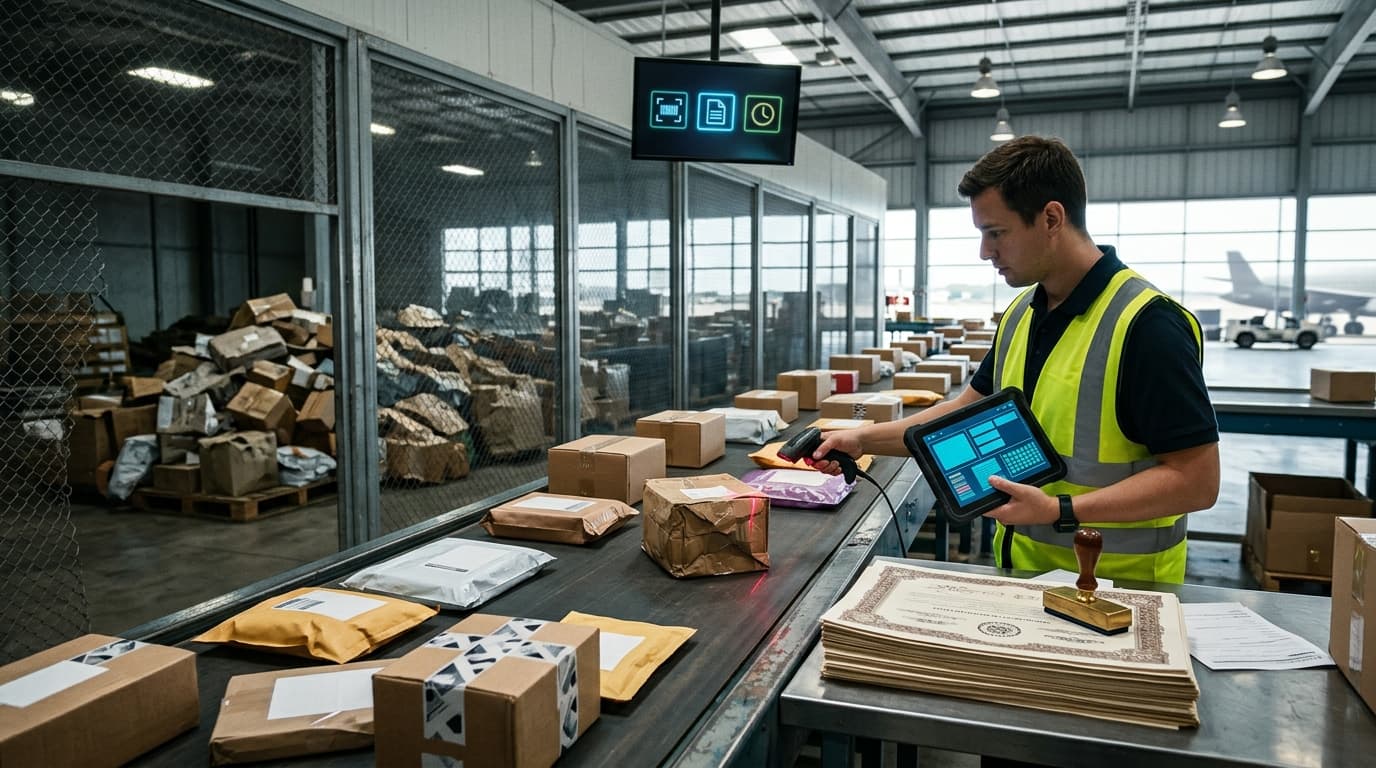
CBP’s guidance for the new postal process lists, as an early step, obtaining and maintaining a basic importation and entry bond, single transaction or continuous, carrying the 19 CFR 113.62 conditions. For mail subject to Section 201, 232, or 301 duties or to partner agency requirements, informal entry will require Entry Type 13 from January 20, 2027, according to CBP’s October 14, 2026 announcement; otherwise, formal entry applies. Our earlier analysis of Entry Type 13 describes the filing itself.
The Low-Value Shipments Proposal
CBP’s October 8, 2026 notice of proposed rulemaking (docket USCBP-2026-0298; comments due December 7, 2026) would, among other changes:
- require a basic importation and entry bond, single transaction or continuous, for all Entry Type 11 (informal) and Entry Type 13 (informal mail) filings;
- require informal entries to be filed electronically on or before the date of importation, rather than within 15 days after arrival;
- set a minimum liquidated damages amount of $1,000 for each breach of certain bond conditions on these entries, on the reasoning that liquidated damages based on the value of low-value merchandise alone would often be too small to secure compliance; and
- allow certain goods subject to Chapter 99 duties and valued up to $2,500 to use informal entry, in place of the current $250 limit.
The proposal notes that a filer needing a bond could either replace an existing continuous bond or obtain a new single transaction or continuous bond after a final rule. As a proposal, it does not apply to entries until CBP publishes a final rule with an effective date.
Effect on Continuous Bond Calculations
Under CBP’s current guide, informal entries (type 11) are excluded from the continuous bond sufficiency computation. If informal entries come to require bonds, how CBP will treat their duties in future sufficiency reviews is a question the current guide does not address.
⚠️ Critical Takeaway: For low-value shipments, the question has shifted from “is a bond needed?” to “whose bond secures this entry?” The answer depends on who files the entry and as what party.
6 · Executive Order 14411 and the Importer of Record
Executive Order 14411, Strengthening Customs Enforcement (June 3, 2026), directs DHS and CBP to revise importer eligibility rules. As described in the order and CBP’s subsequent notices, the directions relevant to bonds include:
| Direction | Applies To |
|---|---|
| Maintain a minimum level of tangible domestic assets, bonding, or both, for formal and informal entries | All importers of record |
| Increase minimum required bond coverage | All importers of record |
| Foreign importers of record may not rely on a continuous bond for formal entries, except where CBP determines that revenue is fully protected and compliance assured | Foreign importers of record |
| Foreign importers of record may not file informal entries | Foreign importers of record |
| Enforce liquidated damages claims against bonds | All |
The order called for revisions within 180 days, a period ending November 30, 2026. As of early November 2026, CBP had begun enforcement of Form 5106 accuracy but had not published final rules setting new bond minimums or the conditions for foreign importers. Our analyses of EO 14411 and foreign importers of record and of IOR options for Chinese exporters discuss the wider framework.
⚠️ Critical Takeaway: Until CBP publishes implementing rules, the order sets direction rather than specific bond amounts. The details, including any new minimums and how existing bonds are treated, will come from those rules.
7 · Practical Considerations
The following points are commonly reviewed by importers, exporters, and logistics providers. They are offered for information, not as a checklist.
Knowing Which Bond Secures Each Entry
The bond number on an entry identifies whose obligations are on the line. Importers using brokers, forwarders, or third-party importers of record often confirm whether entries are filed under their own bond or someone else’s, and what that means for liability.
Estimating Sufficiency Before CBP Does
Applying the Reviewer formula to the past 12 months of duties, taxes, and fees, and checking for unpaid bills or debit vouchers, gives an early view of whether a bond is likely to be found insufficient.
Keeping Importer Identity Data Accurate
Because bonds depend on an active importer identity in ACE, accurate and current Form 5106 information supports both bond processing and continued use of an importer number.
Matching Bond Type to Import Pattern
Frequency, value, merchandise type (including restricted or partner agency-regulated goods), and AD/CVD exposure all bear on whether single transaction or continuous bonding fits, and on the amounts required.
Following Low-Value Developments
E-commerce sellers and their logistics partners commonly follow the Low-Value Shipments rulemaking, the January 20, 2027 Entry Type 13 date for covered mail, and CBP’s implementation of EO 14411, since each affects who must be bonded and how.
8 · Conclusion: The Guarantee Behind Every Entry
Customs bonds have long been a routine part of formal entry. What has changed since the end of de minimis is their reach: postal informal entries now require them, a CBP proposal would extend them to every informal entry, and an executive order points toward higher minimums and tighter terms for foreign importers. The underlying mechanics, however, remain those set out in 19 CFR Part 113 and CBP’s bond-setting guide: a single transaction bond sized to one entry, a continuous bond sized to a year of duties, and periodic sufficiency reviews that adjust the bond as import activity changes.
Key Takeaways
| Factor | Detail |
|---|---|
| Legal Framework | 19 CFR Part 113; basic importation and entry bond conditions in 19 CFR 113.62 |
| CBP Guidance | A Guide for the Public: How CBP Sets Bond Amounts (Publication 3569-0224, Feb. 2024) |
| Single Transaction Bond | Generally entered value plus duties, taxes, and fees; three times value for restricted merchandise |
| Continuous Bond | Greater of $50,000 or 10% of prior-12-month duties, taxes, and fees; $10,000 increments to $100,000, then $100,000 |
| Sufficiency | Periodic Revenue Division reviews; unpaid bills and debit vouchers add to the required amount |
| Postal Informal Entry | Bond required since July 24, 2026; Entry Type 13 mandatory for covered mail from Jan. 20, 2027 |
| Low-Value Shipments Proposal | Bond for all Type 11 and 13 entries; $1,000 minimum liquidated damages; comments due Dec. 7, 2026 |
| EO 14411 | Higher bond minimums and continuous bond limits for foreign IORs; implementing rules pending |
The Bottom Line
For any business that imports into the United States, or that sells to U.S. customers on delivered terms, the customs bond determines who stands behind each entry and for how much. Understanding the two bond types, the sufficiency formula, and the changes now reaching low-value and foreign-importer shipments makes it easier to keep bonding aligned with actual import activity. Businesses that would like help reviewing their bond structure, entry filings, or importer-of-record arrangements may find it useful to work with a licensed customs broker and logistics partner familiar with CBP’s bond requirements.
The message is clear: a customs bond is sized to the duties it secures—entered value for a single transaction, prior-year duties for a continuous bond—and since de minimis ended, bonding has been extending into low-value entries that once moved without one.
This analysis reflects CBP’s A Guide for the Public: How CBP Sets Bond Amounts (Publication 3569-0224, February 2024), 19 CFR Part 113, CBP’s Low-Value Shipments proposed rule (91 FR 64532, October 8, 2026), CBP’s Updated Global Guidance for International Mail (July 2026), CBP’s announcement extending the Entry Type 13 mandatory date (October 14, 2026), CBP’s notice on the accuracy of importer of record data (August 19, 2026), and Executive Order 14411 (June 3, 2026). Information is current as of early November 2026. Bond amounts in individual cases are set by CBP based on the facts of each principal, and premiums are set by sureties. Proposed rules and executive order directions do not apply until implemented through final rules or CBP guidance. Organizations should consult with licensed customs brokers, sureties, and customs counsel for guidance tailored to their specific circumstances.