Executive Summary
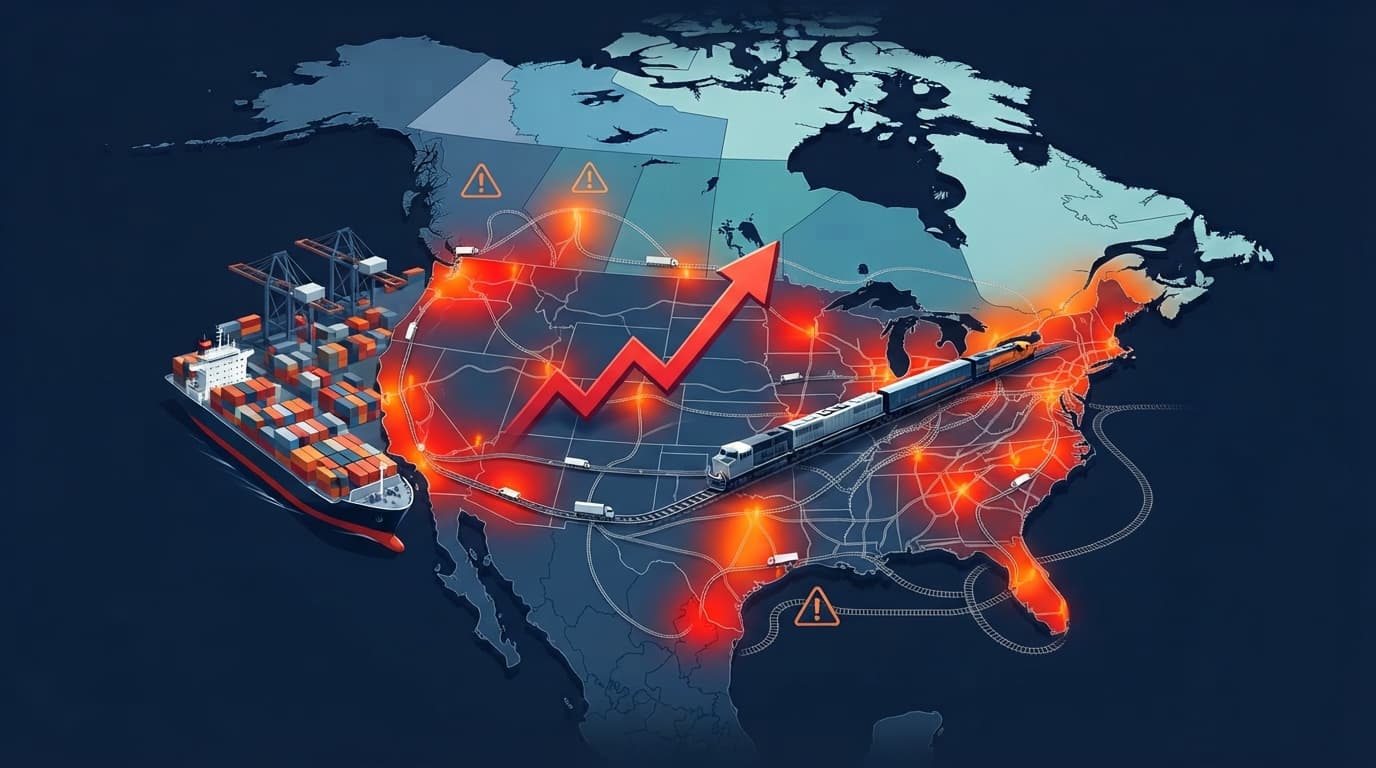
U.S. container imports are projected to reach an all-time monthly record of 2.47 million TEU in July 2026, surpassing the previous high of 2.4 million TEU set in May 2022 during the post-pandemic import surge. This represents a meaningful increase from July 2025 and reflects aggressive front-loading by retailers and importers ahead of anticipated tariff changes. The surge is driven by the scheduled expiration of temporary global tariffs and expectations of new tariffs tied to forced labor concerns as early as August. Despite record volumes, major gateways are handling the influx without significant congestion, though the traditional peak season has shifted earlier in the calendar. Imports are forecast to retreat in the months following July. This analysis examines the drivers, operational dynamics, and strategic implications of this historic import surge.
U.S. Ports Set a July 2026 Record: Understanding the Volume Surge and What Comes Next
(2026年7月美国港口创纪录:了解货量激增及其后续影响)
1 · The Record: 2.47 Million TEU in Context
The Numbers
July 2026 Forecast: U.S. ports are forecast to handle roughly 2.47 million twenty-foot equivalent units (TEU) in July 2026. This would represent a meaningful increase from July 2025 and surpass the previous monthly record of 2.4 million TEU set in May 2022, when the economy was rebounding from pandemic-related disruptions.
First-Half Performance: The record July follows substantial growth in preceding months. May 2026 saw ports handle a volume up strongly from a year earlier and meaningfully above April levels. June volumes are projected to show a similarly strong year-over-year increase.
Combined, these figures would bring first-half 2026 imports to a total modestly higher than the same period in 2025.
Annual Context: Total U.S. container imports were roughly flat in 2025 compared to 2024. The strong first-half performance in 2026, followed by the anticipated July record, suggests annual volumes may exceed 2025 levels despite an expected second-half pullback.
The Previous Record in Perspective
The May 2022 record of 2.4 million TEU was set during a period of extraordinary pandemic-related demand, as consumers shifted spending toward goods and supply chains strained to keep pace. The July 2026 forecast surpasses that pandemic-era high—a notable development given that the current surge is driven not by organic demand growth but by policy-driven front-loading.
Much of the recent increase in import volumes reflects shippers pulling cargo forward ahead of expected tariff changes rather than any underlying strengthening in consumer demand.
2 · The Policy Drivers: Tariff Front-Loading in Action
The record July volumes are primarily a function of trade policy timing rather than underlying demand strength.
Tariff Expiration Dynamics
A Key Deadline: Temporary global tariffs implemented earlier in 2026 are scheduled to expire in late July, creating a window for importers: goods arriving before the expiration date are subject to the lower rate, while those arriving afterward face uncertainty about the tariff regime that will replace it.
The impending expiration has created a natural incentive for importers to accelerate shipments, pulling forward cargo that might otherwise have arrived in August or September.
Expected New Tariffs
Forced Labor-Related Tariffs: Beyond the scheduled expiration, a new round of tariffs targeting goods linked to forced labor is expected as early as August. The specific scope, rates, and product coverage of these tariffs remain uncertain, but their anticipated implementation has created additional urgency for importers to bring goods into the U.S. before they take effect.
Industry observers have noted that this year’s early peak season is expected to continue through July as retailers and other importers prepare for potentially higher tariffs beginning in August, alongside broader trade uncertainties.
The Front-Loading Dynamic
Rational Behavior Under Uncertainty: Front-loading—accelerating imports ahead of anticipated cost increases—represents rational economic behavior. When faced with the prospect of higher tariffs, importers have strong incentives to bring goods in before new rates apply. The July record reflects this dynamic in concentrated form.
However, front-loading creates a “borrowing from the future” effect. Goods that arrive in July are, in many cases, goods that would have arrived in August, September, or October under normal conditions. This concentration of volume in a single month is typically followed by a corresponding decline in subsequent months.
3 · The Post-July Correction: What Comes Next
Forecast Decline
Sharp Volume Retreat: Import volumes are generally expected to retreat significantly after July, with monthly forecasts through the fall showing meaningful year-over-year declines relative to the July peak.
The May–July Peak: Volumes from May through July are estimated to represent the highest stretch of 2026. This marks a shift from historical patterns, where the peak shipping season has typically centered around October.
The Shifting Peak Season
Structural Change in Import Timing: The traditional peak shipping season—historically centered around October as retailers prepared for the winter holidays—has moved earlier in recent years. This shift reflects several converging factors:
- Port Labor Uncertainty: Concerns about potential labor disruptions have prompted earlier shipments
- Tariff Policy Volatility: Anticipated tariff changes have created front-loading incentives
- Geopolitical Risk: Conflicts and trade tensions have encouraged supply chain de-risking
- Consumer Behavior: Earlier holiday shopping by consumers has pulled retailer demand forward
July and August have become some of the busiest months of the year for imports as companies prepare for the holidays, a pattern that has intensified in recent years as shoppers pull their holiday shopping forward.
4 · Port Operations: Handling the Surge
Remarkable Absence of Congestion
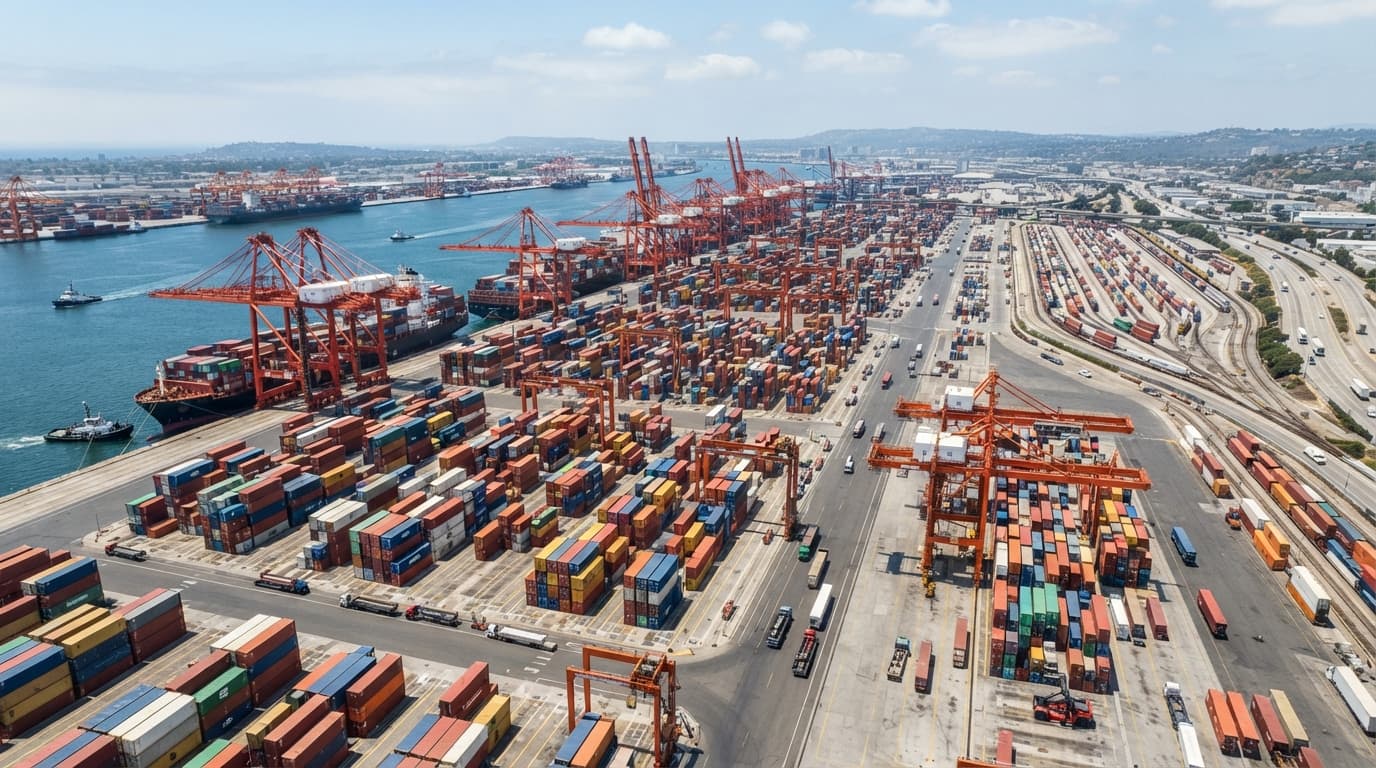
Efficient Throughput: Despite the record volumes, there are few signs of congestion at the nation’s largest gateway. Vessel anchorage counts at Southern California’s ports have remained low, indicating that terminals continue to handle elevated cargo flows without significant vessel queues.
The absence of congestion reflects several factors:
- Enhanced Terminal Capacity: Investments in terminal infrastructure and operational efficiency since the pandemic have increased throughput capacity
- Improved Visibility: Better visibility into cargo flows has enabled more effective planning
- Labor Stability: Absence of labor disruptions has supported consistent operations
- Carrier Coordination: Improved coordination between carriers and terminals has smoothed cargo flow
Operational Stress Points
Beyond the Gateway: While ports themselves are managing the volume surge effectively, the record imports create downstream pressures:
Drayage Capacity: Moving containers from ports to warehouses and distribution centers requires sufficient drayage capacity. The concentrated volume in July puts pressure on local trucking markets serving port gateways.
Warehouse Capacity: The front-loaded inventory must be stored somewhere. With warehouse vacancy rates already elevated in many markets, the surge in imports may strain available space in key distribution hubs.
Inland Transportation: Once goods leave port gateways, they must move via rail or truck to inland markets. The July volume concentration creates surges on key inland corridors.
One of the recurring lessons for retailers has been the importance of making sure all partners in the supply chain are aware of the plan, so that capacity, warehouse space, and drayage can be arranged in advance when volumes are being pulled forward.
5 · Retail and Consumer Implications
Retailer Strategy
Purchasing Decisions Made Months in Advance: The current front-loading reflects decisions made well before the current month. Many companies made their purchasing decisions six, nine, or even twelve months ago. Being hit with a tariff on top of those existing commitments represents a real challenge, which is part of why companies are looking to pull shipments ahead.
For retailers, the front-loading strategy serves multiple purposes:
- Cost Avoidance: Locking in lower tariff rates before potential increases
- Inventory Assurance: Ensuring sufficient stock for back-to-school and holiday seasons
- Price Stability: Avoiding the need to pass tariff increases to consumers
Consumer Spending Context: Despite ongoing economic headwinds, consumers continue to spend, though affordability remains a key factor affecting spending habits. The front-loaded inventory positions retailers to meet consumer demand without immediate price increases, even as tariff uncertainty persists.
Consumer Price Implications
Potential for Lower Prices: The front-loading of inventory at lower tariff rates may allow retailers to maintain or even reduce prices for certain goods, at least in the near term. Goods imported before tariff increases take effect carry lower duty costs, creating margin flexibility.
Future Price Pressure: However, the post-July volume correction and any new tariffs that take effect will eventually affect the cost of goods arriving later in the year. Retailers may face upward pressure on prices for goods imported after new tariffs are implemented.
6 · Broader Supply Chain Implications
The Front-Loading Cycle
Pattern Recognition: The July 2026 record is the latest example of a recurring pattern in U.S. trade: tariff announcements trigger front-loading, which concentrates import volumes, which strains supply chains, which is then followed by a period of reduced volumes as the front-loaded inventory is absorbed.
This pattern has become increasingly familiar to supply chain professionals and creates operational challenges:
- Volume Volatility: Sharp peaks and valleys in import volumes complicate planning
- Capacity Misalignment: Surge capacity is required for peaks, followed by excess capacity during troughs
- Inventory Carrying Costs: Front-loaded inventory ties up working capital
- Forecast Uncertainty: Policy-driven volume swings make demand forecasting more difficult
The New Normal for Peak Season
Earlier and More Volatile: The traditional October peak season has been replaced by a more complex pattern. The peak shipping season has moved up in recent years for reasons ranging from port labor disputes to expected tariff increases.
For supply chain managers, this means:
- Extended Planning Horizons: Earlier peak seasons require earlier planning
- Multiple Peaks: Rather than a single peak, there may be multiple volume surges throughout the year
- Policy Monitoring: Tariff announcements have become critical inputs to supply chain planning
- Flexibility Requirements: The ability to accelerate or decelerate shipments based on policy developments
Geopolitical Risk Integration
Beyond Tariffs: The current front-loading is not solely about tariffs. Retailers are also navigating supply chain disruptions tied to broader geopolitical tensions. Geopolitical risk has become a permanent feature of supply chain planning, with implications for routing, timing, and inventory strategy.
7 · Strategic Considerations for Shippers and Supply Chain Managers
For Importers with July Cargo
Organizations moving cargo through this period generally benefit from confirming arrival timing relative to key tariff deadlines, ensuring entry documentation is prepared for prompt clearance, coordinating drayage and warehouse capacity for post-arrival movement and storage, and tracking duty costs by shipment to understand landed cost impacts.
For Importers Planning Post-July Shipments
Organizations planning shipments beyond July may find value in monitoring tariff developments closely, developing cost models for various tariff outcomes, discussing tariff risk sharing and potential price adjustments with suppliers, and weighing whether to accelerate additional shipments before new tariffs take effect.
Medium-Term Strategic Planning
Supply Chain Agility: The current environment underscores the importance of supply chain agility, including maintaining relationships with multiple ports and carriers, considering strategic inventory positioning to help absorb policy shocks, reducing concentration in high-tariff origins where feasible, and enhancing visibility and decision-support capabilities.
Policy Monitoring Framework: Given the central role of trade policy in driving volume patterns, shippers benefit from establishing systematic policy monitoring, including tracking proposed, announced, and implemented tariff changes, noting key statutory deadlines, engaging with trade associations and industry groups, and maintaining relationships with customs brokers and trade counsel.
Long-Term Considerations
Structural Supply Chain Design: The recurring pattern of tariff-driven front-loading suggests that supply chain design benefits from accounting for policy volatility over the long term, through network redundancy, alternative sourcing options in lower-tariff regions, evaluation of nearshoring economics, and a balance between just-in-time efficiency and buffer inventory.
8 · Outlook: Beyond the July Record
Near-Term Projections
Post-July Normalization: The decline forecast for the months following July suggests a period of normalization following the front-loading surge. The magnitude of the decline will depend on several factors, including which tariffs actually take effect and when, whether consumer demand remains resilient, how quickly front-loaded inventory is absorbed, and whether additional geopolitical developments occur.
The Policy Uncertainty Factor: The primary uncertainty remains trade policy. Ongoing developments related to international tensions and the scheduled expiration of temporary tariffs are among the key themes shaping industry expectations for the months ahead.
Structural Trends
Earlier Peak Seasons: The shift of peak season volumes earlier in the calendar appears to be a structural trend rather than a one-time anomaly. Supply chain planning increasingly needs to account for this ongoing shift.
Policy-Driven Volatility: Trade policy volatility has become a lasting feature of the U.S. import environment. Organizations that build policy monitoring and response capabilities into their supply chain operations tend to be better positioned to navigate this volatility.
Resilience as Competitive Advantage: Organizations that develop the capability to respond quickly to policy changes, manage volume volatility, and maintain service levels despite disruptions are likely to achieve competitive advantages in an increasingly complex trade environment.
9 · Conclusion: A Record with Lessons
The July Record in Perspective
The projected July 2026 record of 2.47 million TEU represents more than a statistical milestone. It reflects the continued centrality of trade policy to supply chain decision-making, the adaptability of port infrastructure to handle concentrated volume surges, and the ongoing shift in peak season timing.
The record is driven not by organic demand growth but by policy-driven front-loading. This distinction matters for supply chain planning: the surge is temporary, and the post-July correction is likely to be significant.
Key Takeaways
For Supply Chain Professionals:
- Monitor Policy Closely: Tariff deadlines and announcements are critical planning inputs
- Plan for Volatility: Front-loading creates peaks that are typically followed by troughs
- Coordinate Across the Chain: Ensuring all partners—ports, drayage, warehouses, carriers—are aligned supports smoother execution
- Build Flexibility: The ability to accelerate or decelerate shipments is increasingly valuable
For Business Leaders:
- Recognize the Pattern: Tariff-driven front-loading is a recurring phenomenon
- Invest in Resilience: Supply chain agility remains a strategic priority
- Scenario Plan: Developing plans for multiple tariff and volume scenarios helps manage uncertainty
- Communicate with Customers: Managing expectations about availability and pricing supports stronger relationships
Looking Ahead
The July 2026 record will likely not be the last monthly record for U.S. container imports. As long as trade policy remains a source of uncertainty and volatility, front-loading is likely to continue concentrating volumes in specific periods.
Organizations that understand this dynamic—and build the capabilities to navigate it—are better positioned to manage costs, maintain service levels, and achieve competitive advantage in an increasingly complex trade environment.
This analysis reflects U.S. port import projections for July 2026 based on available industry reporting and forecasts. Market conditions evolve continuously and specific circumstances vary by importer, product, and trade lane. Organizations managing U.S. imports may wish to consult with customs brokers, supply chain professionals, and trade advisors for guidance tailored to their specific requirements and circumstances.