Executive Summary
Labor negotiations between the International Longshore and Warehouse Union (ILWU) and the Pacific Maritime Association (PMA) for a new contract covering 22,000 dockworkers at 29 West Coast ports reached a critical juncture in July 2026. The previous contract expired on July 1, and while both parties committed to keeping cargo moving, automation remained the defining point of contention—a dispute that has shaped the ports for six decades. The PMA views automation as essential for competitiveness and capacity, while the ILWU argues automation reduces jobs and worker leverage. This analysis examines the negotiation landscape, the automation divide, cargo diversion trends, and strategic considerations for supply chain professionals navigating this period of uncertainty.
West Coast Port Labor Negotiations: Automation, Uncertainty, and Strategic Response
(美国西海岸港口劳资谈判:自动化、不确定性与战略应对)
1 · The Negotiation Landscape: A Critical Juncture
Contract Expiration and Status
The July 1 Deadline: The collective bargaining agreement between the ILWU and PMA expired at 5 p.m. on July 1, 2026. Formal negotiations for a new contract began on May 10 in San Francisco. The proposed six-year deal covers over 22,000 dockworkers at 29 U.S. West Coast ports and includes provisions for wages, benefits, and operational flexibility.
Tentative Agreement and Ratification: A tentative agreement was announced, though the details remained subject to ratification by both parties. The ILWU rank-and-file ratification vote, a process that typically takes several weeks, was pending as negotiations concluded. Reports indicated ILWU members voted strongly in favor of ratifying a six-year agreement that includes a substantial pay increase over the contract term.
Commitment to Operations: Despite the contract expiration, both parties publicly committed to keeping cargo moving. In a joint statement, the ILWU and PMA affirmed that while there would be no contract extension, cargo would keep moving and normal operations would continue at the ports until an agreement could be reached.
Port officials expressed confidence in a resolution, noting that cargo was expected to keep moving while a mutual resolution was reached within a reasonable time.
The High Stakes
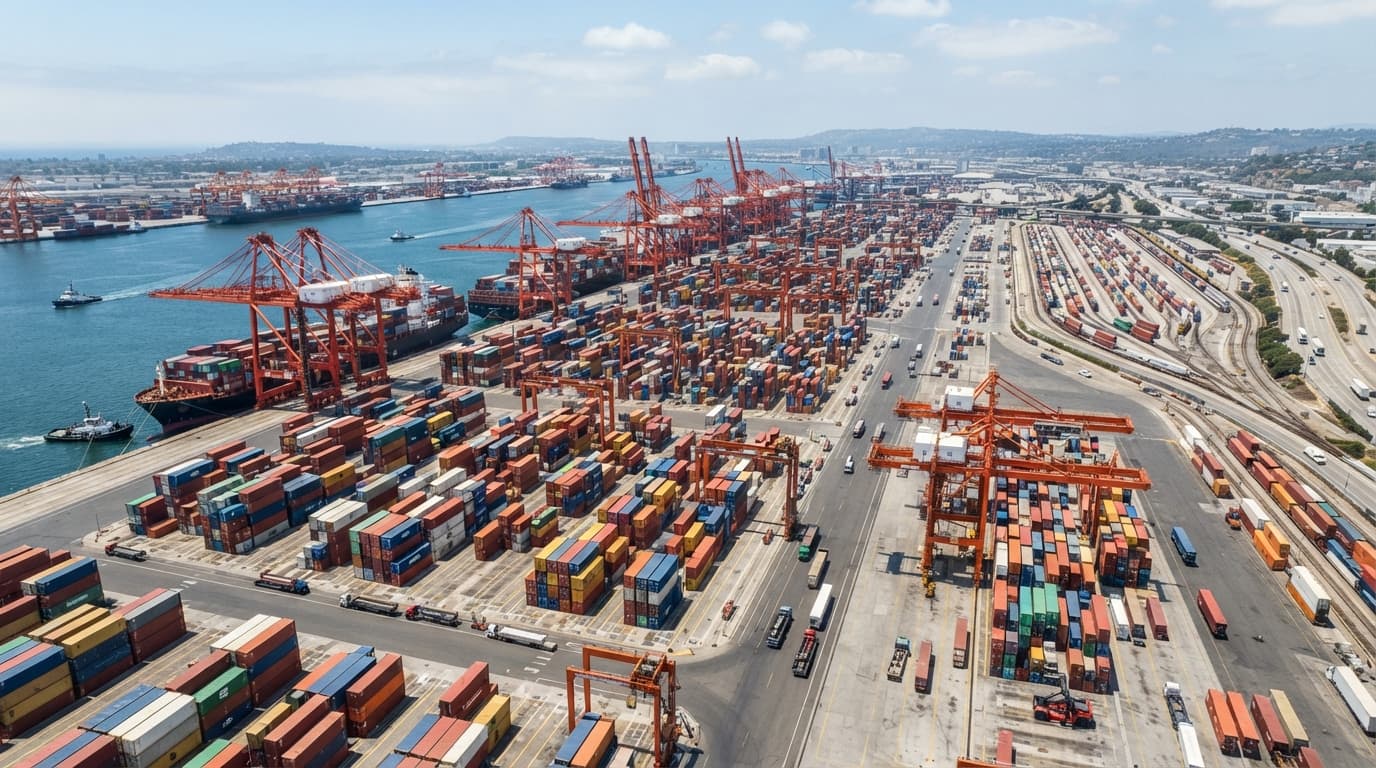
Economic Significance: West Coast ports handle just under half of the containers entering and leaving the United States and serve as the principal gateway for shipments to and from China, the largest source of American merchandise imports. The stakes are considerable: any significant disruption would ripple through the U.S. economy during a period already marked by inflation and supply chain sensitivity.
Peak Season Timing: The negotiations coincided with one of the busiest periods of the year for imports. July and August are typically peak months as retailers stock up on back-to-school and holiday goods. The peak arrived even earlier this year, with companies looking to pre-empt future disruptions—amplifying the pressure on both parties to reach a resolution.
2 · The Automation Divide: Decades of Conflict
The Core Dispute
A Generational Issue: Automation has been a defining issue in West Coast port labor relations for over sixty years. The tension between technological advancement and job security has persisted through multiple contract cycles, with each negotiation revisiting the same fundamental question.
ILWU Position: Existential Threat: For the ILWU, automation represents an existential threat to its membership. Union leaders have argued that automation has reduced jobs at the ports, with cost savings from increased robotics benefiting overseas shipping lines rather than the domestic workforce.
Workers at automated terminals have described a mix of appreciation for the technology and concern about job elimination. At the Port of Tacoma, local union leaders warned that a proposal to automate container identification could eliminate a meaningful number of marine clerk positions, characterizing it as a step toward broader automation. Other union officials have noted that computerized auto gates have reduced the number of clerks needed, observing that a single person can now do work once done by several—efficient, but evidence of job erosion in their view.
PMA Position: Competitiveness Imperative: The PMA views automation as a critical tool to address capacity constraints and maintain competitiveness, describing it as key to the long-term survival and competitiveness of West Coast ports. Industry executives have noted that European and Asian ports can clear cargo backlogs quickly because they operate automated cargo-handling equipment around the clock, a resilience that West Coast terminals have historically lacked.
The Productivity Debate
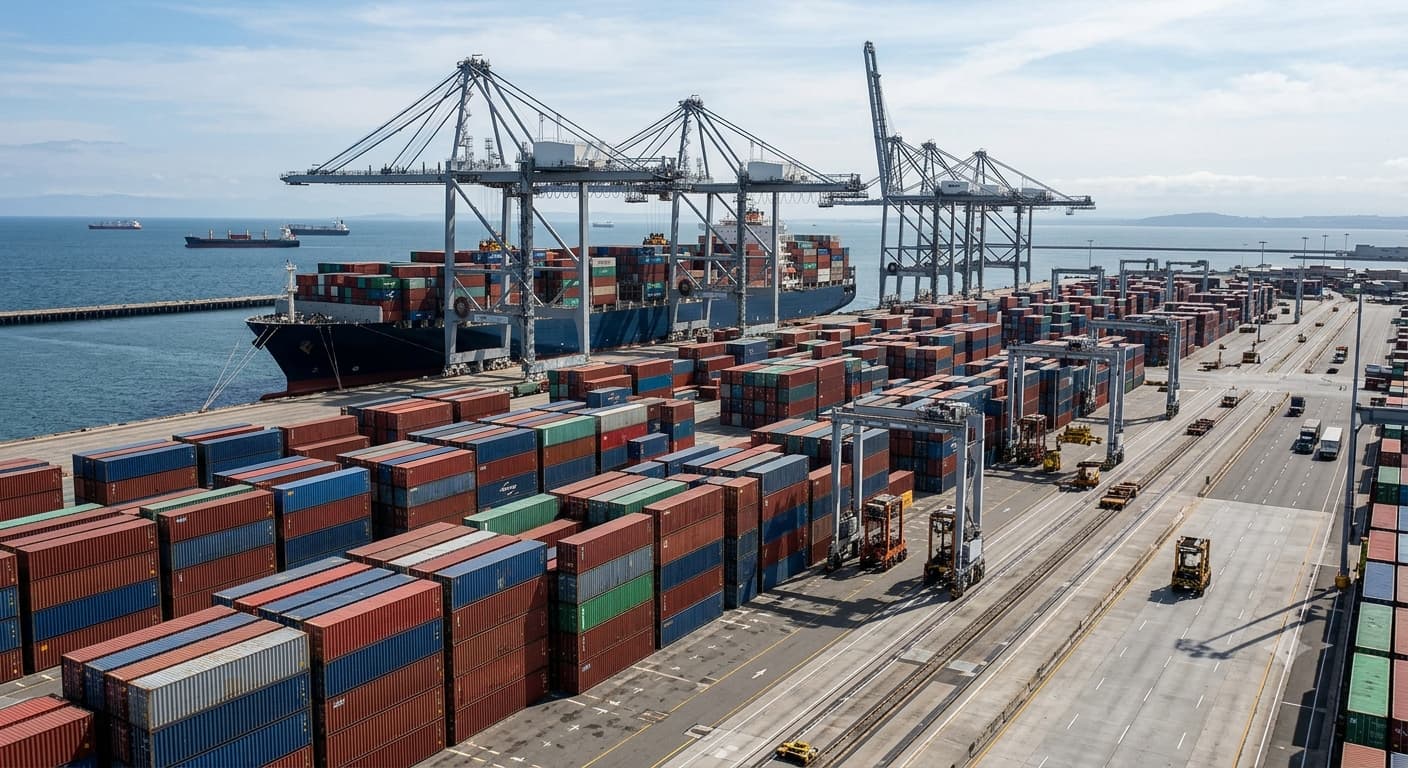
PMA’s Commissioned Study: Ahead of negotiations, the PMA published a study on the benefits of terminal automation. The study found that container throughput per acre at automated terminals in the Los Angeles-Long Beach port complex was substantially higher than at non-automated facilities, with automated terminals processing containers roughly twice as fast since 2019 through autonomous vehicles and higher, closer container stacking.
The study also argued that automation had benefited labor overall, citing data showing that paid ILWU hours at automated terminals grew at a considerably faster pace than at non-automated terminals over a multi-year period, alongside overall growth in the registered ILWU workforce at the port complex. The study’s conclusion was that automation had added work rather than come at labor’s expense.
ILWU’s Rebuttal: The ILWU dismissed the PMA-funded study as self-serving, arguing that automation had resulted in job losses at the ports overall. The union’s position is that increased productivity at automated terminals has meant less work at other terminals and an overall loss of employment for longshore workers—describing the situation as a shell game that masks the human cost of job displacement rather than a genuine productivity increase.
Legislative and Political Dimensions
State-Level Action: The automation debate has extended beyond the negotiating table into state legislatures. Washington State has reinforced a permanent ban on public funding for fully automated port equipment, with supporters arguing that existing automation in Seattle and Tacoma has already reduced waterfront jobs.
Federal Engagement: The White House closely monitored the talks, with senior officials engaging directly with both negotiating parties. Federal supply chain officials have described automation as inevitable, while stressing that the industry should move toward it deliberately rather than being dragged into it—and that automation should enhance production and efficiency rather than simply replace human workers. The overarching federal position has been that automation must be part of the solution going forward, but not at labor’s expense, with labor also needing to be part of the solution.
3 · Negotiation Timeline: From May to July
Pre-Negotiation Positioning
In the run-up to formal negotiations, public exchanges over automation intensified. The PMA published its commissioned study extolling automation’s benefits, while the ILWU dismissed it as self-serving—an exchange that did little to calm the nerves of cargo owners whose traffic moves through West Coast ports.
Formal Negotiations Begin
Formal negotiations began on May 10 in San Francisco. The ILWU represents workers across California, Oregon, and Washington State, while the PMA represents shipping lines and terminal operators at the 29 West Coast ports covered by the agreement.
The Negotiation Process
Throughout May and June, negotiations progressed with reported positive movement, with discussions heavily centered on the implications of increased port automation. Proposed provisions reportedly addressed retraining initiatives, job reallocation strategies, and compensation structures for roles potentially affected by new technologies.
The process was not without friction. Despite the involvement of a federal mediator, tensions escalated between the parties at points, with allegations of work slowdowns and constrained availability of skilled labor bringing some West Coast ports close to significant congestion.
Jurisdictional Complications: A complicating factor emerged at the Port of Seattle, where labor talks reportedly stalled over a jurisdictional conflict between the ILWU and a separate machinists union—among the factors contributing to the extended length of the negotiations.
Post-Expiration Phase
The contract expired on July 1 without a new agreement or extension in place, though both parties reaffirmed that neither was preparing for a strike or lockout.
In the weeks following expiration, the ILWU and PMA announced a tentative agreement on a new contract covering the full membership and port complex. Federal labor officials involved in the process noted that collective bargaining, while sometimes difficult, works. Industry groups including major retail associations urged rapid ratification, warning that additional disruption would push retailers and shipping partners to continue diverting cargo away from West Coast ports.
4 · Cargo Diversion: A Recurring Pattern
The Diversion Phenomenon
While retailers normally divert some discretionary cargo to East and Gulf Coast ports in years when the ILWU and PMA negotiate a new contract, the shift away from the West Coast appeared particularly pronounced in 2026. Ports on the U.S. East and Gulf coasts were already experiencing strong growth when shippers began diverting additional cargo to avoid West Coast uncertainty, adding to volumes at those terminals.
A Self-Reinforcing Cycle: The diversion has at times been characterized as a largely self-inflicted pressure on West Coast ports. Shippers, wary of potential disruptions, proactively move cargo to alternative gateways. This behavior, while rational for individual companies, can collectively undermine West Coast port volumes and create a reinforcing cycle: uncertainty drives diversion, which reduces volumes, which in turn can reduce the long-term leverage of West Coast ports in future negotiations and infrastructure investment decisions.
Economic Impact: Given that West Coast ports handle just under half of U.S. container imports, any sustained shift in market share to East and Gulf Coast ports carries long-term consequences for the West Coast port complex, the regional economy, and the ILWU workforce.
The Competitiveness Challenge
Global Context: The automation debate must be understood in a global context. U.S. ports, including Los Angeles and Long Beach, have at times been rated among the world’s less efficient major gateways in international port performance rankings.
Competing Arguments: The PMA argues that without automation, West Coast ports risk continuing to lose market share to more efficient global competitors, with a cascading effect on jobs throughout the regional economy. The ILWU counters that automation has not delivered the productivity gains claimed, and has instead simply shifted work from people to machines without a genuine overall increase in port productivity.
5 · Historical Context: Lessons from Previous Negotiations
The 2002 Lockout
The last time the Taft-Hartley Act was invoked in a West Coast port labor dispute was in 2002, when the federal government relied on the legislation to reopen the ports after a lockout of workers by the PMA following a series of work slowdowns. That intervention demonstrated both the economic stakes involved and the federal government’s willingness to intervene when port disruptions threaten broader national interests.
The 2014–2015 Negotiations
The 2014 talks, which extended into 2015, resulted in months of disruption from work slowdowns at various ports along the coast, hampering operations from San Diego to Bellingham, Washington. The experience left a lasting impression on shippers and reinforced the practice of cargo diversion during contract years.
The 2022–2023 Negotiations
The most recent prior contract negotiations, concluded in 2023, were widely described as fraught, stretching over roughly 13 months of stalled talks, walkouts, and cargo shifting to alternate locations. The extended nature of those talks—and the disruption they caused—left shippers particularly wary heading into the current negotiation cycle.
Lessons Learned: The historical pattern is clear: West Coast port labor negotiations are typically contentious, often extend beyond contract expiration, and frequently result in some level of operational disruption. The 2026 negotiations followed elements of this pattern, despite both parties’ public commitments to avoid disruption.
6 · Supply Chain Implications and Risk Considerations
Near-Term Risks
Operational Uncertainty: Even without a strike or lockout, the negotiation period creates operational uncertainty. Work slowdowns, as alleged during the negotiations, can reduce throughput and create congestion, while constrained availability of skilled labor can bring ports close to significant gridlock.
Congestion Pressure: Los Angeles and Long Beach, having worked to clear earlier congestion challenges, continue to manage ongoing landside issues such as warehouse and rail bottlenecks and uneven truck gate utilization. Any additional disruption, even subtle work slowdowns, can compound these existing pressures.
Potential for Escalation: Had the negotiations collapsed, the risk of a work stoppage during the busiest time of year at the nation’s largest ports would have been significant, with the potential to snarl U.S. supply chains still sensitive to disruption.
Medium-Term Risks
Cargo Diversion Persistence: The uncertainty surrounding contract negotiations can accelerate the structural diversion of cargo away from West Coast ports. Shippers who establish alternative routing during periods of uncertainty do not always return once a contract is ratified, potentially resulting in a lasting shift in market share.
Investment Decisions: The recurring pattern of contentious labor negotiations affects investment decisions. Terminal operators may be more cautious about infrastructure investment absent labor stability, and shippers may hesitate to commit to West Coast distribution strategies—creating a cycle that can affect long-term competitiveness.
The Federal Government’s Role
If negotiations were to deadlock and significant disruptions occur, the federal government retains the option of invoking the Taft-Hartley Act, a Cold War-era law allowing an 80-day cooling-off period during labor impasses. Such an intervention would generally be considered a measure of last resort, given the political sensitivity of labor issues.
7 · Strategic Considerations for Shippers
Near-Term Considerations
Diversification of Gateway Ports: Given the periodic uncertainty associated with West Coast labor negotiations, shippers may find value in maintaining flexibility around port of entry. East Coast and Gulf Coast ports have shown capacity to absorb diverted cargo, and while these alternatives may involve higher costs or longer transit times in some cases, they can provide a hedge against West Coast disruption.
Communication with Logistics Partners: Maintaining open communication with freight forwarders, customs brokers, and carriers helps ensure access to real-time intelligence on port conditions and alternative routing options during periods of negotiation uncertainty.
Inventory Buffering: Some shippers consider building additional inventory buffers to help absorb potential delays during sensitive negotiation periods, weighing the additional carrying cost against the protection it provides during peak season.
Scenario Planning: Developing contingency plans for a range of scenarios—from smooth operations through work slowdowns to a full stoppage—supports a more measured response when conditions change.
Longer-Term Strategic Planning
Supply Chain Network Design: The recurring pattern of West Coast labor negotiation cycles is a useful input into long-term supply chain network design. Shippers may wish to periodically evaluate whether their current dependence on West Coast ports remains optimal or whether a more diversified gateway strategy is warranted.
Carrier and Terminal Relationships: Strong relationships with carriers and terminal operators can provide advantages during periods of uncertainty, including priority service or more flexible arrangements for shippers with established relationships.
Nearshoring Evaluation: Ongoing labor uncertainty, alongside other supply chain risk factors, is one of several considerations that has contributed to broader nearshoring evaluations, with production in Mexico or other Western Hemisphere locations offering a way to reduce dependence on any single West Coast gateway.
8 · Outlook: Beyond the Current Negotiations
Resolution and Operational Continuity
Following the tentative agreement, ratification by the ILWU rank and file proceeded through the typical multi-week process. Both parties committed to keeping cargo moving throughout the ratification period, though the interval between a tentative agreement and final ratification can carry residual tension, warranting continued attention from shippers.
Structural Trends
The Automation Trajectory: Regardless of the outcome of any single negotiation, automation is likely to remain a defining issue in West Coast port labor relations. The productivity and competitiveness pressures driving the PMA’s push for automation are unlikely to diminish.
Labor’s Evolving Position: The ILWU has accepted the terminals’ right to automate since a 2008 agreement. Current and future negotiations tend to center less on whether automation will happen and more on how it is implemented and what protections are in place for affected workers.
The Global Competitiveness Challenge: As global ports continue to automate, pressure on U.S. West Coast ports to improve efficiency is likely to persist. The central question going forward is whether this can be achieved through a collaborative approach balancing productivity with worker protections, or through continued periodic confrontation.
The Long View
The 2008 contract agreement, which allowed fully mechanized and robotic-operated marine terminals, established that automation is permissible under the labor agreement; subsequent negotiations have generally focused on the terms and conditions under which it is implemented. Even after any given contract is ratified, the automation debate is likely to resurface in future negotiation cycles—a structural tension between technological advancement and job security that is managed over time rather than resolved in a single agreement.
9 · Conclusion: Navigating Uncertainty Through Informed Strategy
The Current Reality
The West Coast port labor negotiations of July 2026 represented a critical moment for U.S. supply chains. The contract expired on July 1, and while both parties committed to keeping cargo moving, the fundamental divide over automation remained a live issue—one that has shaped the ports for six decades and is unlikely to be fully resolved in any single negotiation cycle.
Strategic Themes
Diversification: The recurring pattern of West Coast labor uncertainty makes diversification a valuable long-term consideration. Shippers benefit from periodically evaluating their dependence on West Coast ports and developing alternative gateway strategies where appropriate.
Visibility: Enhanced visibility into port conditions, labor relations, and alternative routing options supports more informed decision-making, making continued investment in intelligence-gathering capabilities worthwhile.
Flexibility: The ability to adjust routing, timing, and inventory levels in response to changing conditions remains a valuable capability, one worth building into supply chain design over time.
Relationship Management: Strong relationships with carriers, terminal operators, and logistics partners provide meaningful advantages during periods of uncertainty and are worth the ongoing investment.
Looking Ahead
A ratified agreement, once finalized, generally provides a period of stability for the duration of the contract term. However, the underlying tensions over automation are likely to persist. The central question for both parties is not whether automation will continue to advance at West Coast ports, but how it will be managed—and whether it can be done in a way that balances productivity gains with meaningful worker protections.
As one federal labor official observed during the 2026 talks, collective bargaining—though sometimes difficult—works. The ongoing challenge for both parties is making it work not just for a single contract, but for the long-term future of the West Coast port complex and the supply chains that depend on it.
This analysis reflects West Coast port labor negotiation developments as of July 2026 based on available reporting and industry intelligence. Market conditions and negotiation dynamics evolve continuously. Organizations with supply chains dependent on West Coast ports may wish to consult with logistics providers, customs brokers, and supply chain professionals for guidance tailored to their specific requirements and circumstances.